
TLDR:
Uniswap v4 “hooks” are plug-ins that let anyone customise how a trading pool works, from fees that change with the market to whole new pricing formulas.
Last month Uniswap used hooks to turn itself into an aggregator, routing trades through outside exchanges like Curve, with the fees going towards burning UNI.
That flexibility has a cost, with claims that over half of the hooks created are malicious, a finding Uniswap’s founder Hayden Adams disputes.
Hooks are now set to power regulated pools for tokenised stocks, under the SEC’s new Innovation Exemption.
Uniswap is one of the giants of the crypto space and recently they’ve looked to expand their reach even further by creating the ability for custom set ups for their AMM model through something they call “Hooks”, which is what fuelled the Robinhood Chain memecoin-to-stock-pairing mania a few weeks back, so this week I decided to write about them!
This blog goes out weekly to around 20,000 subscribers. Please message me if you’re interested in sponsorships or partnerships.
And if this post resonates with you and you enjoy the content then please share it with a friend and get rewarded for doing so!

YieldSeeker is your onchain AI financial manager. Use specialised onchain agents to manage DeFi activity such as earning yield, borrowing, and portfolio management, without constantly monitoring positions yourself. Your funds remain non-custodial as agents operate through secure smart-wallet infrastructure within the permissions you set. YieldSeeker agents monitor opportunities and risk around the clock, while you retain control over your funds.
Uniswap Hooks
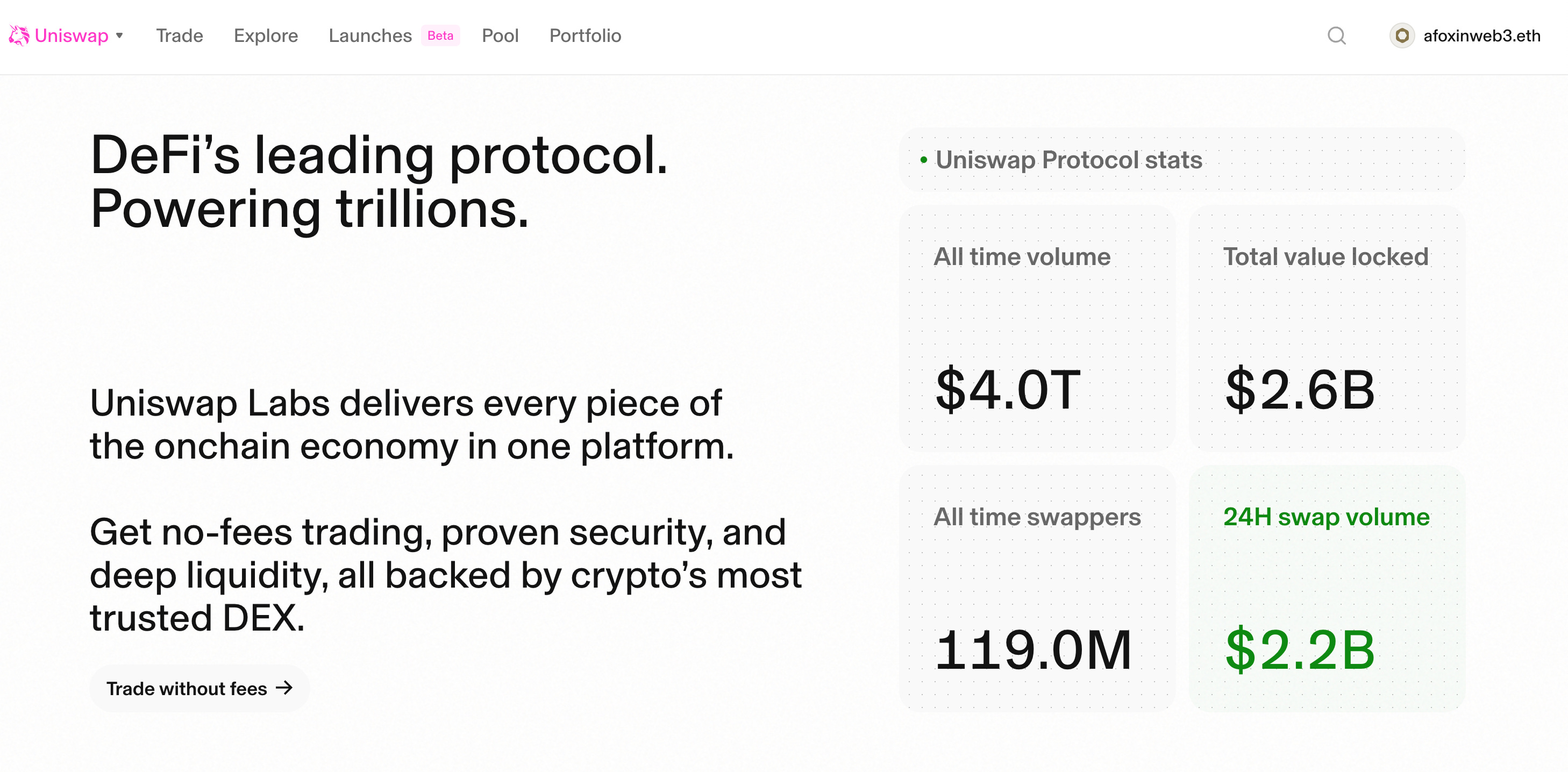
Uniswap is the largest decentralised exchange in crypto, with more than $4.5 trillion traded on it since it launched in 2018.
Like most decentralised exchanges, it’s an “automated market maker”, or AMM. Instead of buyers being matched with sellers, people trade against pools of tokens deposited by “liquidity providers”, and a formula sets the price. I explained how AMMs work in a post a few years ago.

Uniswap v4, the latest version of the protocol, went live at the end of January 2025. It moved every pool into a single smart contract, making new pools around 99% cheaper to create, but its real headline feature was “hooks”.
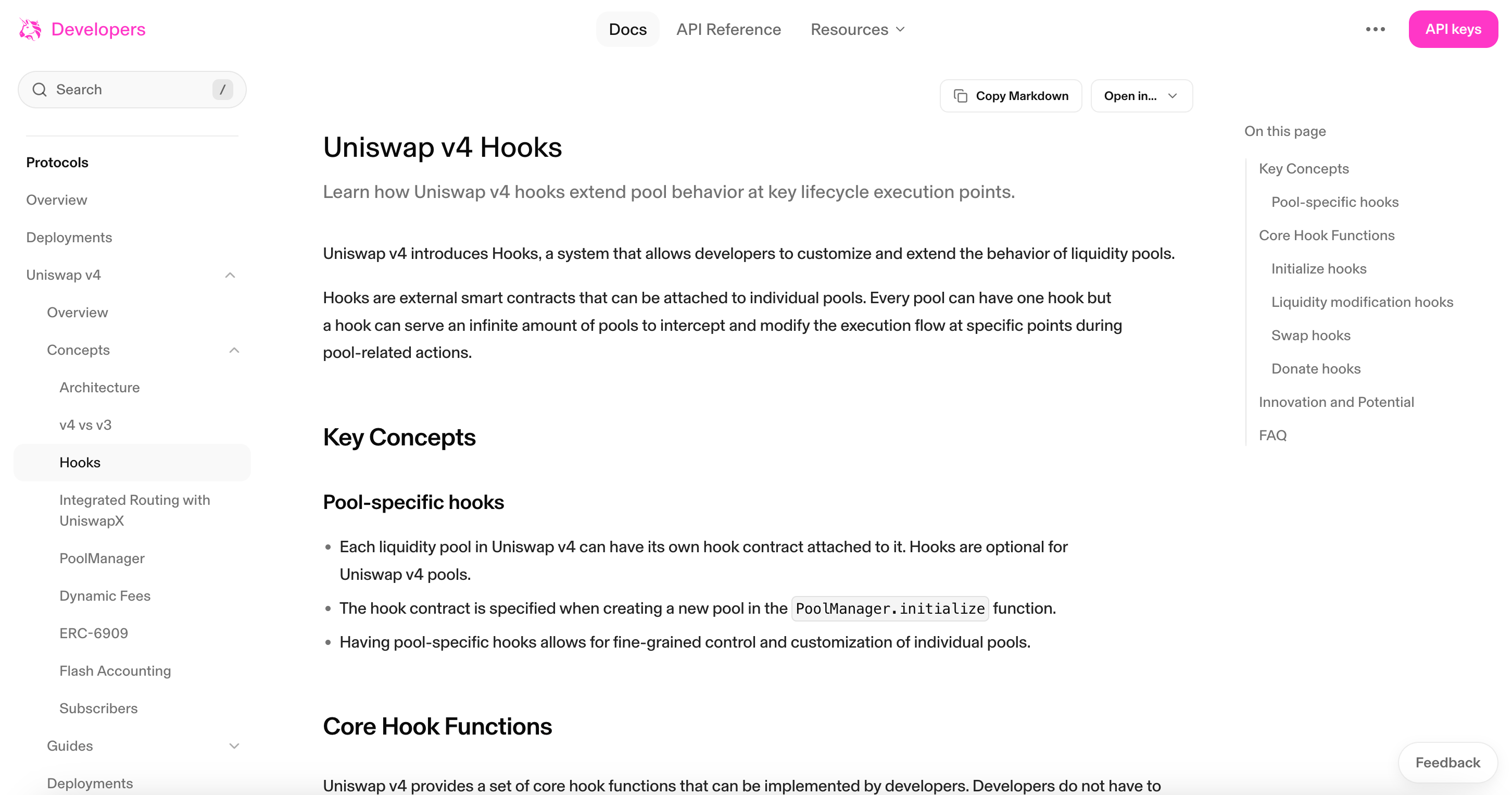
A hook is a small smart contract that gets attached to a pool when the pool is created. Uniswap calls it at set moments in the pool’s life, like just before or after a swap, or when liquidity is added or removed, and at each of those moments the hook can change what happens.
You can think of hooks like extensions for a trading pool. The pool keeps doing its normal job, but the hook can add new behaviour on top.
Each pool can only have one hook, and it’s fixed for good once the pool is created. A single hook can be shared across many pools though.
Before v4, every Uniswap pool worked the same way, with a few fixed fee levels and one pricing formula. Now anyone can build their own custom market and still plug into Uniswap’s contracts, its app, and all the trading bots that already route trades through Uniswap, rather than having to launch a whole new exchange from scratch!
Building a basic hook is fairly easy for a developer. There are ready-made templates, a “Hook Incubator” course, and Uniswap has even published skills that walk AI coding assistants through building them.
What Can Hooks Do
Hooks can be used for things like:
Fees that change with the market, for example charging more when prices are volatile to better protect liquidity providers.
Limit orders, where a trade only goes through once a token hits a set price, and large orders that are spread out over time to reduce their impact on the price.
Different pricing formulas, like concentrating all of a pool’s liquidity around a fixed rate for two tokens that should always trade 1:1.
Rules about who can trade, such as pools only open to verified wallets.
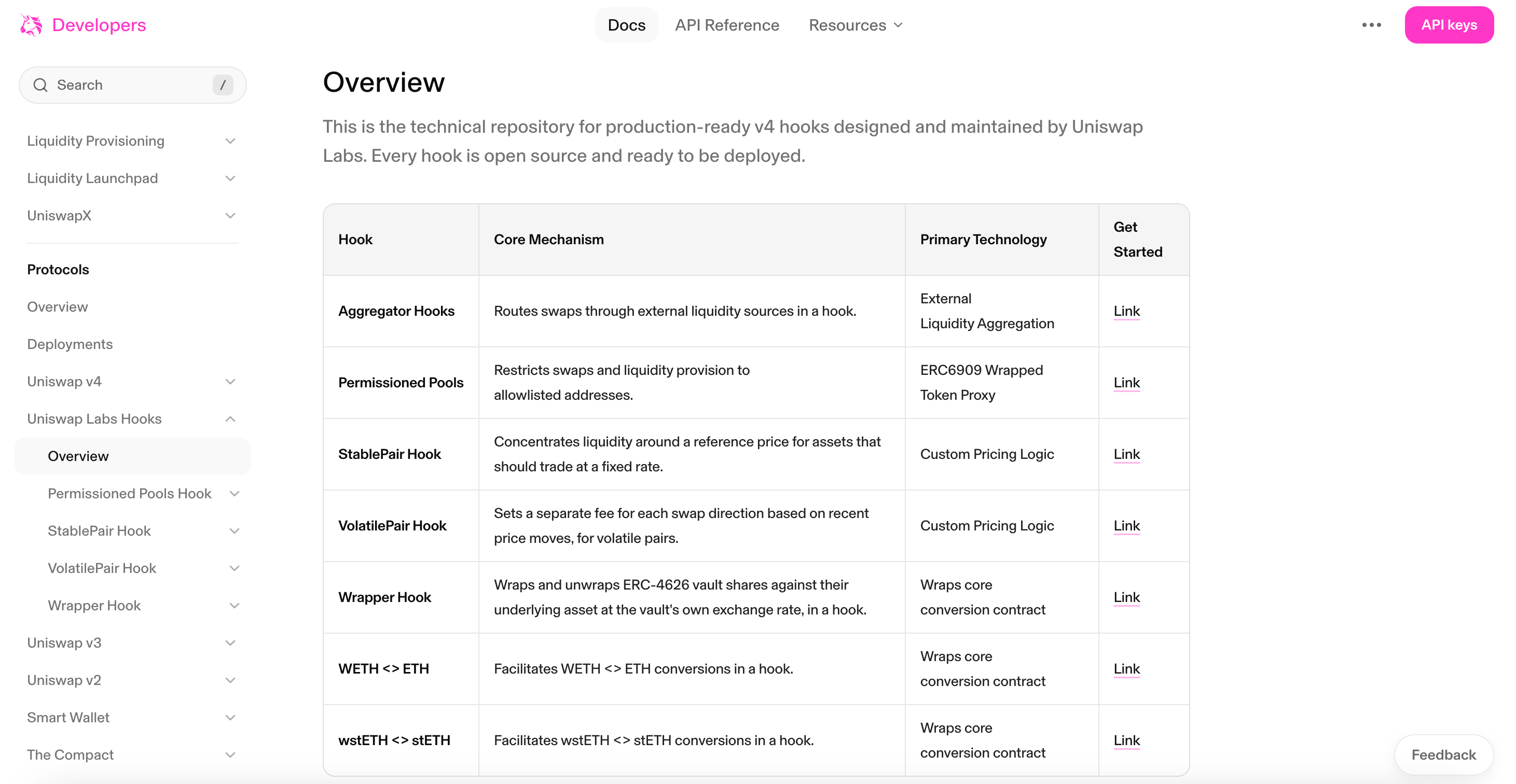
Uniswap Labs has released several of these as open-source hooks anyone can use, including a “VolatilePair” hook that sets fees based on recent price moves, and a “StablePair” hook for assets that should trade at a fixed rate.
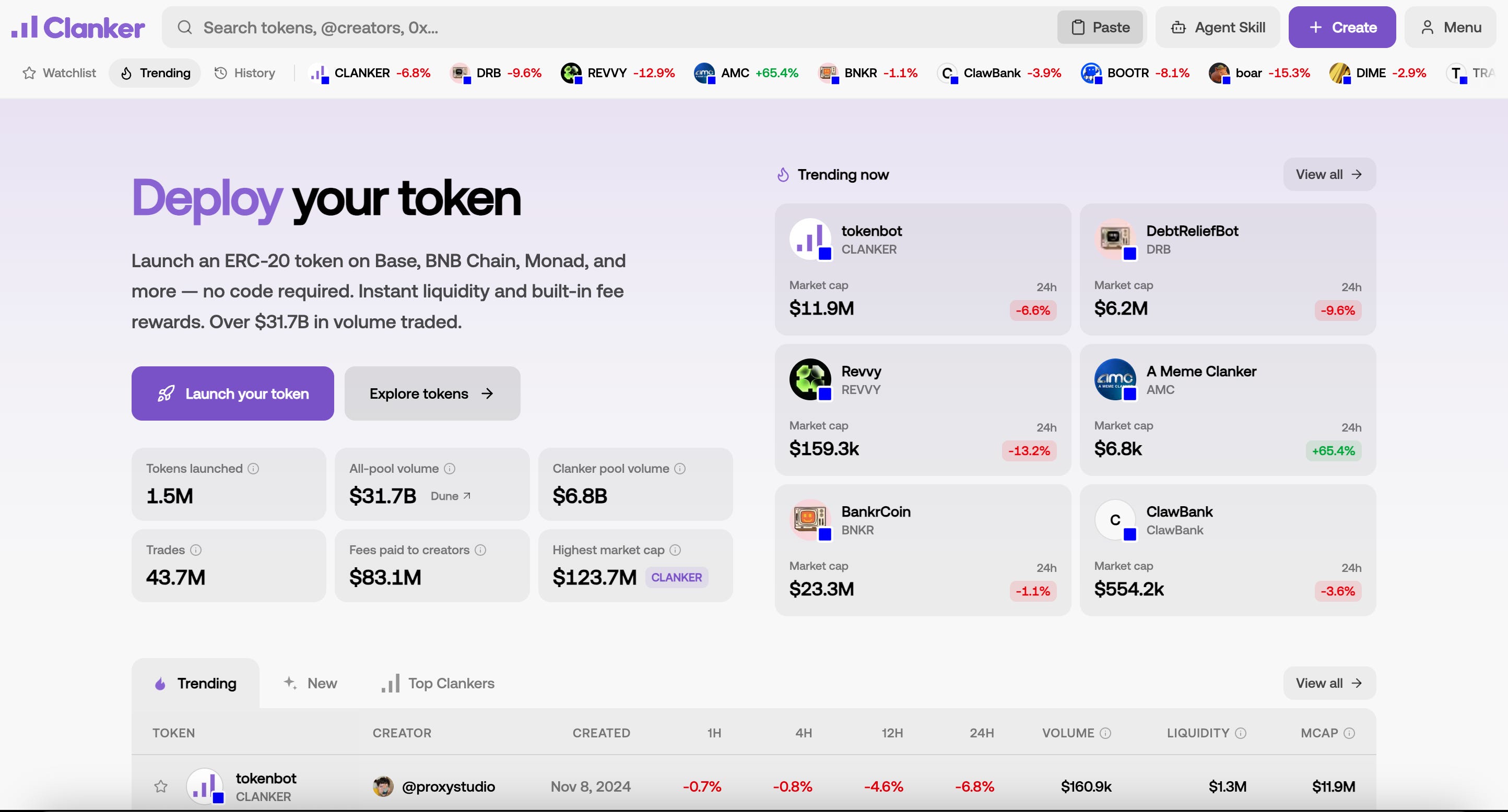
Some of the most popular projects on Base are built on hooks too. Token launchpads like Flaunch and Clanker use them to add their own rules to every new token’s pool, like locking the price for a short time after launch so early buyers can’t dump on everyone else.
The number of hooks has exploded, with tens of thousands of hook contracts deployed since launch, although many of those are experiments and tests.
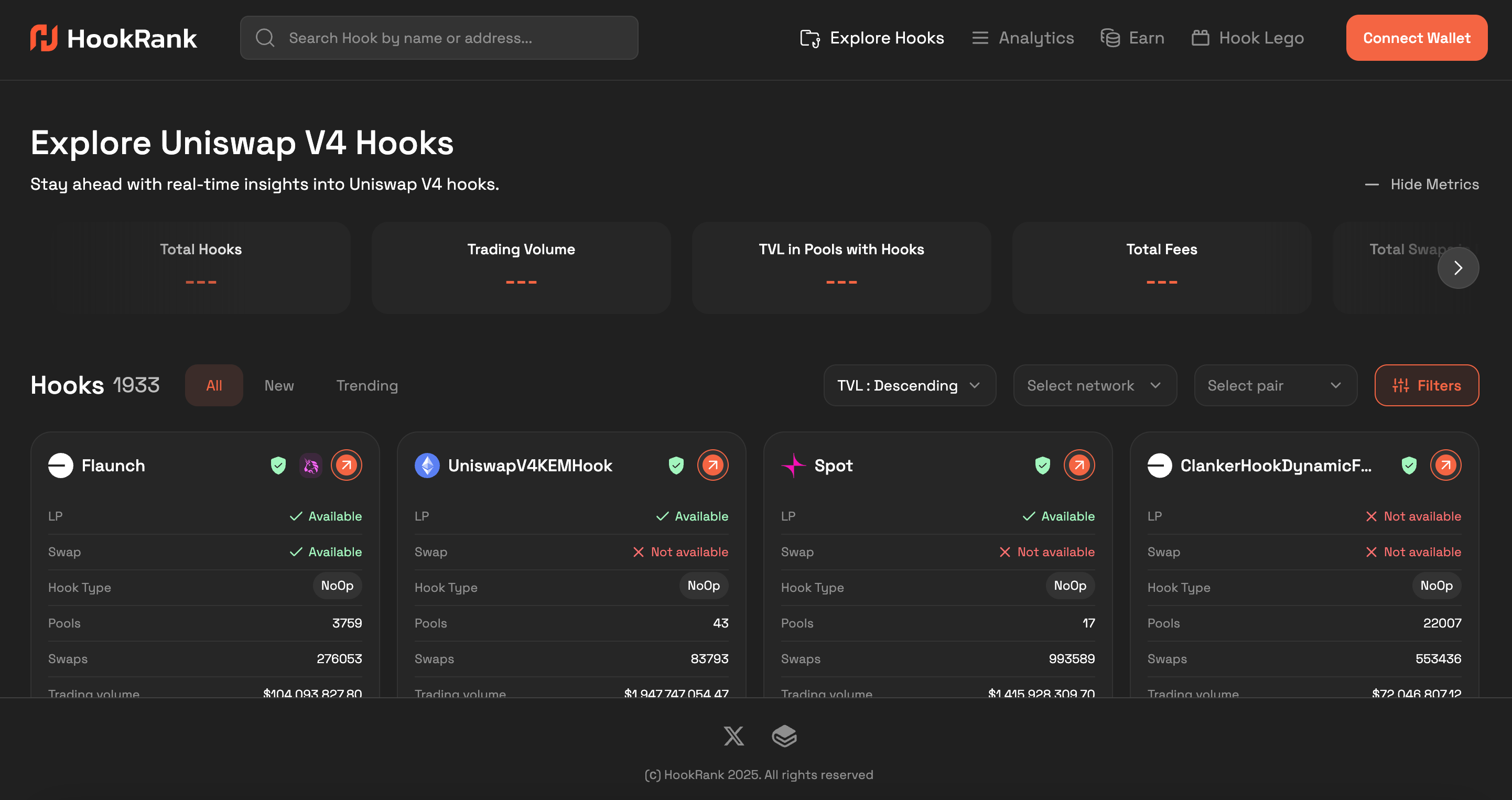
The hard part has been getting trades to flow to them. Trading bots and aggregators used to only need to understand a few standard pool types, while every hooked pool can now behave differently. The Uniswap Foundation even set aside up to $9m to pay back aggregators’ transaction fees when they route trades through hooked pools.
Aggregator Hooks
An “aggregator” is a service like 0x or 1inch that checks prices across many exchanges and splits your trade between them to get you the best overall price.
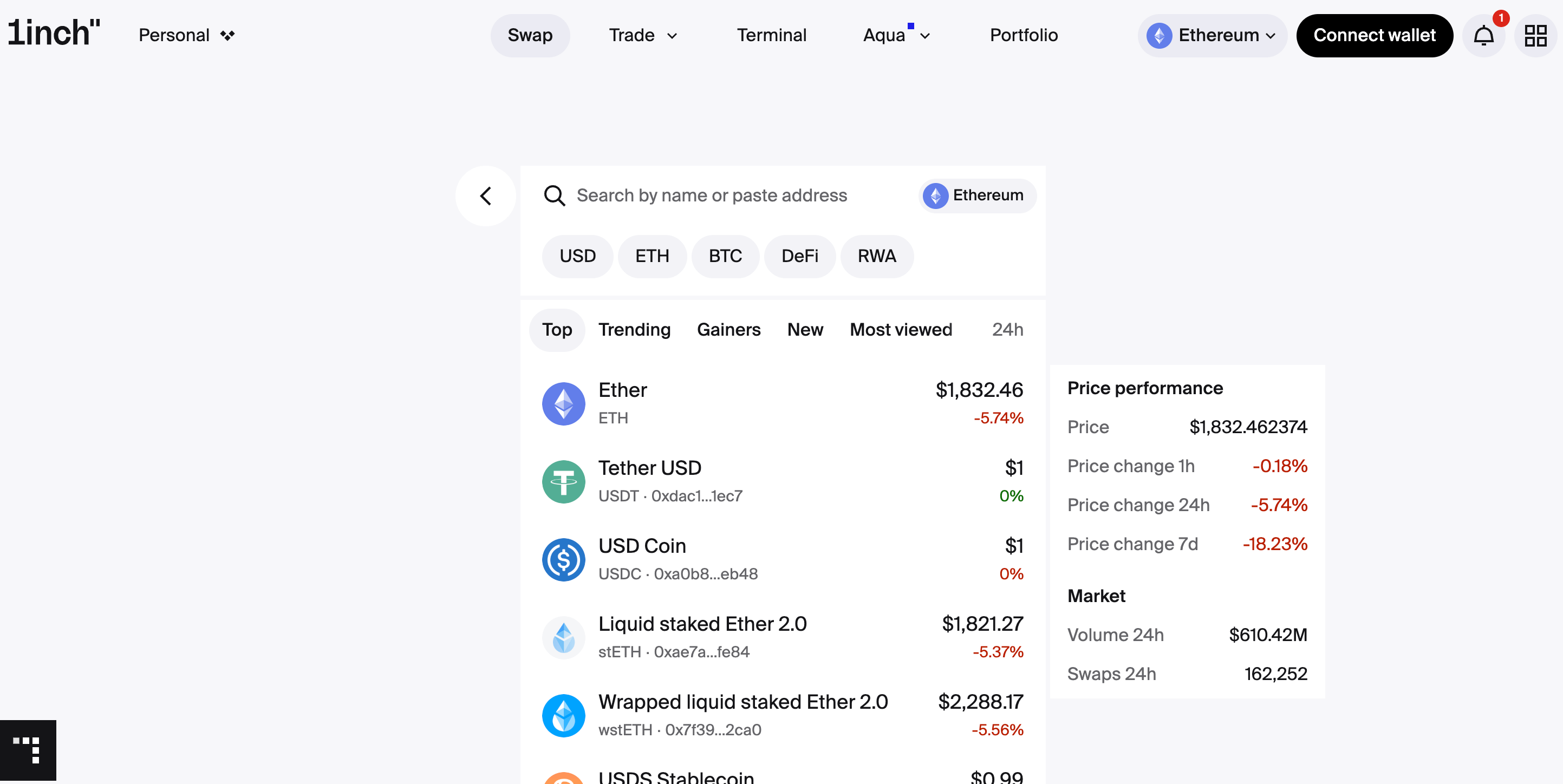
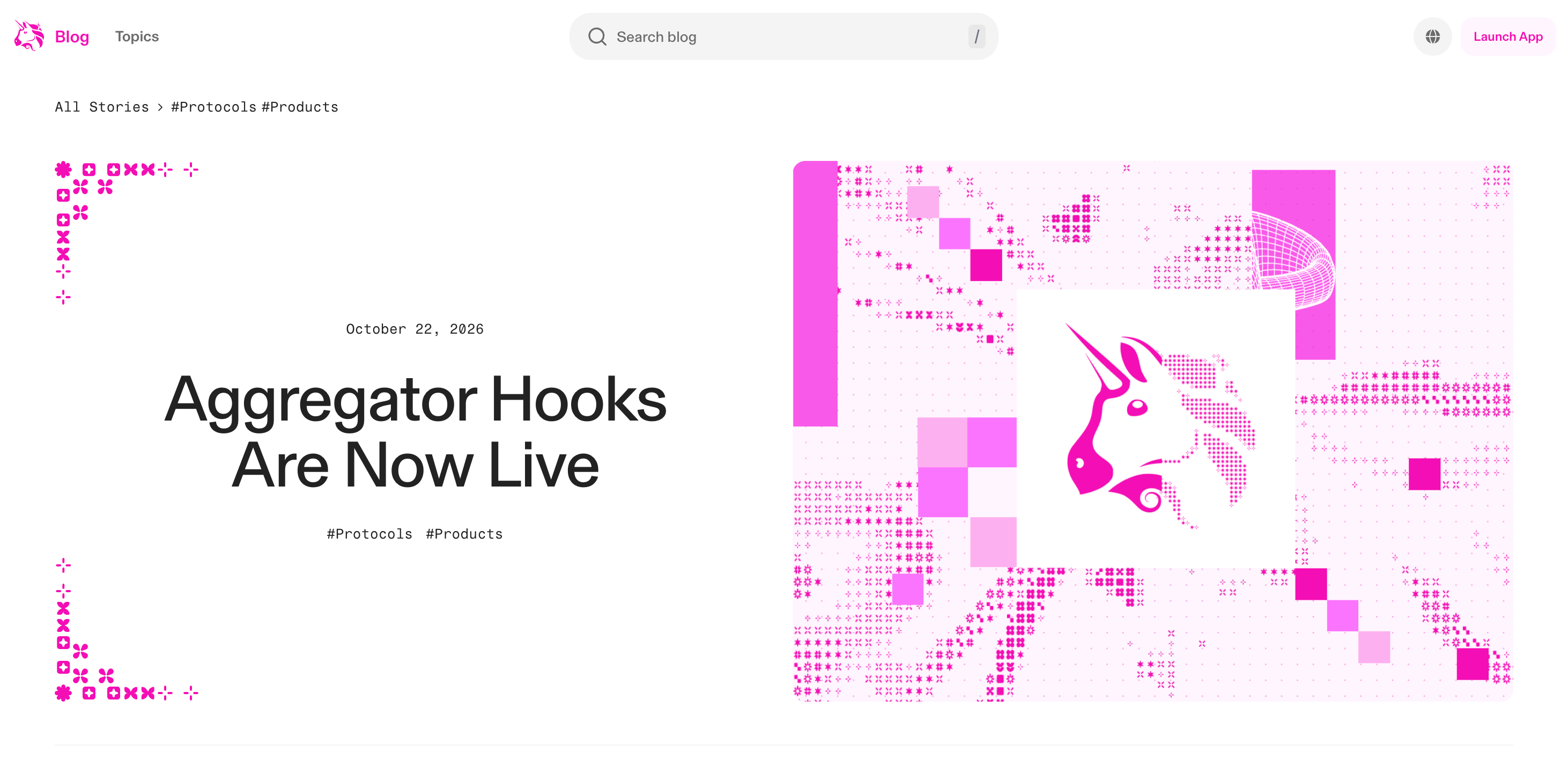
A few weeks ago on October 22nd, Uniswap Labs announced that “Uniswap v4 is now an aggregator”, using a new set of “aggregator hooks”.
Each aggregator hook wraps an outside exchange, like Curve, Fluid or PancakeSwap, so that it looks like a normal Uniswap pool. Uniswap’s router pulls fresh prices from them every block, finds the best route across both its own pools and these outside ones, and settles the whole trade in a single transaction.
Seven outside sources went live at launch on Ethereum, Base and Robinhood Chain, covering more than 90% of decentralised exchange activity on those chains. Anyone swapping on the Uniswap app gets this automatically, and developers can use it through Uniswap’s API.
Robinhood Chain was a natural fit as a launch chain, since Uniswap is its main exchange, which I covered in September.

On fees, Uniswap founder Hayden Adams said there’s “Zero margin added to native Uniswap liquidity”, with “Just a couple basis points of UNI protocol fees for any routes to external sources.”
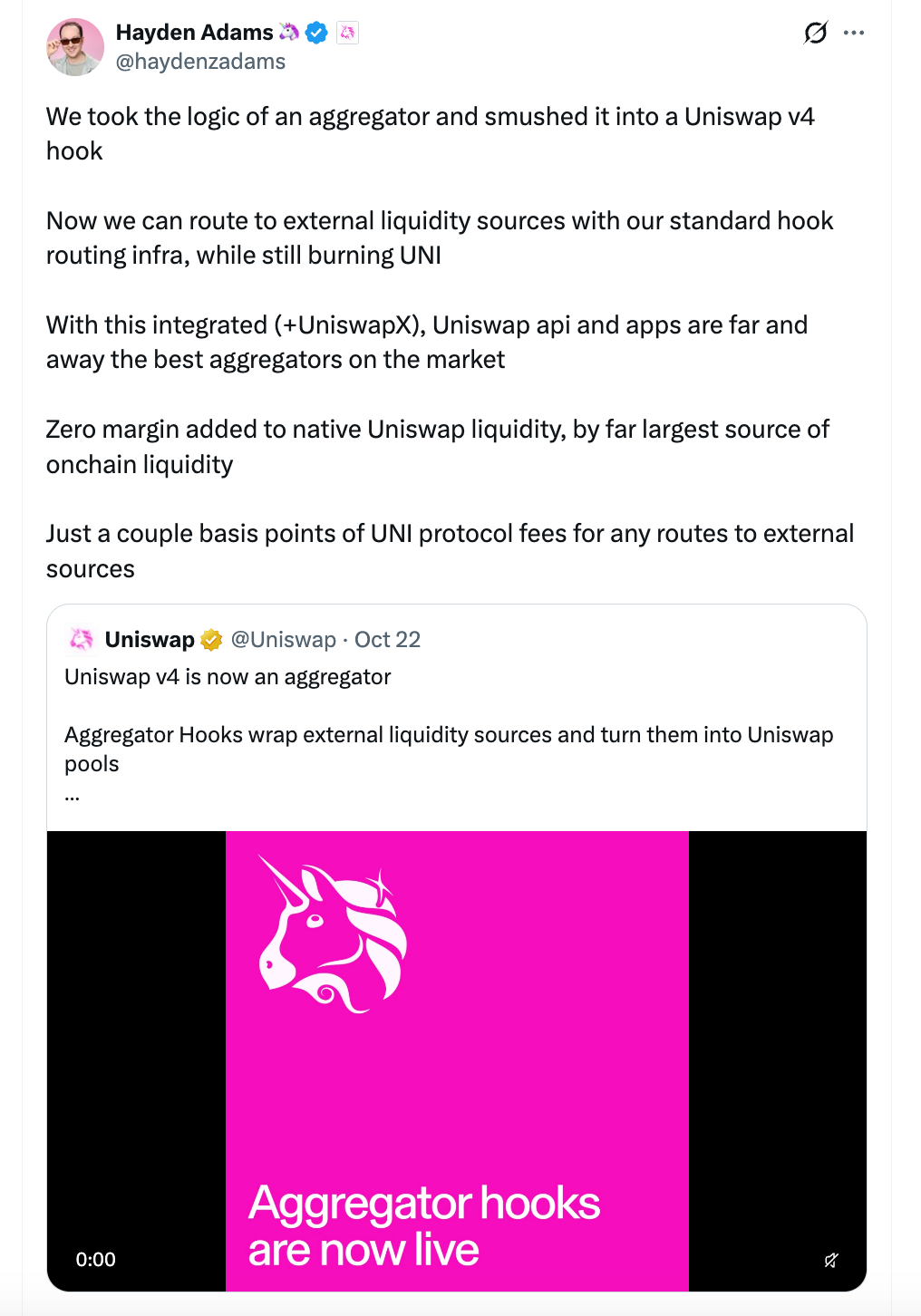
Those fees go towards burning UNI, through the Token Jar mechanism I covered in July. So every trade Uniswap sends to a rival exchange now also earns a little for UNI holders!

Malicious Hooks
The same freedom that makes hooks powerful also makes them dangerous. Because anyone can attach any hook to a pool, a pool can look perfectly normal while its hook quotes one price and then settles the trade at another.
In September, the aggregator 0x published research titled “Uniswap v4 hooks were a mistake”. It analysed 84,163 hooks across six blockchains and classed just 19.4% as safe, 54.2% as malicious and 26.4% as likely malicious!
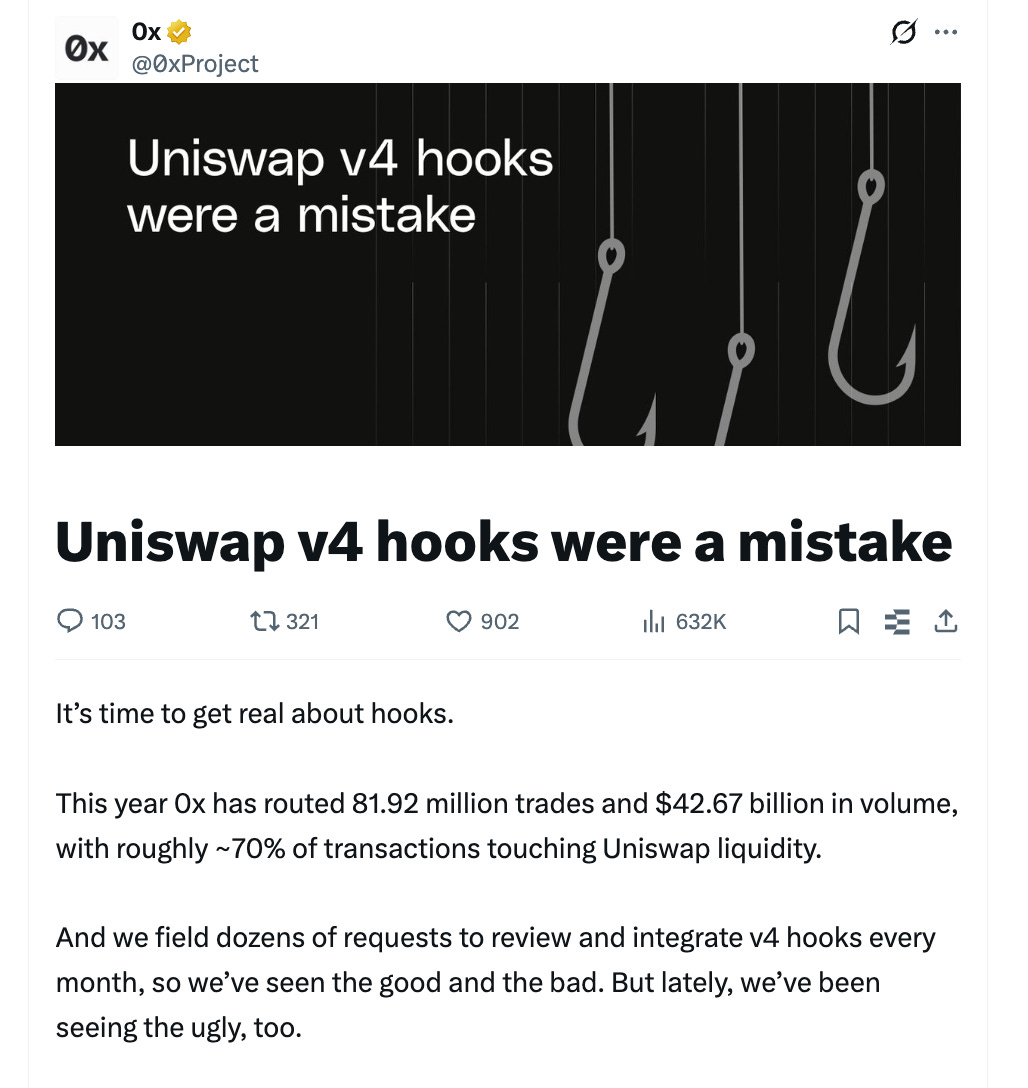
According to 0x, some trades through malicious pools delivered “as much as 50% less at execution than the amount quoted to the user.”
Hayden Adams called it a “skill issue”. He argued that malicious contracts have existed in every version of Uniswap, and in fact any blockchain layer itself. The comparison here is that being able to write malicious contracts on Ethereum for example doesn’t make Ethereum contracts bad, the same applies to hooks contracts.
Hayden said that the real problem is aggregators sending trades into pools they haven’t checked, something Uniswap’s own router already avoids by only routing to vetted hooks.
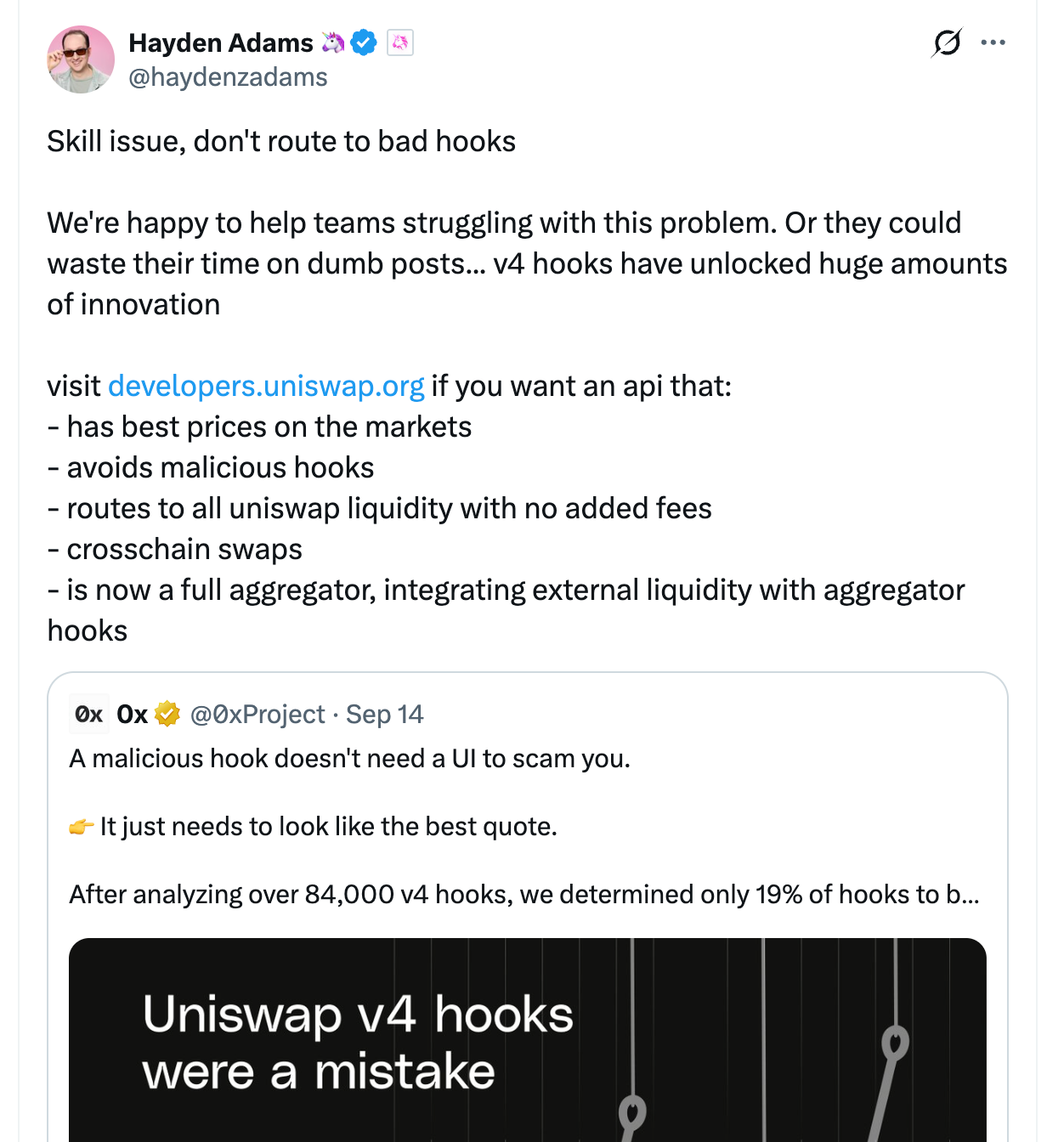
0x is itself an aggregator though, and a month after its report Uniswap launched aggregator hooks that compete with it directly.
Security firm BlockSec found a quieter version of the problem too. Over 30% of the projects in a popular list of open-source hooks had vulnerabilities, although most were honest mistakes rather than deliberate traps.
Uniswap’s core contracts have never been exploited, so the risk sits in individual hooks. The safest approach is to stick to well-known apps and routers that only send trades to vetted pools, and be wary of an unknown pool offering a quote that looks too good to be true.
Permissioned Pools
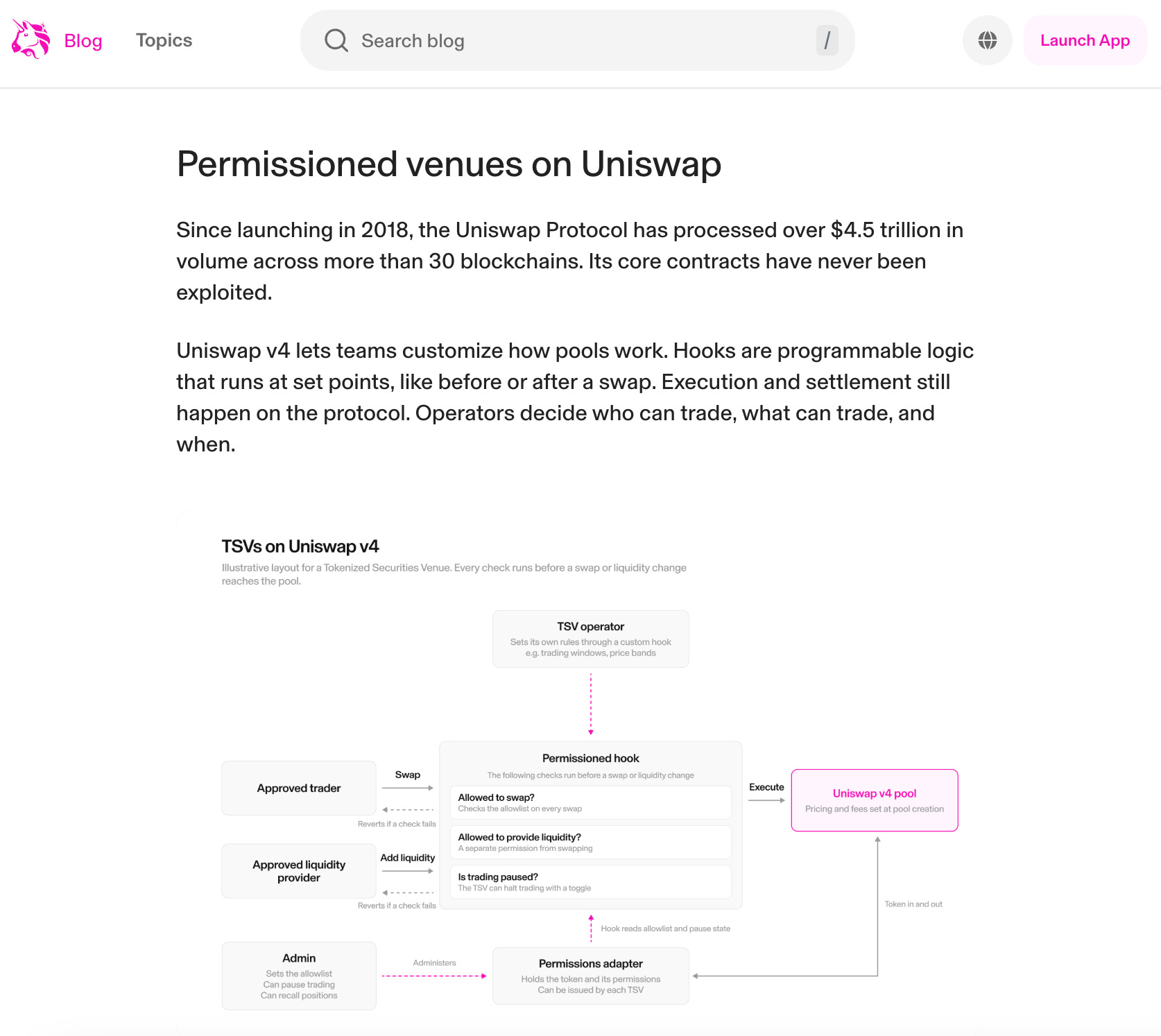
On September 17th, the SEC granted an “Innovation Exemption” creating a new kind of venue, the “Tokenized Securities Venue”. For the next five years, these venues can trade tokenised US stocks through permissioned AMM pools, without having to register as an exchange.
To qualify, they need rules built in, like controls on who can trade, caps on volume and the ability to halt trading. On November 10th, Uniswap explained how its “Permissioned Pools” hook gives these venues “a foundation to build on.”
Tokenised stocks are already a big market on Uniswap. More than $20bn of stock tokens have traded on it, from issuers like Robinhood, xStocks, and Ondo which I covered back in April.

On Robinhood Chain alone, more than 40 tokenised stocks and ETFs now trade in pools against SPY, an S&P 500 fund, with over $900m in volume across 130,000 wallets!
All in all, my personal read is that hooks have turned Uniswap from a single exchange into a platform that others build markets on. The same feature lets Uniswap pull in liquidity from its rivals, lets launchpads add their own rules, and could let regulated stock venues run on a public blockchain.
The cost is that anyone can build a bad market too, but the defences are catching up, with vetted routers, audited hooks and aggregators learning which pools to avoid.
Wall Street’s markets have run on order books for over a century, and hooks could be a key part of what finally brings them onchain!

Whenever you’re ready, these are the main ways I can help you:
Want high crypto returns? Earn up to 14% APY with your own Yieldseeker agent!
Love Web3 & AI? Follow @afoxinweb3 on X for insights!
Entrepreneur using AI? Join our AI community to accelerate your results!