
TLDR:
Merkl is in its own words a “leading incentive and point management platform” that allows projects to “run large-scale incentive programs with no effort”.
Users can scroll through hundreds of different incentivised opportunities where they are required to provide liquidity, hold tokens, or similar to earn rewards.
Their Merkl Studio UI makes it relatively easy for projects to create a standard set of campaigns, however more complex campaigns require reaching out to the team.
The Merkl platform is a win-win for projects and users, since users discover great opportunities and projects incentivise their users to help them acheive their goals.
This week we’re trialling out a Merkl incentive campaign for Yieldseeker and so I thought it would be interesting to share how Merkl works and how to create your own campaign with it.
Incentive programs are incredibly common in crypto but not everyone will have heard or used Merkl before so this post should shed some light on this incentive platform.
If this post resonates with you and you enjoy the content then please share it with a friend and get rewarded for doing so!

This blog goes out weekly to almost 10,000 subscribers. Please message me if you’re interested in sponsorships or partnerships.
Incentive Programs
Incentive programs are incredibly common in crypto, whether you’re participating in a project and getting points that’ll convert to a future airdrop or earning boosted APYs for providing liquidity to a specific pool, you’ll be hard pressed not to have participated in an incentive program at some point in this space.
You could even argue that Bitcoin was the master architect of crypto incentive programs with the creation its “Proof of Work” based consensus algorithm where miners are incentivised to partake in the validation of blocks and in return are given some of the network’s own BTC tokens as a mining reward.
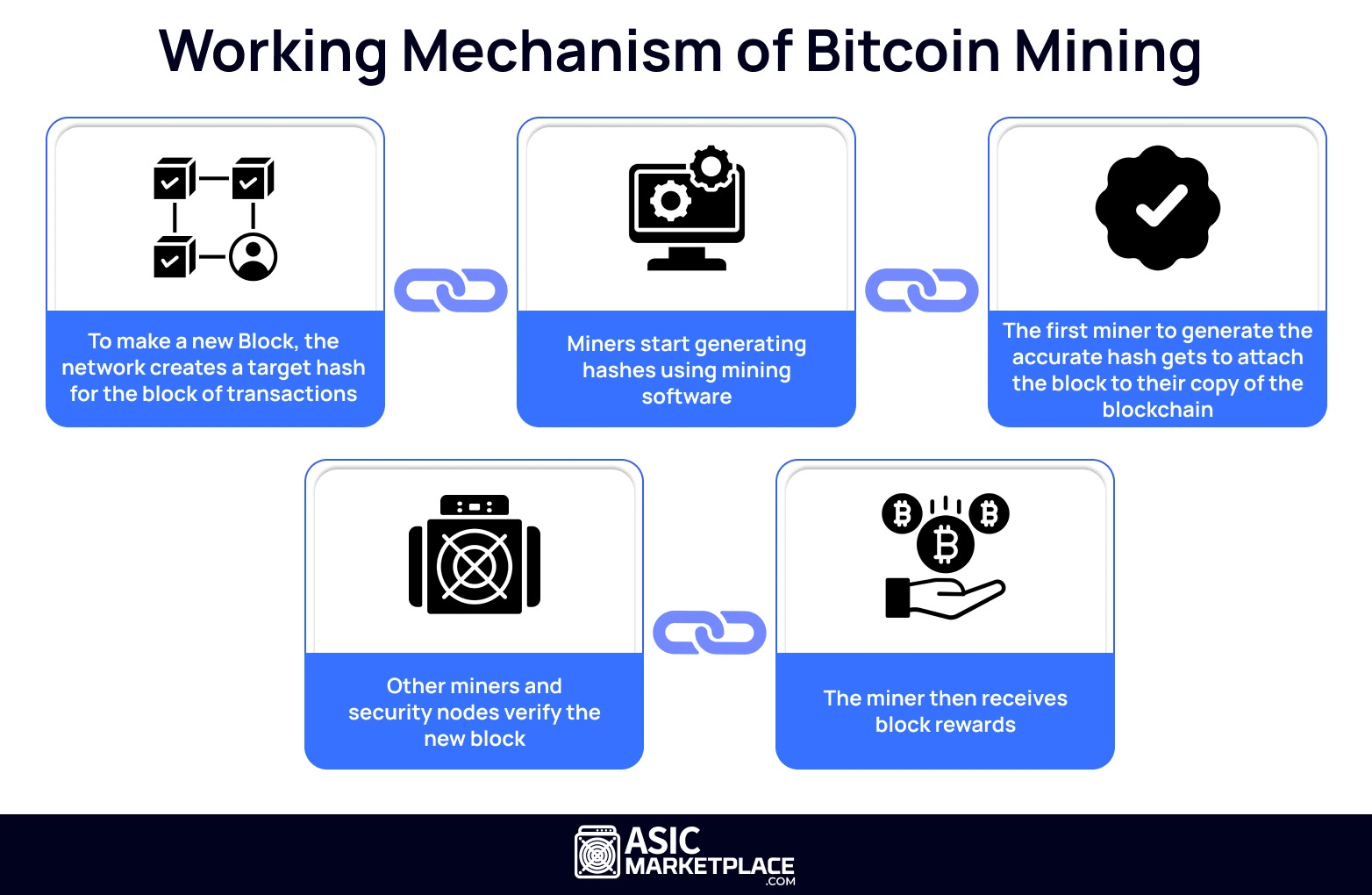
Since DeFi is all about financial networks, incentive programs have unsurprisingly become a cornerstone of DeFi.
In some cases these incentive programs can work really well bringing people into a new chain and growing a whole new ecosystem, as Hyperliquid has done very successfully with their Hype token.
In other cases they may bring in some excitement and momentum for a while before eventually fading away, as was the case with Blast and Blur. If you were around in the last cycle then you may remember how they had a complex seasonal points system and people spent loads of time and money farming these incentive programs.
At the start this worked well for both Blast and Blur, but as the seasons progressed the money being airdropped didn’t justify the amount being spent to farm them, and as NFT attention fell off eventually their entire ecosystem faded in usage and attention too.

Either way incentive programs are a pretty crucial part of crypto and most people in the ecosystem make financial decisions based on them in some way or another.
However it can be hard to find and track all the different incentive programs going on at any given moment.
Merkl
Merkl is an incentive platform that does a great job of bringing together both the people looking for incentive programs and the projects looking to generate new incentivised opportunities.
In their own words Merkl allow projects to “run large-scale incentive programs with no effort”. They are backed by a16z and also describe themselves as the “leading incentive and point management platform”.
Merkl are only 2 years old having launched in November 2023, but since then they’ve "distributed over $1 billion in incentives across 60+ chains, with 200+ protocols”, and they’ve supported many of the biggest players in DeFi such as Uniswap, Morpho, Euler, Arbitrum, and Optimism.
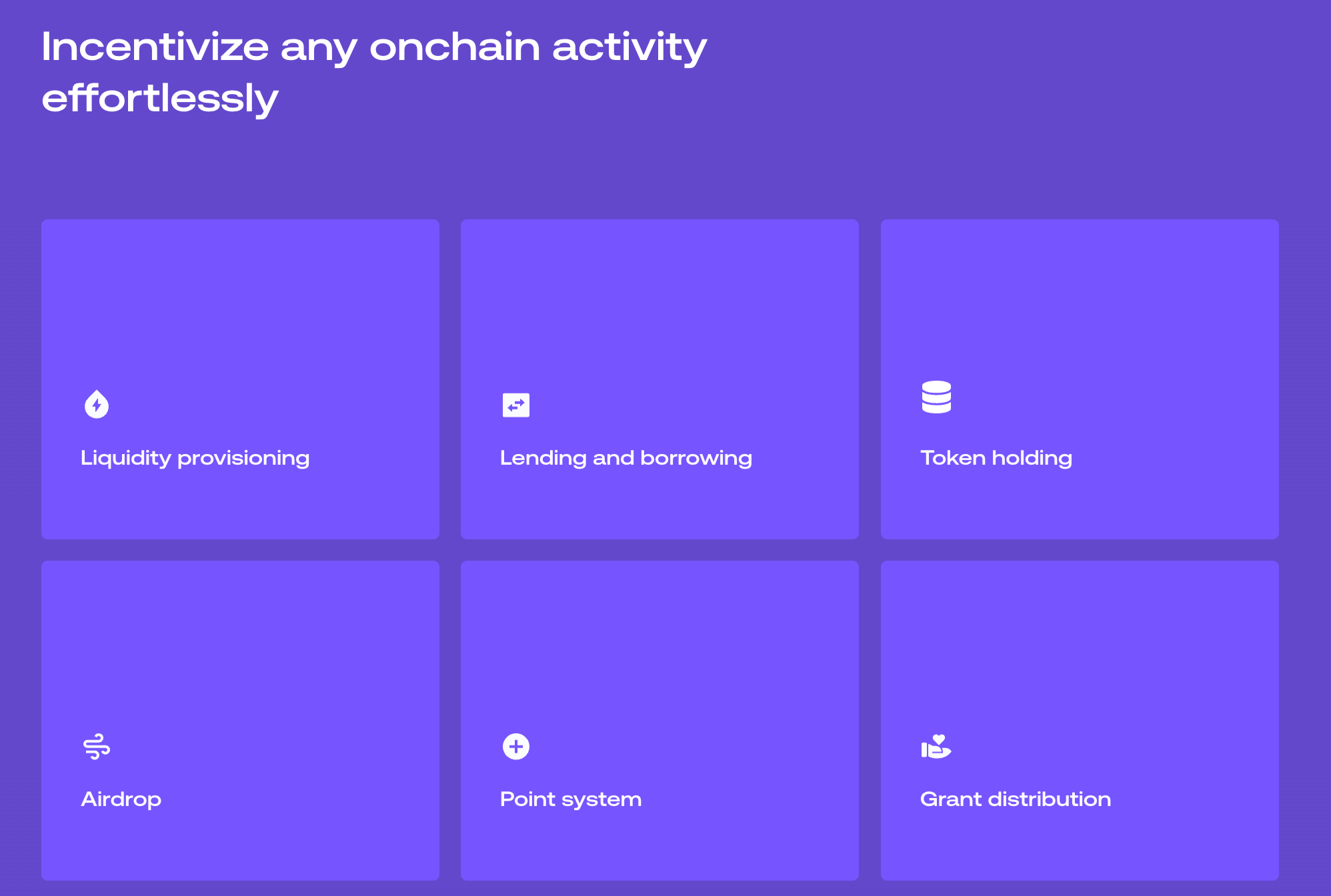
Merkl’s varied campaign types can be used to incentivise LPs, lending and borrowing, token holding, airdrops, points, grants, and a lot more.
A worthwhile distinction here is between Merkl and questing platforms like Galxe (which I’ve already written in the post below) - while both platforms allow you to create user incentives, Merkl is far more focused on incentivising liquidity while Galxe and other questing platforms are more for social metrics and interactions.

Merkl claim to have over 10,000 daily users who are regularly searching for their incentivised opportunities, meaning there’s a lot of people scouring the platform and a lot of potential for projects to influence these people with their campaigns.
User Opportunities
As a user on Merkl its very easy to find new opportunities with the range of incentive programs available.
The first thing you need to do is select “Launch App” in the top right and you’ll be taken to the app page where you can explore all the live opportunities.
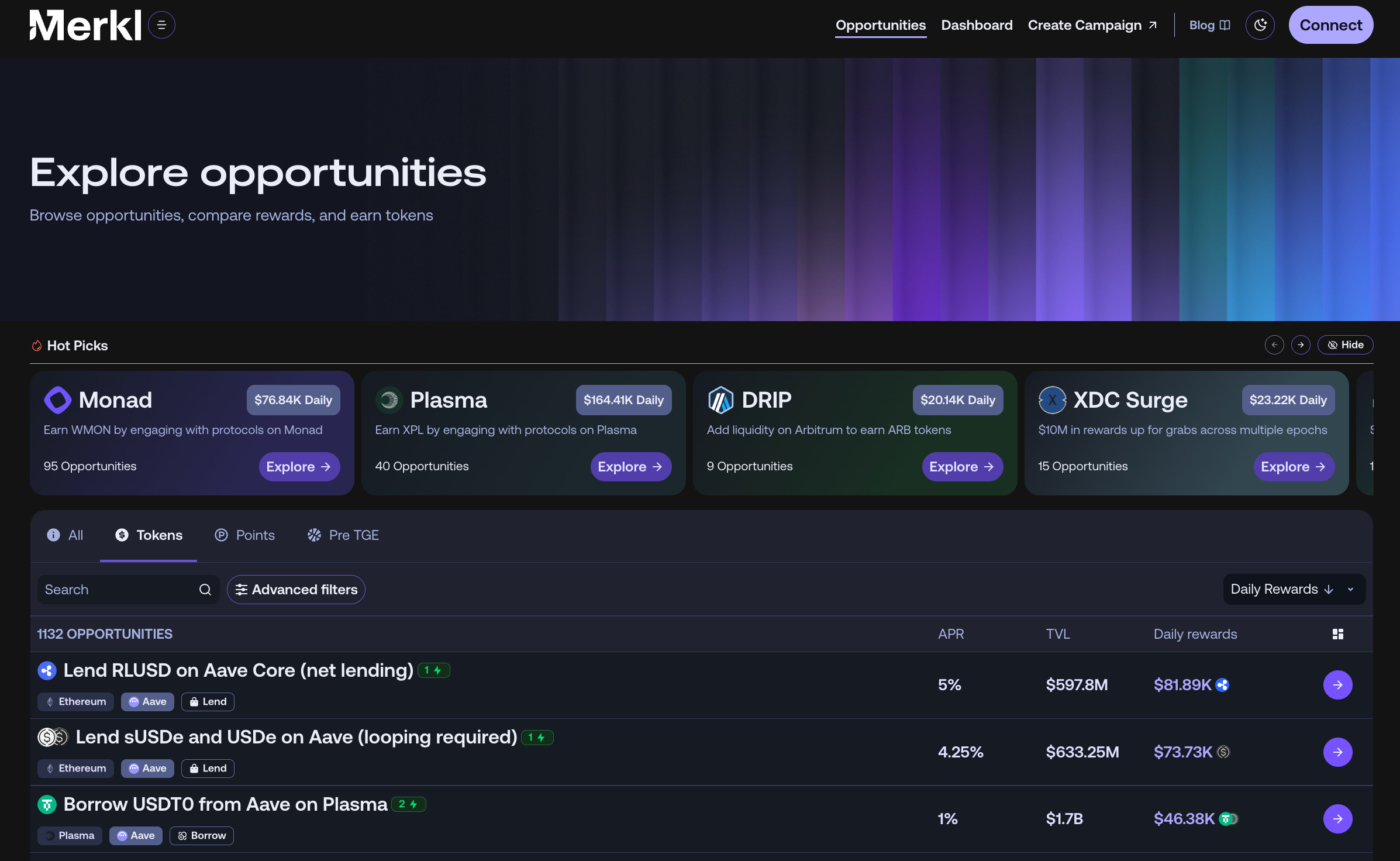
You can generally see here the name of the campaign, the current APR you’ll get from it, the total TVL of the platform, and the daily rewards the project is giving out to incentivise people to use it.
Some campaigns will give out rewards as tokens, while others will give out points for a future airdrop with these points campaigns generally rewarding users through applying a points multiplier. Merkl has filters at the top that allow easy filtering and searching for both the token and points campaigns.
By selecting a campaign that you’re interested in you’ll be taken to a screen showing more information about it. For example you can see below there’s currently a couple of campaigns running for supplying USDC to the Steakhouse vault on Morpho.
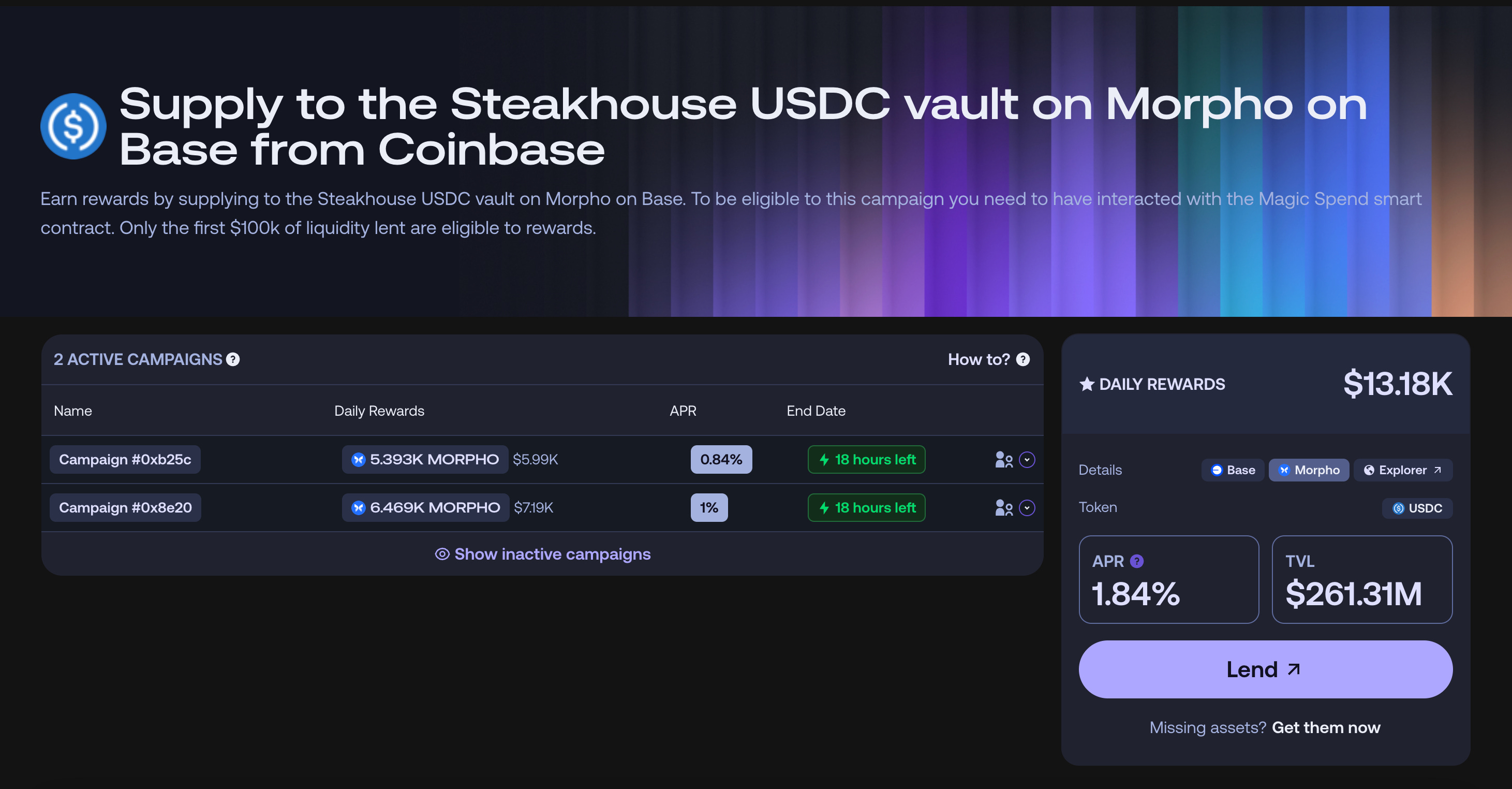
On these campaign screens you can see the daily rewards, how it reflects in APR, and more useful details like when the campaign ends.
Plus of you’re interested in the opportunity but don’t happen to have the necessary asset available, they also have a button for “Missing Assets” that opens up a bridge & swap integration with LiFi.

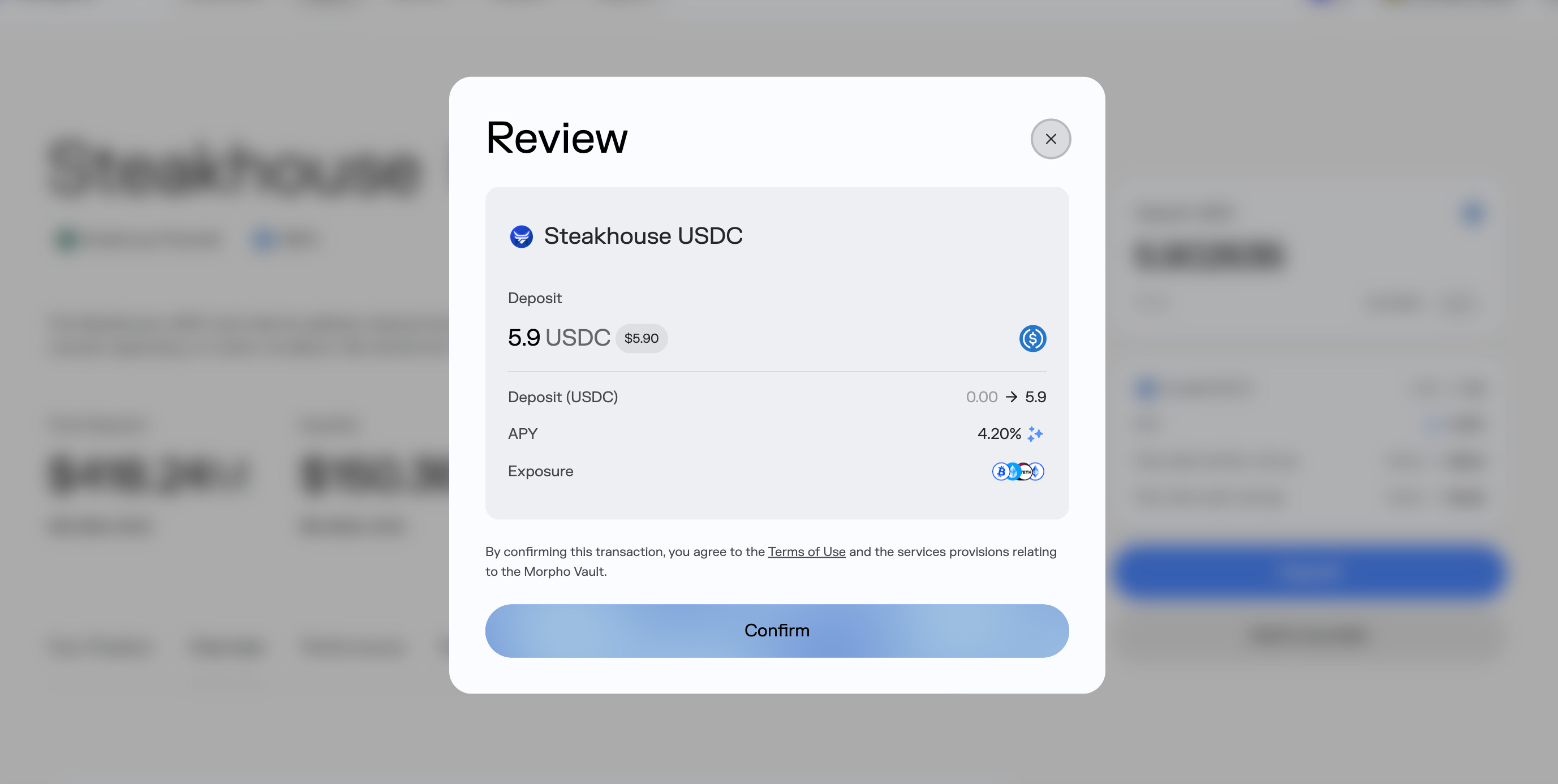
When you select the action required for the opportunity, in this case its “Lend”, you’ll get taken straight to the opportunity where you’ll be able to take the action, which will get registered by Merkl in the background so that you can get hold of your rewards.
Then back on Merkl you can can view all the rewards you are currently earning by connecting your wallet on the top right and selecting “Dashboard”.
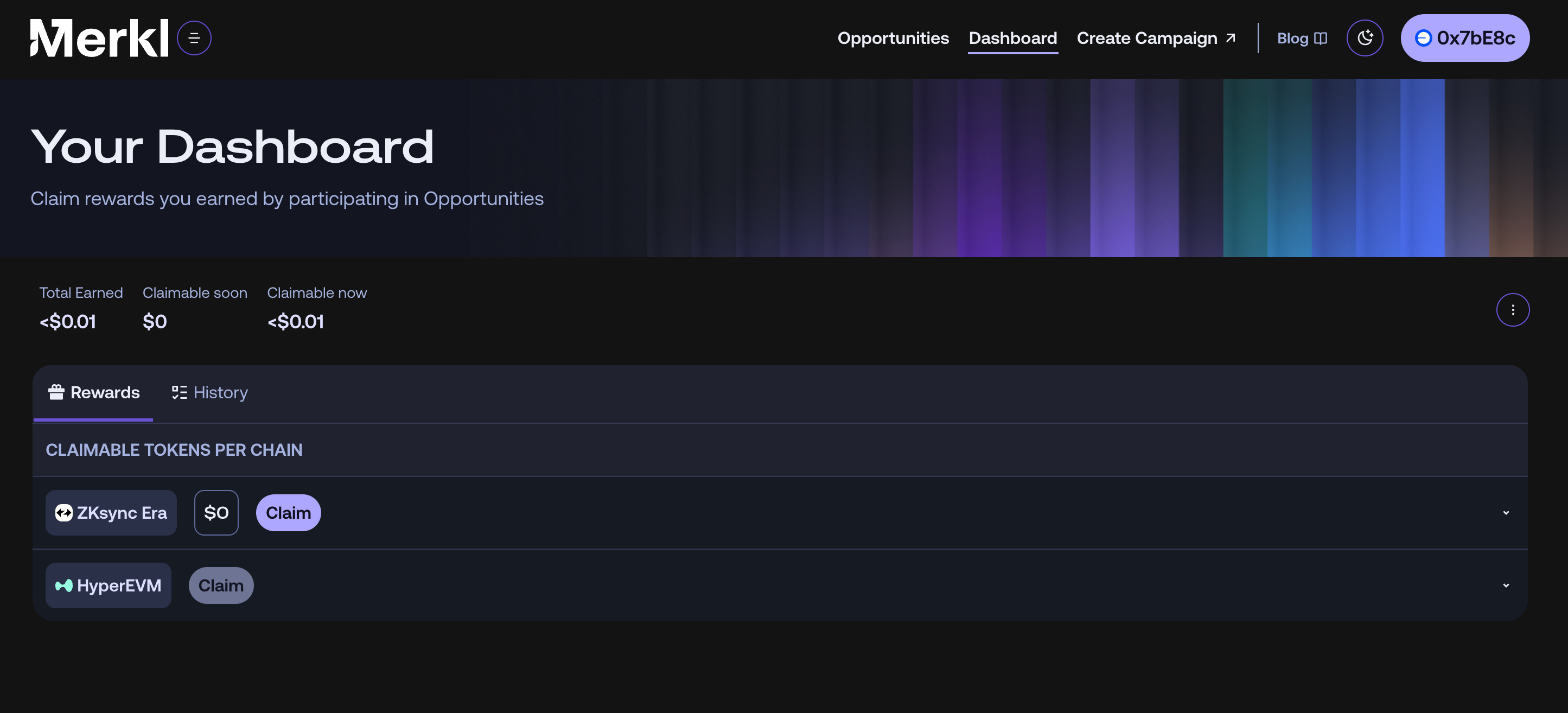
From here you can select claim on any rewards you may have to earn - although in the case of this specific wallet I didn’t have any rewards available.
As you can see its really easy for users to find campaigns and get involved in different incentivised opportunities, similarly if you’re a project setting up a campaign then its relatively easy to set one up too.
Creating Campaigns
Merkl claims to allow incentive campaigns to be created in just 5 minutes with their “Merkl Studio” toolkit, and this can certainly be the case depending on the campaign type you want to create.
To get started here you need to select “Distribute Incentives” on the landing page or “Create campaign” on the app page and you’ll be taken to Merkl Studio.
Now on Merkl Studio you’ll be asked if you want to run a “Single campaign” or “Multiple & Custom campaigns”, however the second option will be greyed out and in order to select it you’ll need to reach out to their team directly.
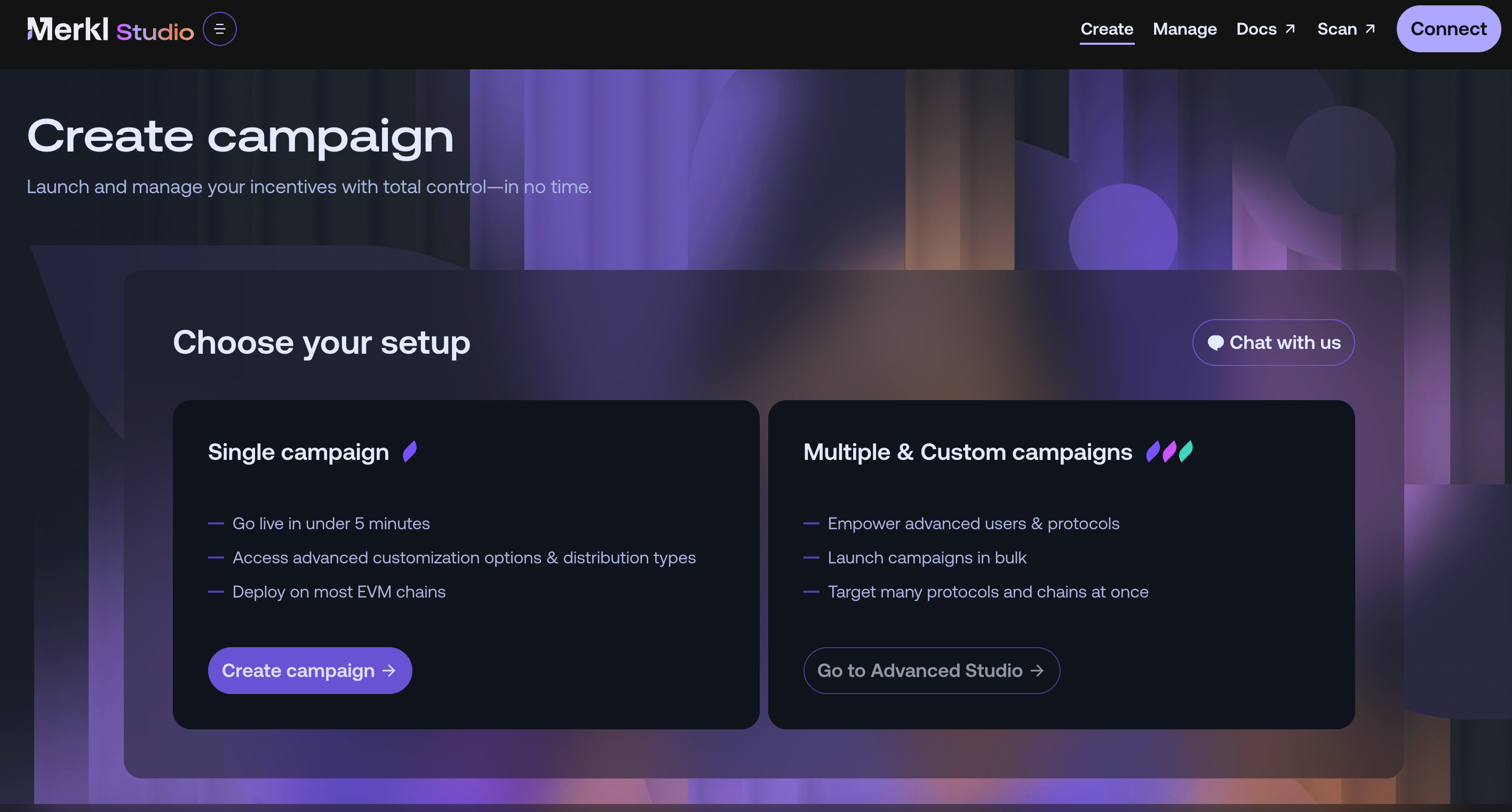
For this simple tutorial we’ll stick with the basic campaigns and select “Create campaign”, where we are taken to another screen asking for the type of campaign you want to run.
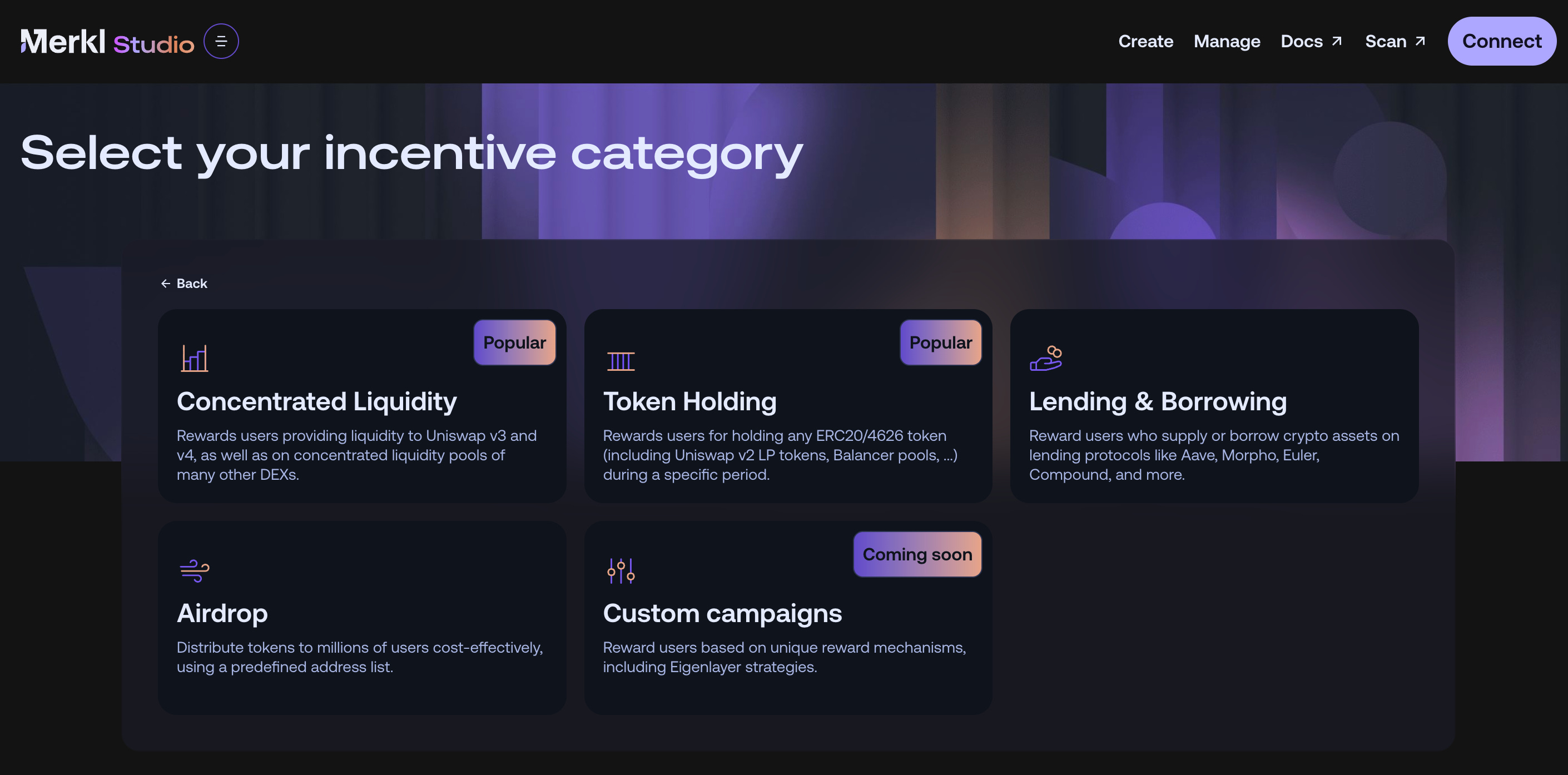
Each campaign type has a clear explanation below it. By selecting the “Lending & Borrowing” campaign, just as an example, you will see the following below.
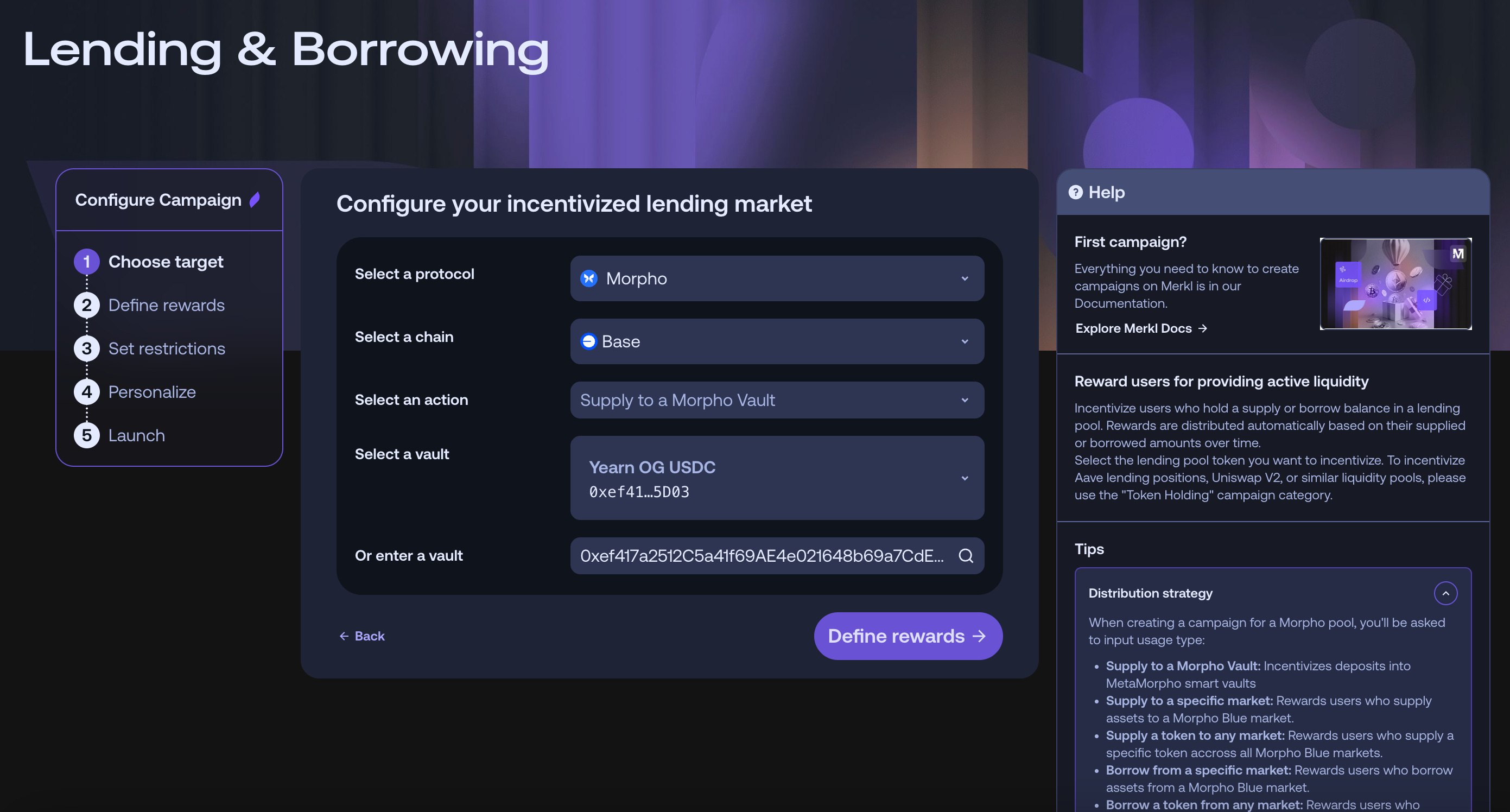
With this type of campaign you’ll be asked to first “choose a target”, in other words fill in details about the protocol, chain, action and vault.
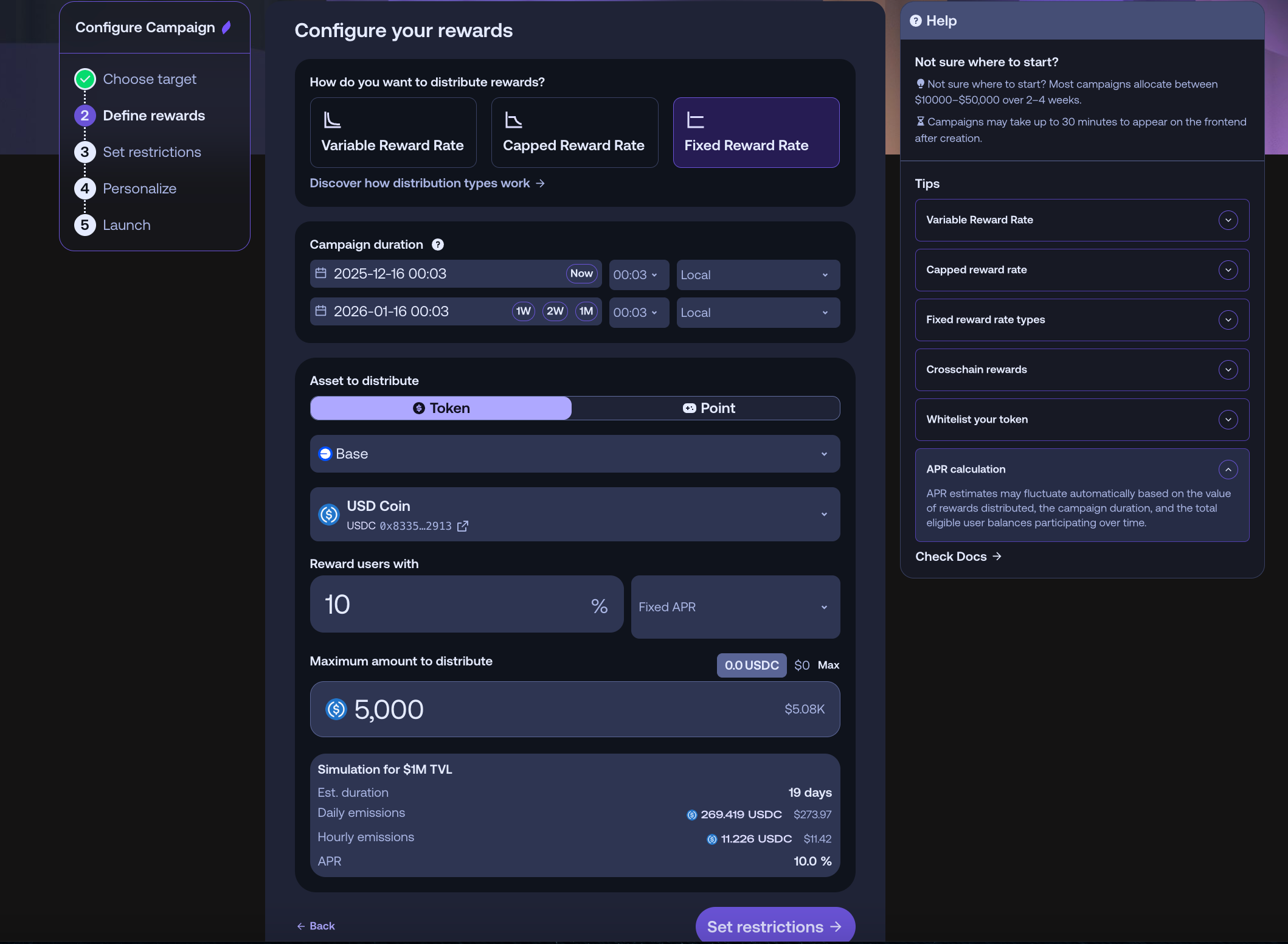
Next you must define the rewards where you can set a lot of different variables like: fixed or variable rewards, points or tokens, the chain of the token, rewards as fixed/variable APRs or daily reward amounts, and the maximum amount to be distributed.
You can then set potential restrictions on blacklisted addresses, and personalise access control and eligibility criteria such as requiring users to hold a specific token.
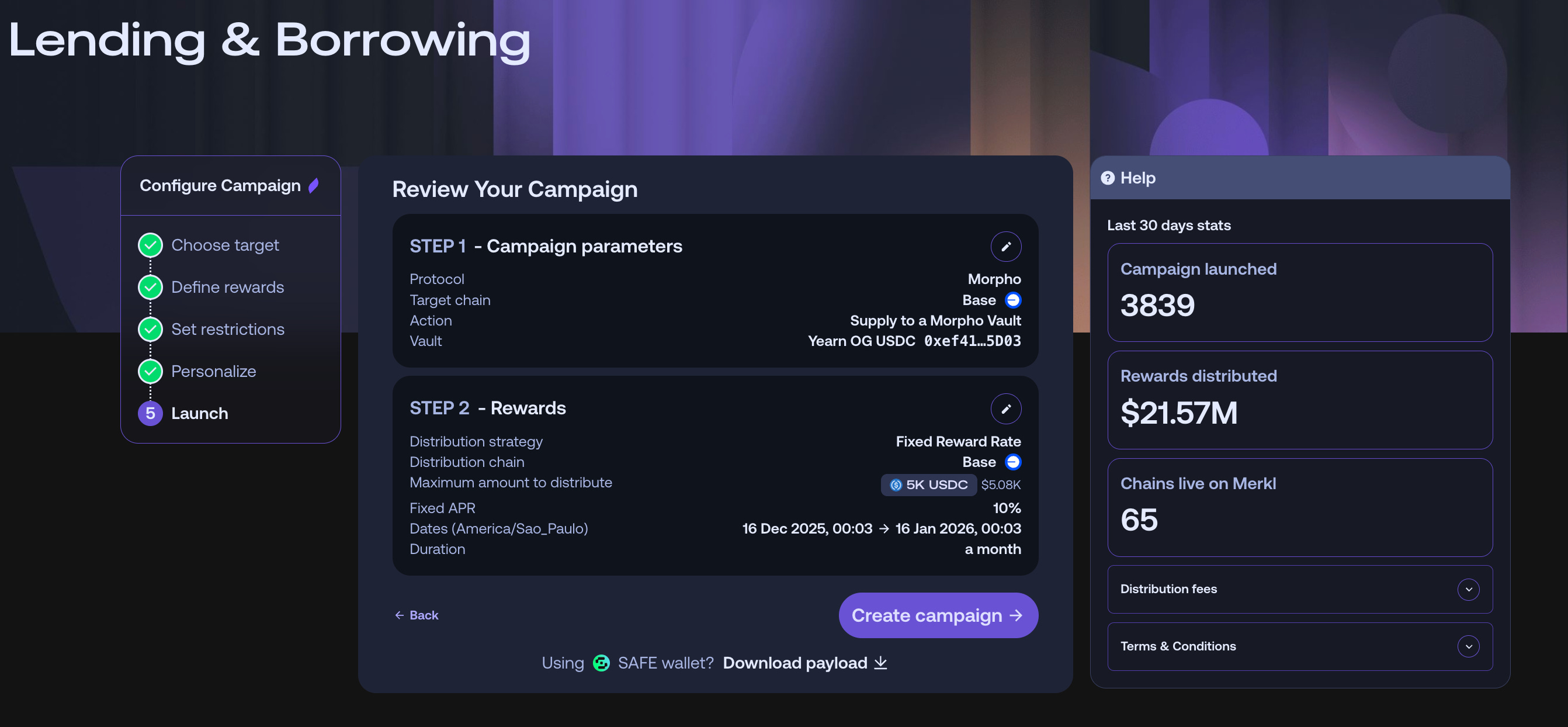
Finally you’ll be given the option to launch your campaign with all the details available.
Now a quick side note here: we had planned to run our own Merkl campaign for yieldseeker using Merkl Studio. However since our setup required a slightly more complex campaign we needed to run something known as an “encompassing campaign”, which required writing some code and fiddling around.
So while you saw the process for creating a standard campaign through the Merkl Studio UI above, our actual campaign was a bit more complex and required reaching out to the team. The the final output of the campaign though was this shown below:
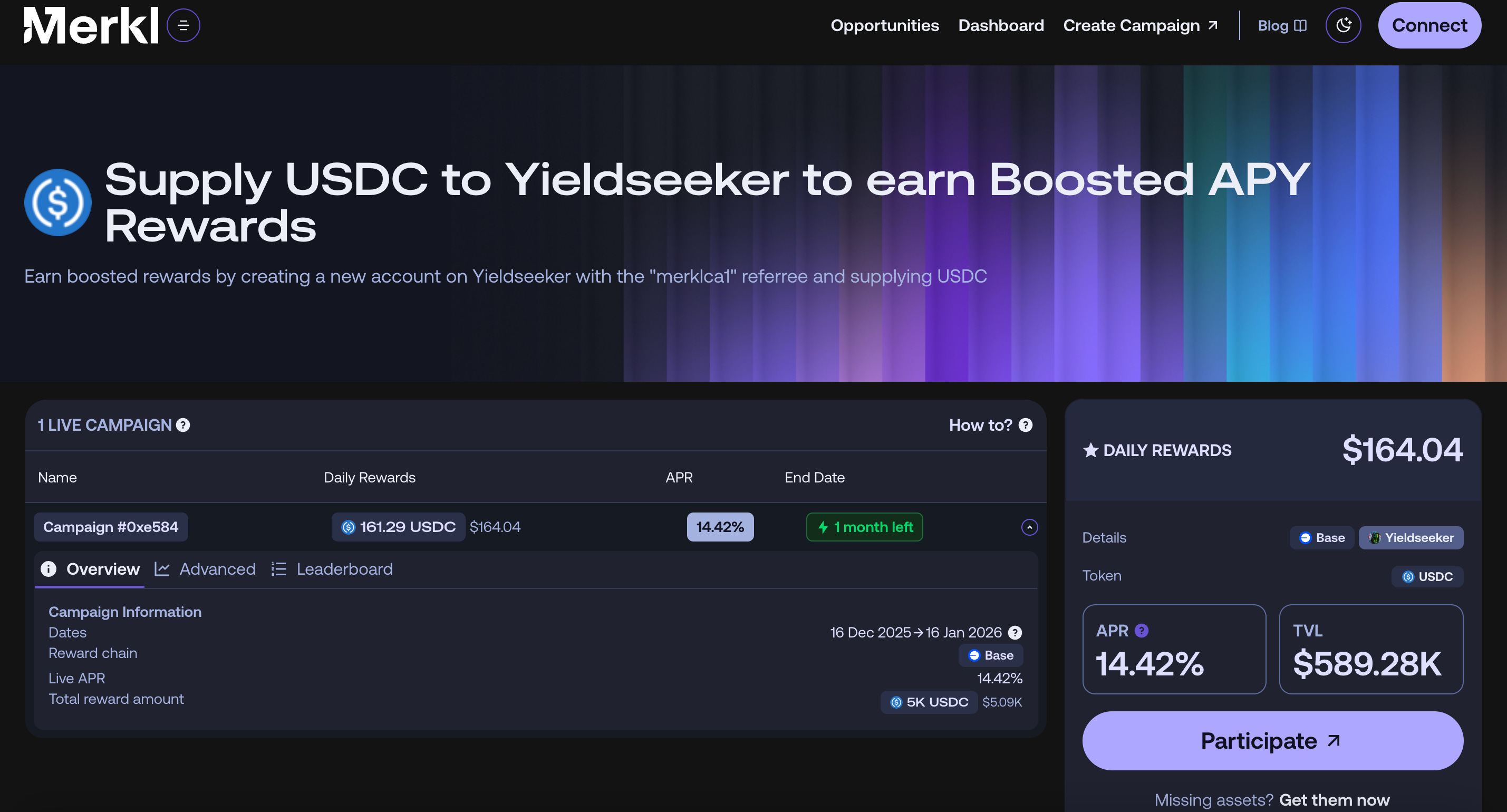
This campaign is currently live for 30 days from the original date of this post, so you can check it out if you want to earn some extra rewards from using yieldseeker!
Earn rewards
You now know how to find hundreds of incentivised opportunities on Merkl and earn rewards from them, or even to create your own opportunity for a specific project as we did above.
If this is your first time using Merkl then you might want to get started with our yieldseeker campaign just to trial it out and see how you find using the platform - https://app.merkl.xyz/opportunities/base/ENCOMPASSING/0x09bc81decb109599f38cc1edf52ec5109b8185ba
Or you can try any of the other campaigns available just by exploring all the opportunities as we saw above.
Projects have set up these campaigns because they want you to discover them, its a win-win situtation so go wild and see what you can find and earn from them.
Now that you’re aware these opporutnities are available, the only question left to ask is: will you take advantage of them?

Whenever you’re ready, these are the main ways I can help you:
Want high returns? Earn up to 14% APY with Yield Seeker!
Love Web3 insights? Follow @afoxinweb3 on X!
New to crypto? Join our beginners community to master crypto fast!
Building a Web3 app? Get our expert product development support!