
TLDR:
Zcash has been one of crypto’s best performers this past cycle, rallying well over 1,000% after years of being written off as a forgotten privacy coin.
Zcash built shielded transactions directly into the protocol using zk-SNARKs. In Zcash privacy is embedded while in Bitcoin and others privacy tools are bolted on.
A critical bug in Zcash’s Orchard pool was found using AI-assistance. The response was rapid and impressive culminating in the Ironwood upgrade.
Bitcoin’s privacy tools and alternatives like Monero have been getting attacked by regulators for years, leaving Zcash as the strongest crypto in the privacy fight.
One of the biggest winners in crypto this past cycle has been Zcash. This cryptocurrency has been around since 2016 but has only recently had a price-wise revival since mid-to-late-2025. This revival is strongly related to the narrative of privacy growing fast, with Zcash and Monero being the biggest privacy coins in the crypto space.
A big price drop happened a few months ago due to a bug that was uncovered that meant that new coins could be created out of thin air without anyone noticing! However, this bug was rapidly patched and then fixed in the latest update Ironwood. Read on below to learn more about Zcash and the recent Ironwood release.
If this post resonates with you and you enjoy the content then please share it with a friend and get rewarded for doing so!

This blog goes out weekly to over 20,000 subscribers. Please message me if you’re interested in sponsorships or partnerships.
Zcash
If you’ve been in crypto for a while then you know Bitcoin is not truly private, it’s only pseudonymous. Every transaction sits on a public ledger that anyone can trace. Wallet addresses, amounts, timestamps, all of it is traceable forever. Zcash (ZEC) is one of the major cryptocurrencies that was built specifically to fix this.
Zcash is a privacy-focused cryptocurrency that lets you optionally hide the sender, receiver, and amount of a transaction using cryptography in what the network calls shielded transactions.
ZEC was originally released in 2016 and peaked price-wise with over $700 back in 2018, but mostly lost price momentum since then. This was until last year where the privacy narrative picked up again and it shot back up to around $700 in November 2025.
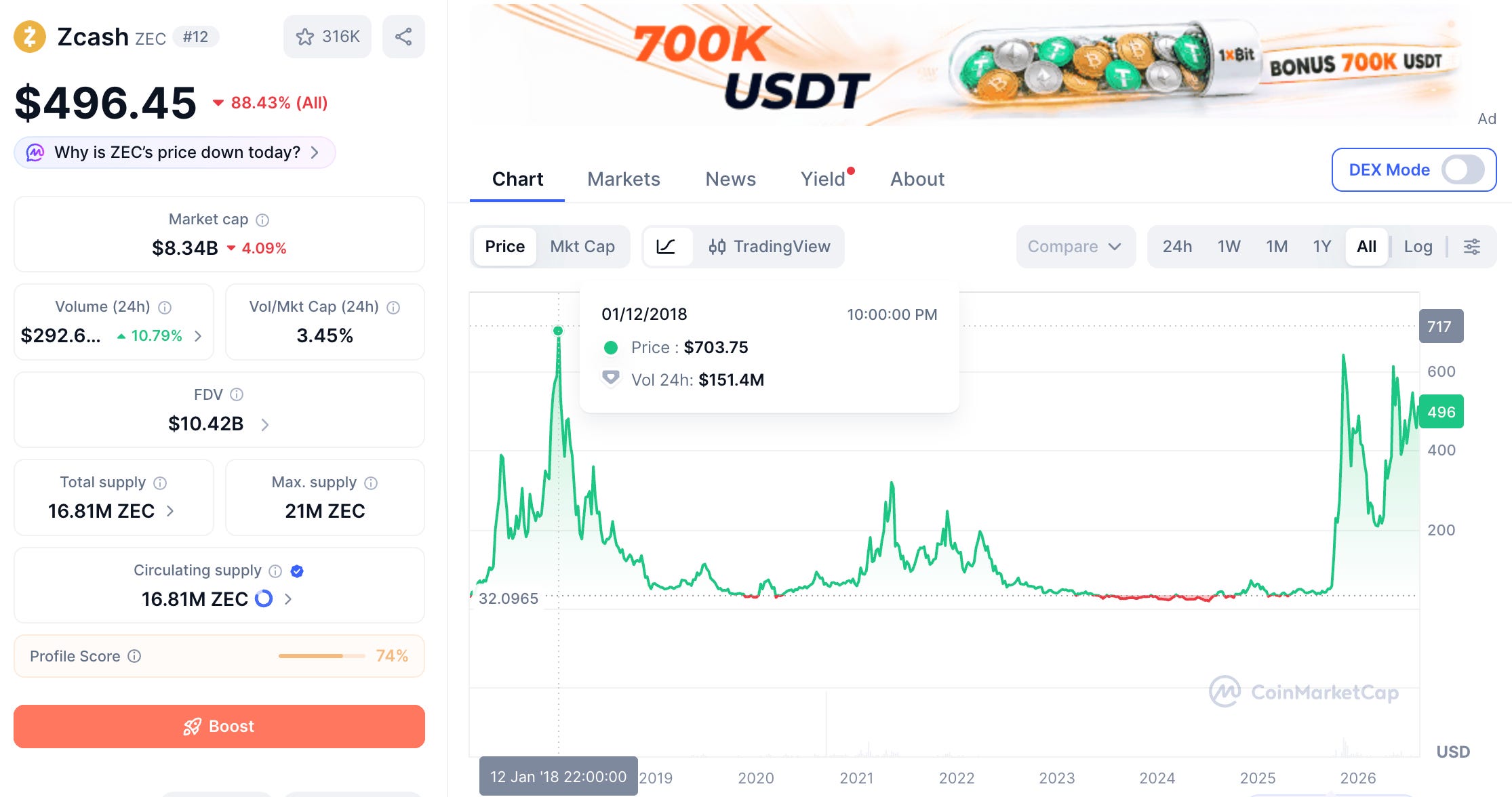
ZEC has been one of the best-performing large-cap assets in this past crypto cycle, growing over 1000% at that peak, from roughly $40 to around $700. That pushed its market cap past $9 billion, enough to overtake Monero (its largest competitor) and land inside the top 15 crypto assets by market cap.
It hasn’t been a straight line though. ZEC corrected down hard from there to as low as $200 in mid-2026, before climbing back to around $500 now.
What exactly is Zcash
Zcash launched 28th October 2016, built by Electric Coin Co. (ECC) and founded by Zooko Wilcox. The Zcash Foundation formed separately in March 2017 with its own endowment, as a nonprofit steward distinct from the for-profit ECC.
Zcash’s privacy is predominantly achieved through what they call “shielded” transactions. For this Zcash uses “zk-SNARKs”, a form of zero-knowledge proof that lets the network verify a transaction is valid (ie. has no double-spending and correct amounts), without revealing who sent it, who received it, or how much moved.
I’ve covered Zero Knowledge Proofs earlier this year in the post below. The core idea is that ZK proofs let you prove something to be true without revealing the information itself, like proving you’re over 18 without showing your ID.

Zcash were the pioneers of ZK privacy in crypto with their shielded pools, although these shielded pools themselves have gone through three big generations.
The first called Sprout launched in 2016 as the original version, but it required a “trusted setup ceremony”, which meant that individual parties had to come together in a one-off ceremony to create the secret cryptographic parameters needed for ZK proofs to work. On top of that shielded transactions were slow and expensive to use.
Next came Sapling in 2018 and cut compute and memory costs by over 90%, finally making shielded transactions usable on a phone. Then Orchard followed in 2022, introducing their “Halo 2” proving system that removed the need for a trusted setup, and added “unified addresses” so all pools could work with a single address format.
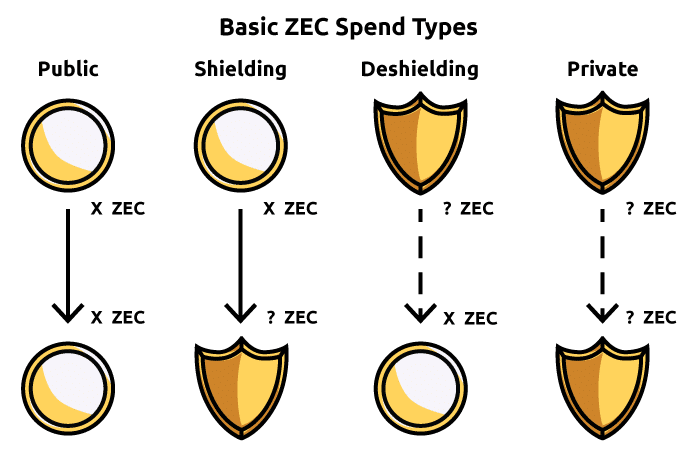
The most popular Zcash wallet Zodl, originally called Zashi and created by the ECC team, helped move users towards privacy as the default. Zodl won't let you spend transparent ZEC directly, it shields incoming funds first, and uses unified addresses so the wallet automatically picks the most private option available.
Zodl also routes traffic over Tor for network-level privacy. Older wallets left the choice of privacy to the user, which meant privacy was only as strong as people's willingness to opt into it.
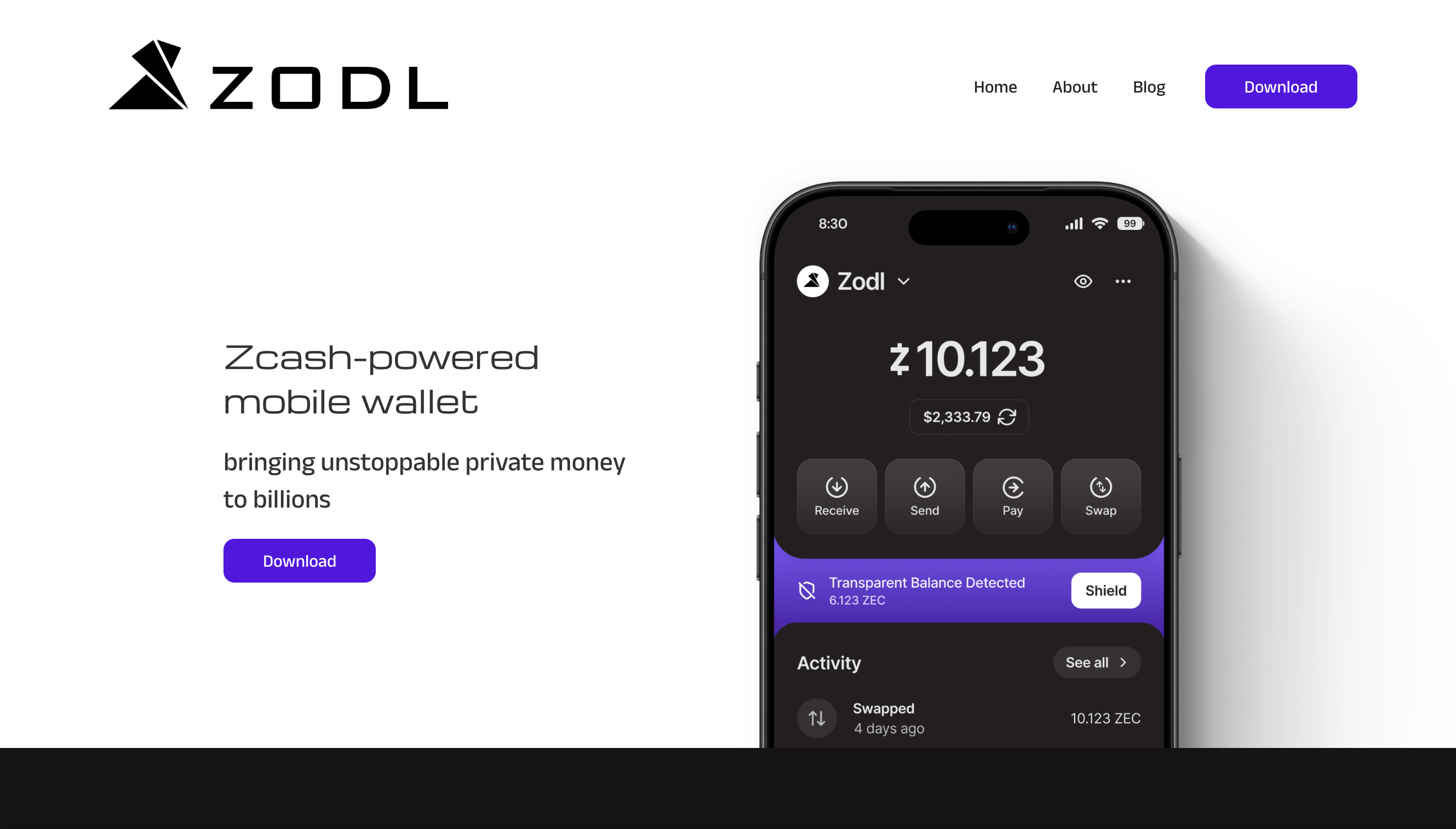
It’s worth noting that the transition to Zodl was a little messier than a simple rename. In January 2026, ECC's entire development team resigned after a dispute with ECC's nonprofit parent board over privatizing the Zashi wallet to raise outside capital, a move that the board blocked over legal risk.
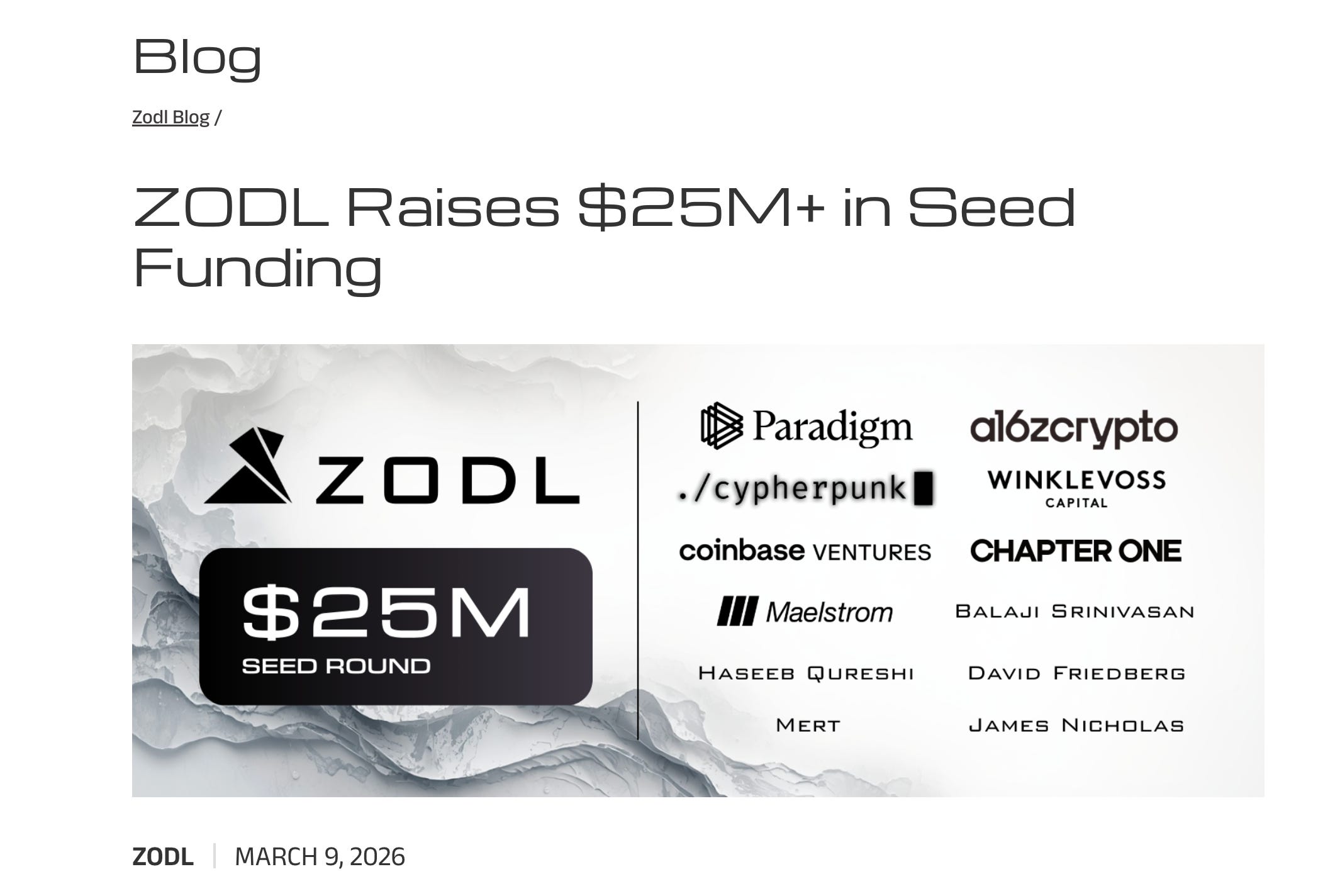
The departing developers formed an independent company called Zcash Open Development Lab (ZODL) and went onto raise $25m+ in a seed round from some of the biggest names in the space.
Thanks to all the Zodl work, people are actually using Zcash today together with its privacy features, rather than just holding the token speculatively. Shielded supply hit an all-time high around 5.17 million ZEC in April 2026, about 31% of circulating supply, up from roughly 11% the year before!
Privacy that Bitcoin never won
Bitcoin has tried to solve for privacy before. Tools like “CoinJoin” with Wasabi, Samourai, and JoinMarket attempted to bolt privacy onto Bitcoin by mixing coins between users so an outside observer couldn’t easily tell who paid whom.
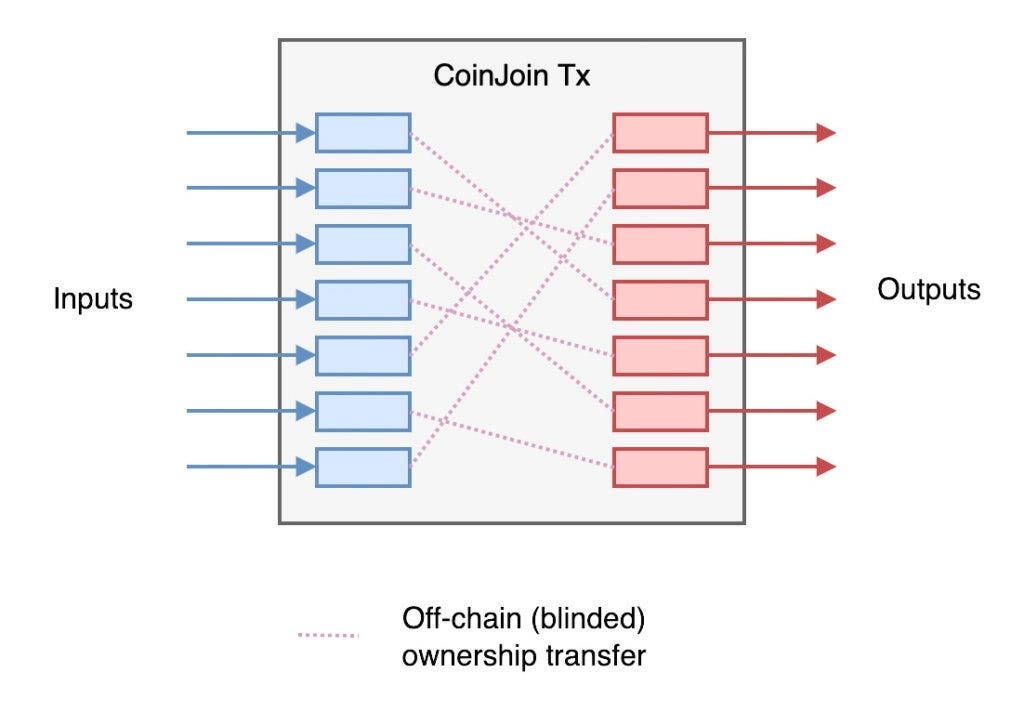
That approach has been attacked by law enforcement though. Samourai Wallet was shut down by the US’s DoJ in April 2024, and its founders were sentenced to prison.
Wasabi’s coordinator, zkSNACKs, was discontinued in June 2024 after the Samourai arrests created more regulatory risk across the space. Even the original JoinMarket repository was archived in April 2026. So two of the three major CoinJoin tools are functionally gone, and the third survives with real caveats.
The structural problem for Bitcoin has always been the same, namely that privacy was an optional service layered on top, run by identifiable coordinators, which made them a legal target. Zcash’s privacy lives in the base protocol itself so there’s no coordinator to sue or shut down.
Importantly, Zcash is also more palatable to exchanges than Monero, crypto's other major privacy coin. Monero shields every transaction with no exception, which sounds like the more private option, but that’s exactly what's made it a target.
Binance delisted Monero in February 2024, and Kraken and others dropped it for European and UK users shortly after, because mandatory, all-or-nothing privacy leaves exchanges with no way to comply with transaction-monitoring anti-money laundering rules.
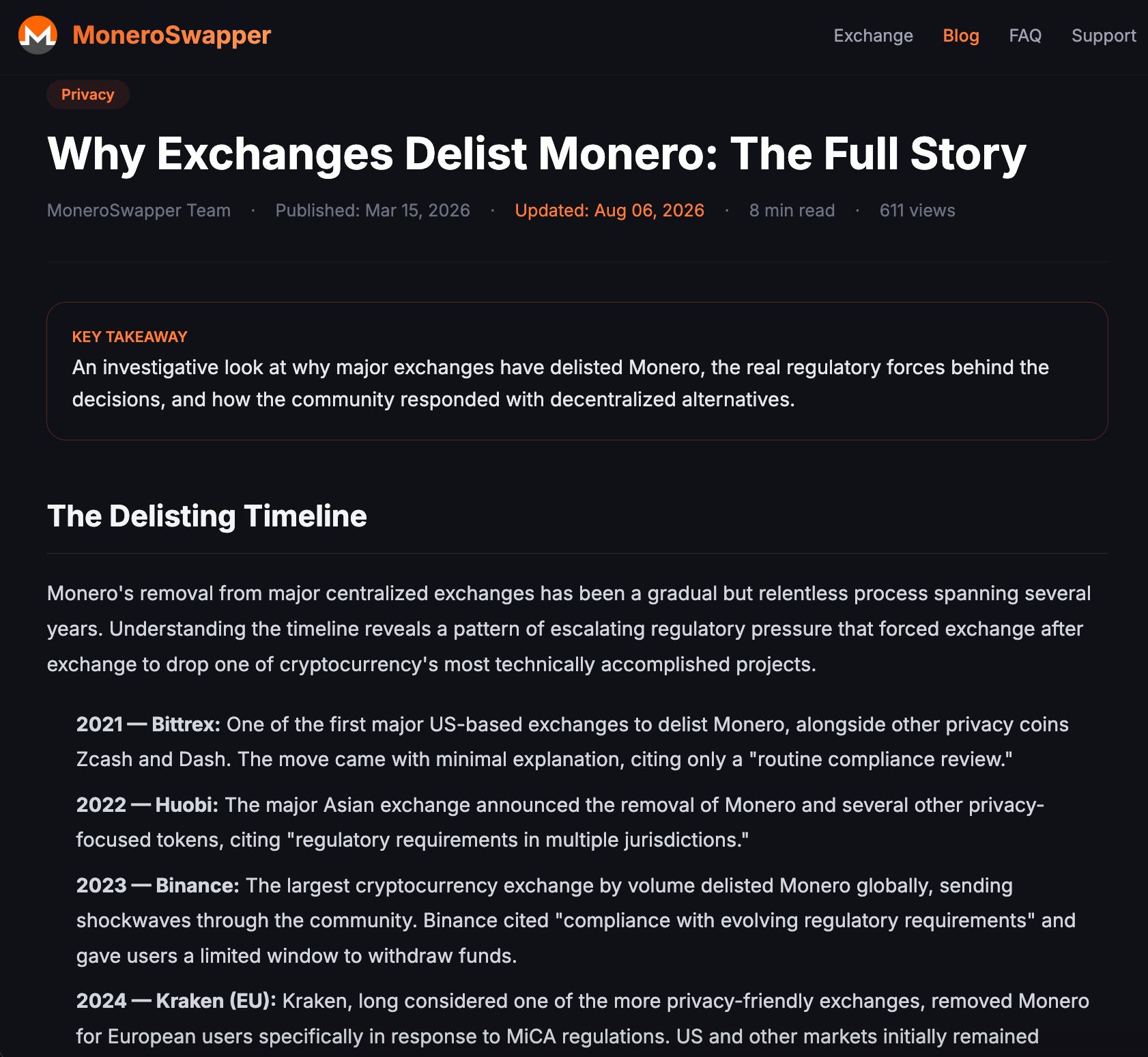
Zcash's shielding is optional, transactions can be transparent or shielded depending on what the user chooses, which gives exchanges a compliant transparent option for regulators to accept. That's part of why Zcash has stayed listed on major platforms while Monero keeps getting pushed off them.
The SEC also officially closed its roughly two-year investigation into the Zcash Foundation on 15th January earlier this year without recommending enforcement action. Institutional interest followed with Multicoin Capital disclosing a “significant position” in ZEC on 5th May 2026.


There’s a broader narrative shift happening too with privacy assets moving from being seen purely as regulatory risk, to something closer to legitimate infrastructure because of the rising concern around AI-driven surveillance.
If the thesis holds that Bitcoin has lost the privacy fight and Zcash took the crown from Bitcoin and Monero then it still has a lot of potential upside - it’s this exact possibility that has caused the market to push up the price of ZEC this past year.
The Orchard bug and Ironwood
However, earlier this year in June ZEC price took a sharp tumble from around $620 to $360 in a matter of days after it was discovered that a a bug in the Orchard shielded pool’s circuit meant someone could, in principle, pass false inputs to its cryptographic checks, and create new ZEC out of thin-air!
That’s about as serious as a bug gets for a privacy coin, since shielded transactions are opaque by design so there’s no public trail to catch fraudulently minted coins after they’ve been created.
This vulnerability was found with an AI assisted code review, just like the Coldcard exploit we discussed last week and that we’ve seen is on the rise.

Security researcher Taylor Hornby found the vulnerability on 29th May 2026, using his custom AI-assisted code review framework that he built himself. He pointed it at Zcash’s codebase, ran a breadth of tests in a way that no manual review had done so in four years since Orchard’s release, then validated the exploit in a test environment.
The emergency response from the community was fast. A soft fork blocking new Orchard activity went live 1st June to stop the bleeding without publishing details of the bug itself. A hard fork, called NU6.2, followed on 3rd June with the actual corrected circuit, restoring Orchard transactions within about five days of discovery.
Rather than stop there though, Zcash’s decentralised development team then spent 60 days rebuilding the software stack properly. 51 engineers coordinated with over 1300 pull requests, culminating in the “Ironwood” upgrade, NU6.3, activated just a few weeks ago on the 28th July!
The update opened up a brand new shielded pool called Ironwood and closed the Orchard pool to new deposits. Existing funds on Orchard have to migrate across through what’s being called a “turnstile.” This new pool maintains all the beneficial properties of Orchard while fixing this existential bug.
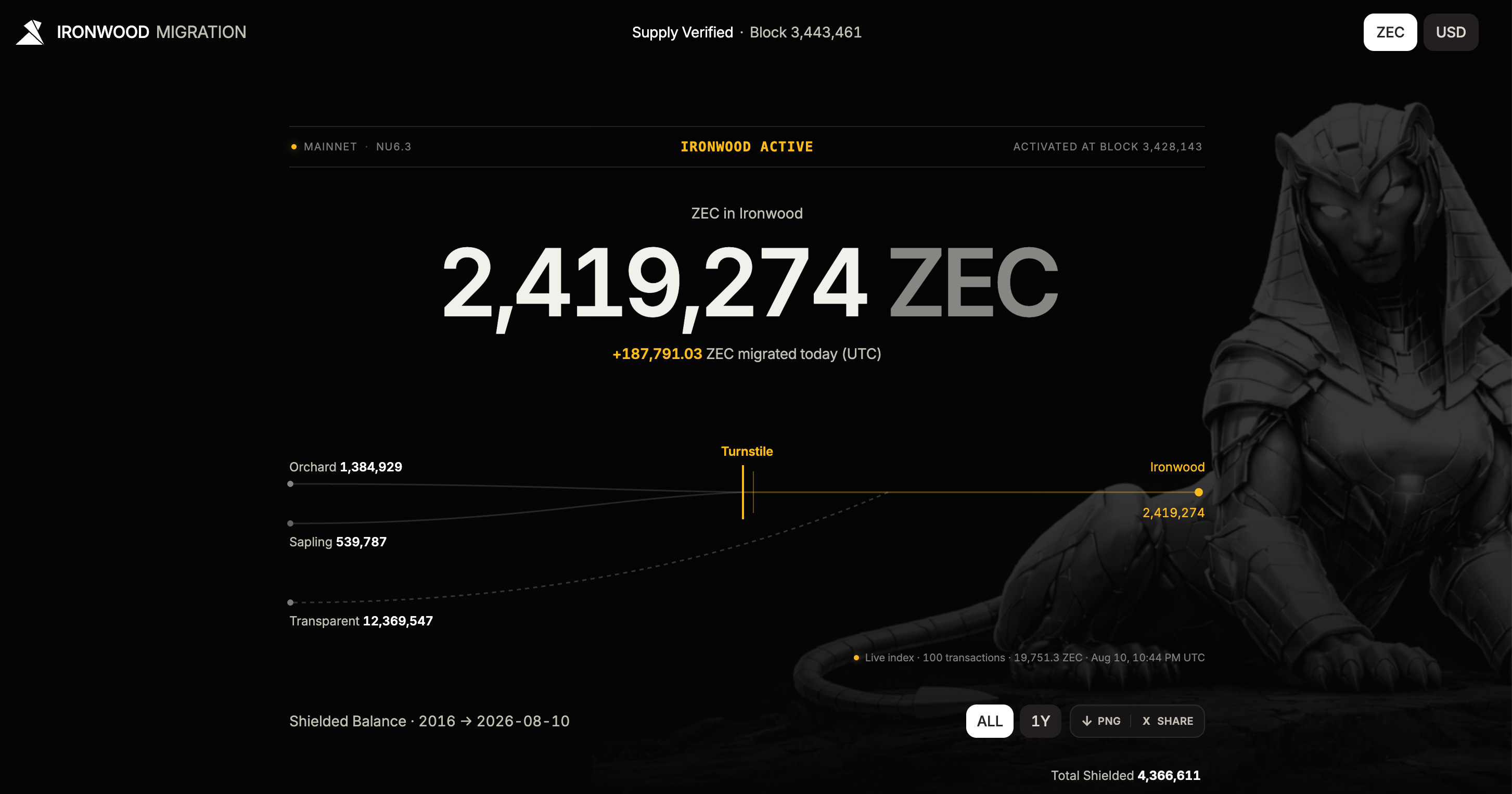
The majority of this work, came from ZODL, the company that the departed ECC devs formed, working alongside some other key ecosystem teams. Today Zcash’s development is genuinely spread across these different independent groups rather than sitting inside just ECC, and this incident was a real test of that.
Alongside the code fix, a separate team called Project Tachyon, working with the security firm zkSecurity, produced a machine-checked mathematical proof that Ironwood’s new zk-SNARK circuit cannot contain an undetectable counterfeiting bug of this kind again.


The level of rigour here is incredible considering that most projects just patch exploits and move on. The Zcash developers have gone above and beyond by proving that this entire class of bug is now impossible.
Putting it all together, you can see that Zcash’s community and devs handled this crisis incredibly well. They had an emergency stop-gap in under a week, a full rebuild in 60 days, and gave a real lead time to exchanges, wallets, and miners to upgrade, plus topped it off with a formal proof of the fix shipped alongside it all!
Privacy king
Zcash spent years as a fairly stagnant, half-forgotten privacy coin before this run. The huge price jump of over 1000% that it made last year brought it back to the levels at its 2018 peak, and it seems to be forming a new position of price stability ready for when crypto picks up again.
The Orchard incident could easily have been the story that killed the privacy-coin comeback narrative completely, as a coin supply-integrity bug is about as bad as it gets.
Instead though, the Zcash community and devs fixed the bug incredibly fast and rebuilt it all in just 60-days, arguably strengthening Zcash’s market case. They showed the market what a robust and mature crisis response looks like and positioned Zcash as the privacy king.
This is even more impressive when you consider the fragmentation of the devs with many having left ECC to move to the newly created ZODL.
If Bitcoin’s really lost the practical privacy fight and Zcash is the asset benefiting from that then there’s a real case for it having more room to grow price-wise. Whether that thesis actually plays out is something to keep an eye on.

Whenever you’re ready, these are the main ways I can help you:
Want high crypto returns? Earn up to 14% APY with your own Yieldseeker agent!
Love Web3 & AI? Follow @afoxinweb3 on X for insights!
Entrepreneur using AI? Join our AI community to accelerate your results!