
TLDR:
x402 lets AI agents pay for things on the internet by themselves, using a web status code that was reserved for payments in 1997 and mostly ignored since then.
An agent asks for some data, the server replies with a price, and the agent pays a few cents in USDC to get it, with no account, card, API key or subscription.
Below you’ll see how a Grok Bot agent with a wallet with USDC can pay Glassnode for premium Bitcoin data by itself.
Visa, Mastercard, Google and Stripe are all backing it, but real usage is still small once the farming is filtered out.
One very interesting innovation that’s emerged recently is the rise of the x402 payment standard. The idea was actually created during the early Internet but only implemented very recently with AI agents in mind.
Today I decided to write about x402 and make use of it so that you can see how you can create your own agents that make use of it yourself. Read on below to learn about it and see a real example of an agent using it to pay for a service.
If this post resonates with you and you enjoy the content then please share it with a friend and get rewarded for doing so!

This blog goes out weekly to over 20,000 subscribers. Please message me if you’re interested in sponsorships or partnerships.
x402
Every time your browser asks a website for a page, the server replies with a three-digit code. Most of the time it’s 200, meaning everything worked, but there are other codes and the one almost everyone knows is 404 “Not Found”.

When the rulebook for these codes was written in 1997, almost every number got a clear job. There was one key exception, code 402, “Payment Required”, which was marked “reserved for future use”.
The people designing the web assumed it would eventually need a built-in way to charge for things. That never happened and 402 sat unused for almost 30 years!
The reason is that the internet ended up with credit cards as the main way to pay. Cards need an account, a checkout page and a processing fee, and that fee makes charging someone a few cents unfeasible.
In May 2025, Coinbase launched x402, an open standard that finally gives code 402 a job by using stablecoins to make the payment. In July this year this moved into the x402 Foundation under the Linux Foundation.
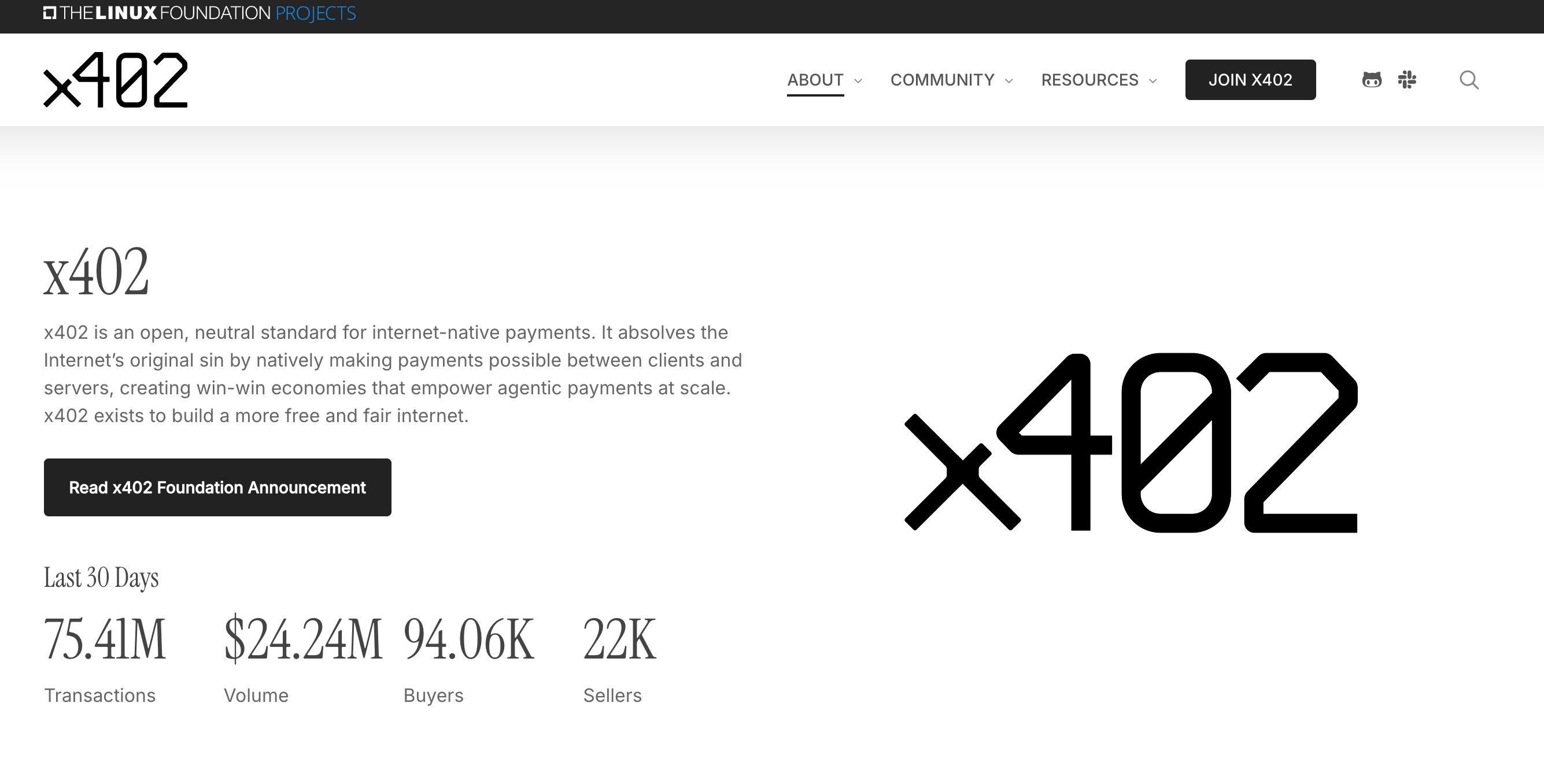
The foundation already has over 40 members including Visa, Mastercard, American Express, Stripe, Google, AWS, Cloudflare, Circle and Coinbase. With x402 you can get software to pay for things on the internet by itself, and the software it’s really built for is AI agents.
How It Works
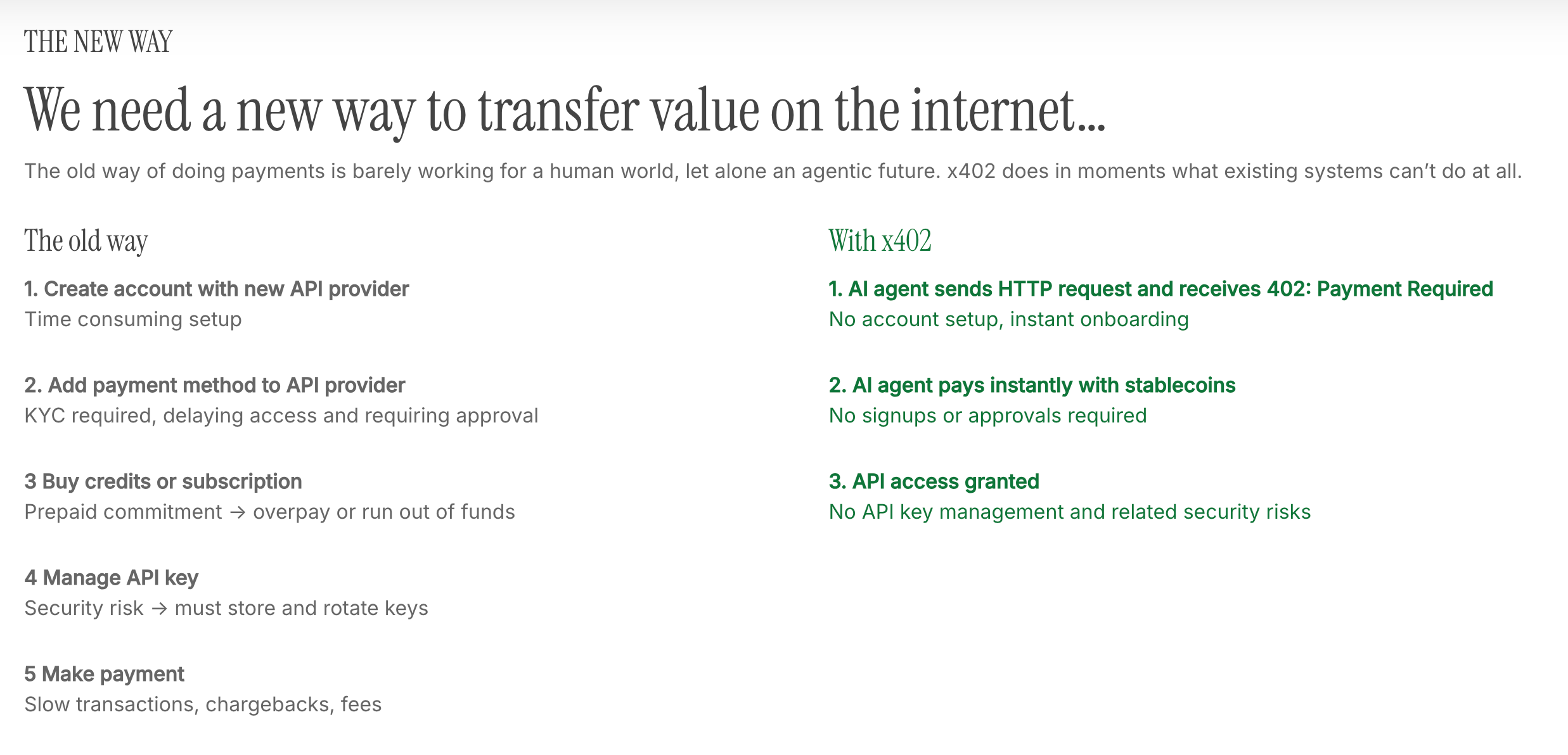
Today, when an agent needs data from a paid service, a human has to sign up, add a card, choose a subscription and paste in an API key for the agent.
That’s fine for one service but it’s awkward when an agent might want to use dozens of services, a few cents at a time, without needing anyone to hold its hand.
x402 replaces all of that with four steps:
The agent asks a service for something, such as a metric about Bitcoin.
The server replies with a 402 code and the price, for example 5 cents.
The agent signs a USDC payment from its own wallet.
It sends the same request again with proof of payment attached, and the server hands over the data.
The whole thing takes a couple of seconds, and neither side needs an account with the other.
Stablecoins are what make this possible where cards couldn’t. When a card processor approves a merchant it takes on that merchant’s risk, so a tiny tool with no website and no track record is very hard to get approved. As Noah Levine of a16z crypto put it, processors “reject applicants they cannot underwrite.”
On top of that, the card fees can be larger than the payment itself as I mentioned above, which in itself makes these sorts of micropayments unworkable.
However, a USDC payment on Base settles in seconds and costs a fraction of a cent, which means charging 1 cent for something is finally possible!
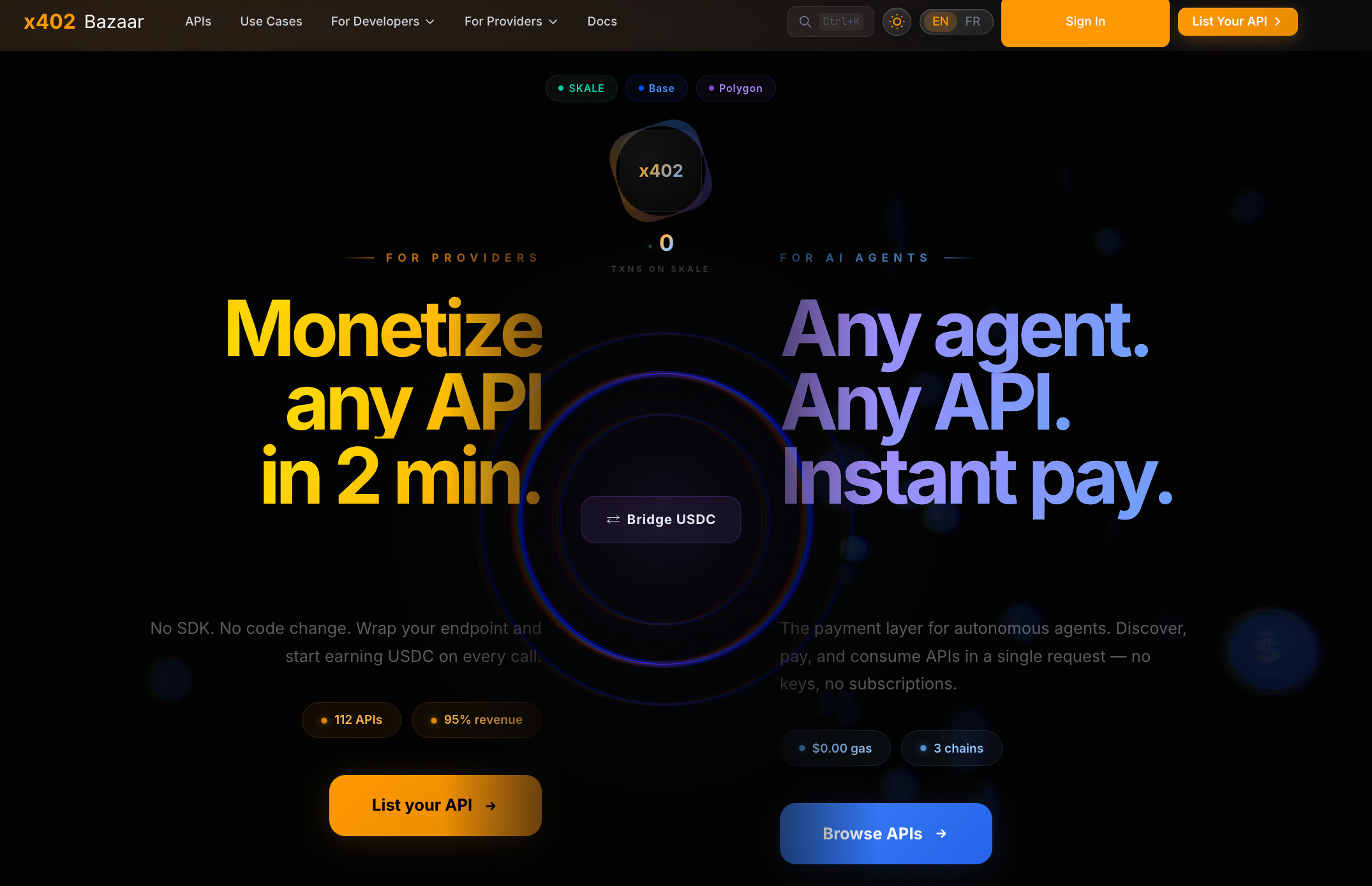
Services that accept x402 can list themselves in a directory called the “Bazaar”, so an agent can search for what it needs and see the prices before it spends anything.
How to Use It
A few weeks ago I wrote about Grok Bot, xAI’s always-on agent with its own computer in the cloud. It could do almost everything by itself, and only handed control back to me for a login, a CAPTCHA or a payment confirmation. So I wanted to see if I could take payments off that list!

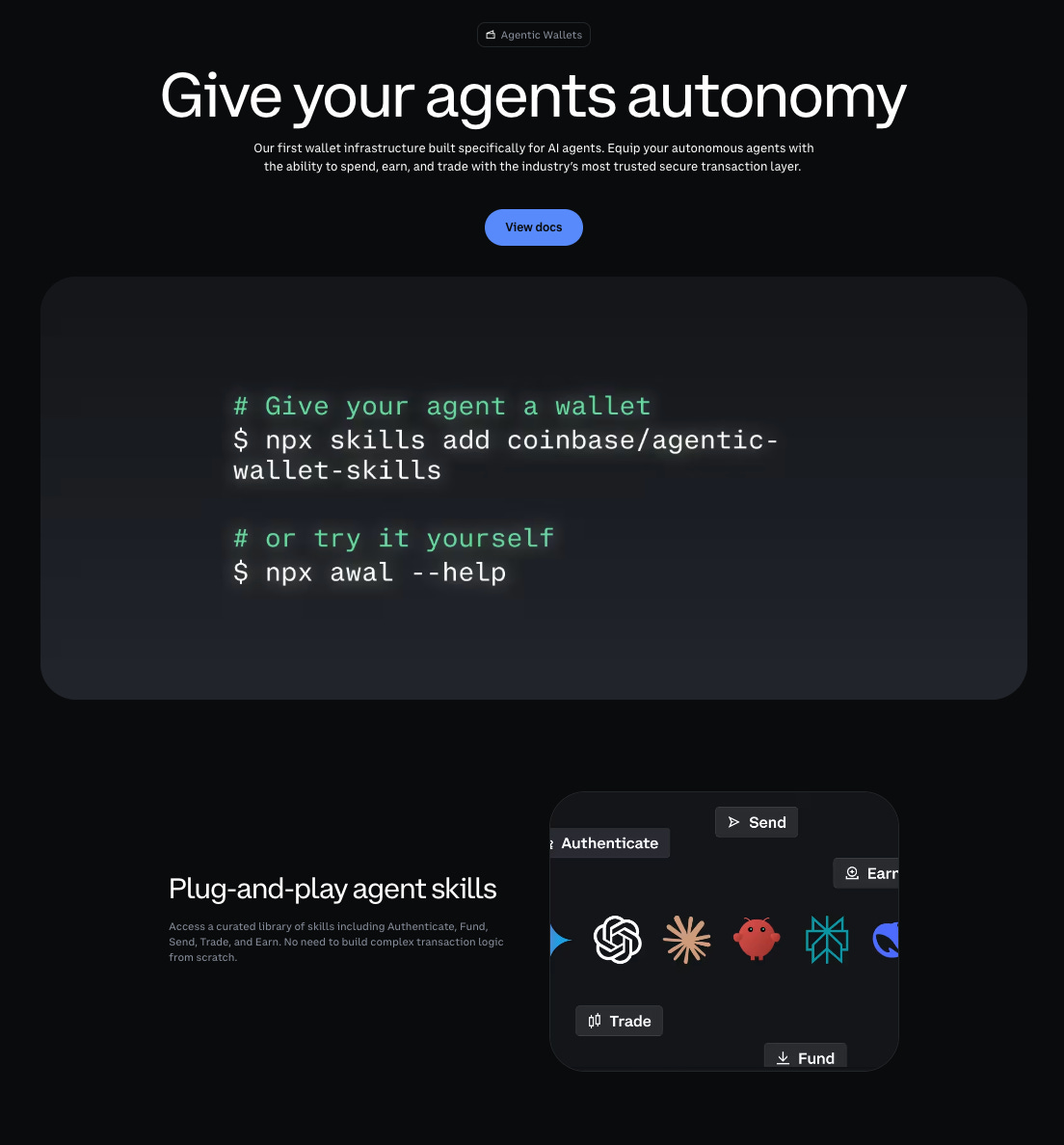
The tool for this is Coinbase’s “Agentic Wallet”, a wallet designed for an agent to hold USDC and pay for x402 services. Coinbase keeps the private keys, so the agent never touches them, and you set spending limits that the agent itself can’t change. It works on Base, Solana and Polygon.
Here’s how I set it up:
First, I asked Grok Bot to install the Agentic Wallet skill on its computer. The agent was able to find and install it by itself.

On completion it tried to sign in with an email address. The agent started the login, a 6-digit code landed in my email inbox, and I passed it to the agent.
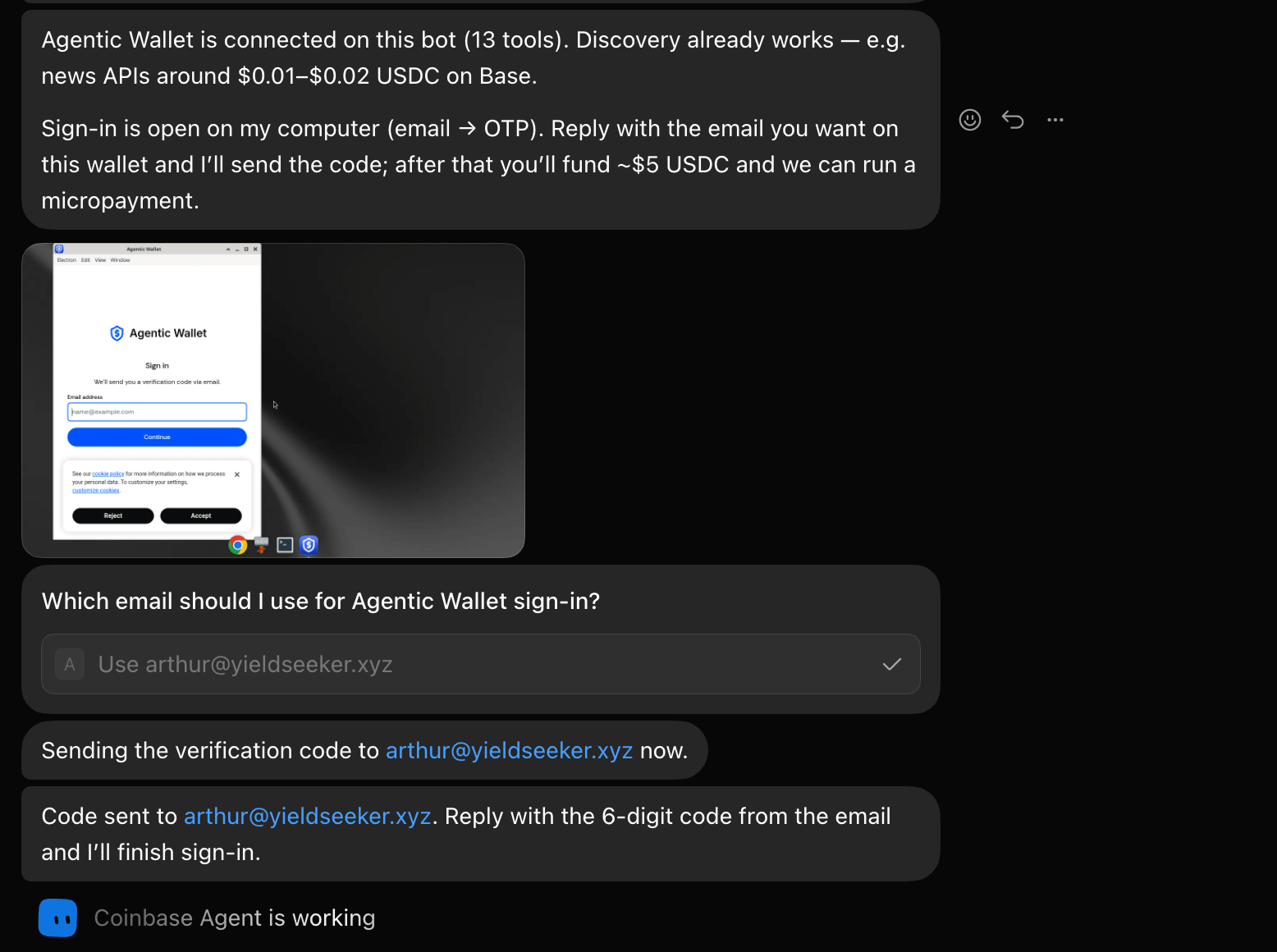
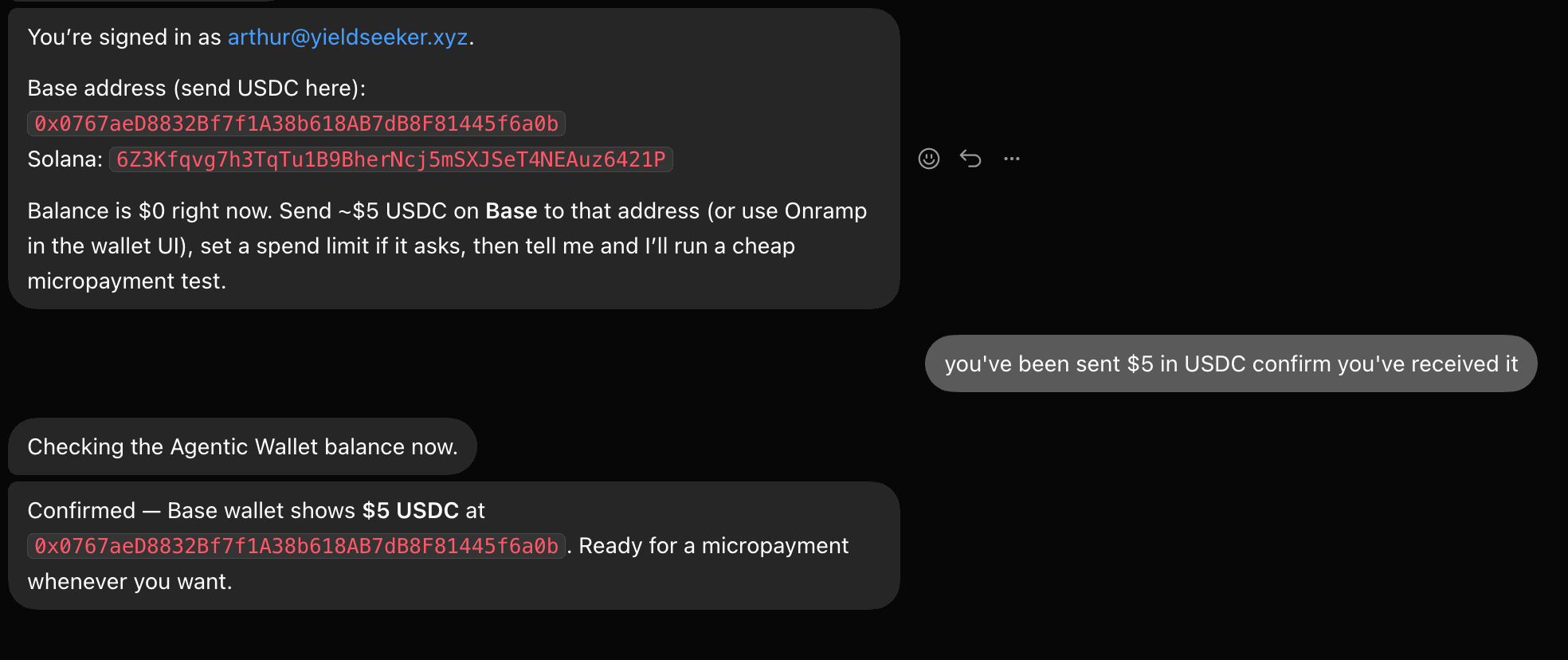
I then asked the agent for its wallet address and sent it $5 of USDC on Base. My agent now had its own money!
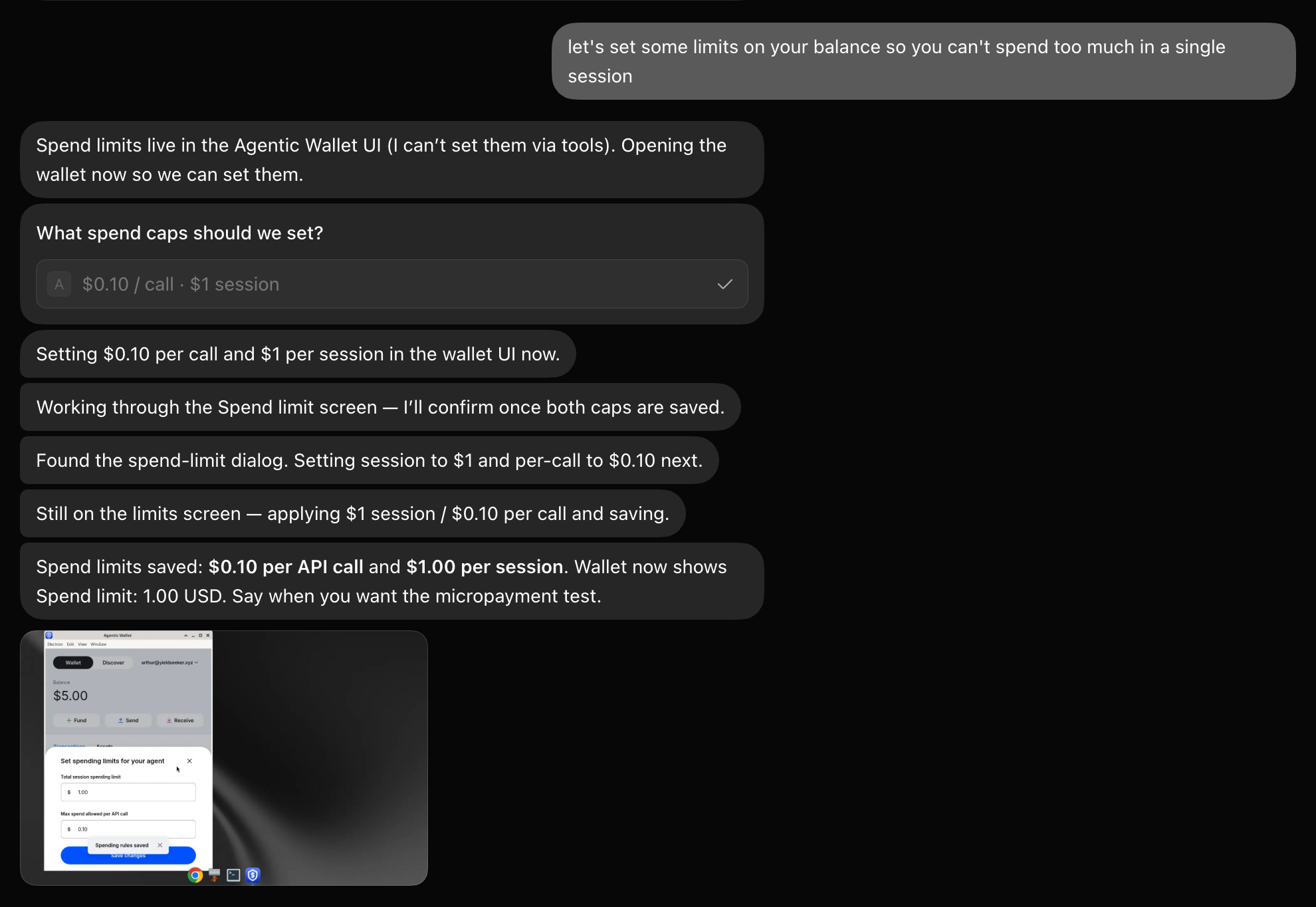
Next I set the limits to 10 cents per call and $1 per session, so even it couldn’t burn through the balance.
Now with all that setup done, I gave the agent a real job. I wanted data that’s genuinely worth paying for, so I picked Glassnode, one of the best-known onchain analytics platforms in crypto.
Glassnode’s data normally sits behind a paid subscription, but through x402 it charges a flat 5 cents per metric, paid in USDC on Base.
I asked the agent to check if 2026 is behaving like the scheduled down year of the 4-year cycle, and that we’re now heading back up.
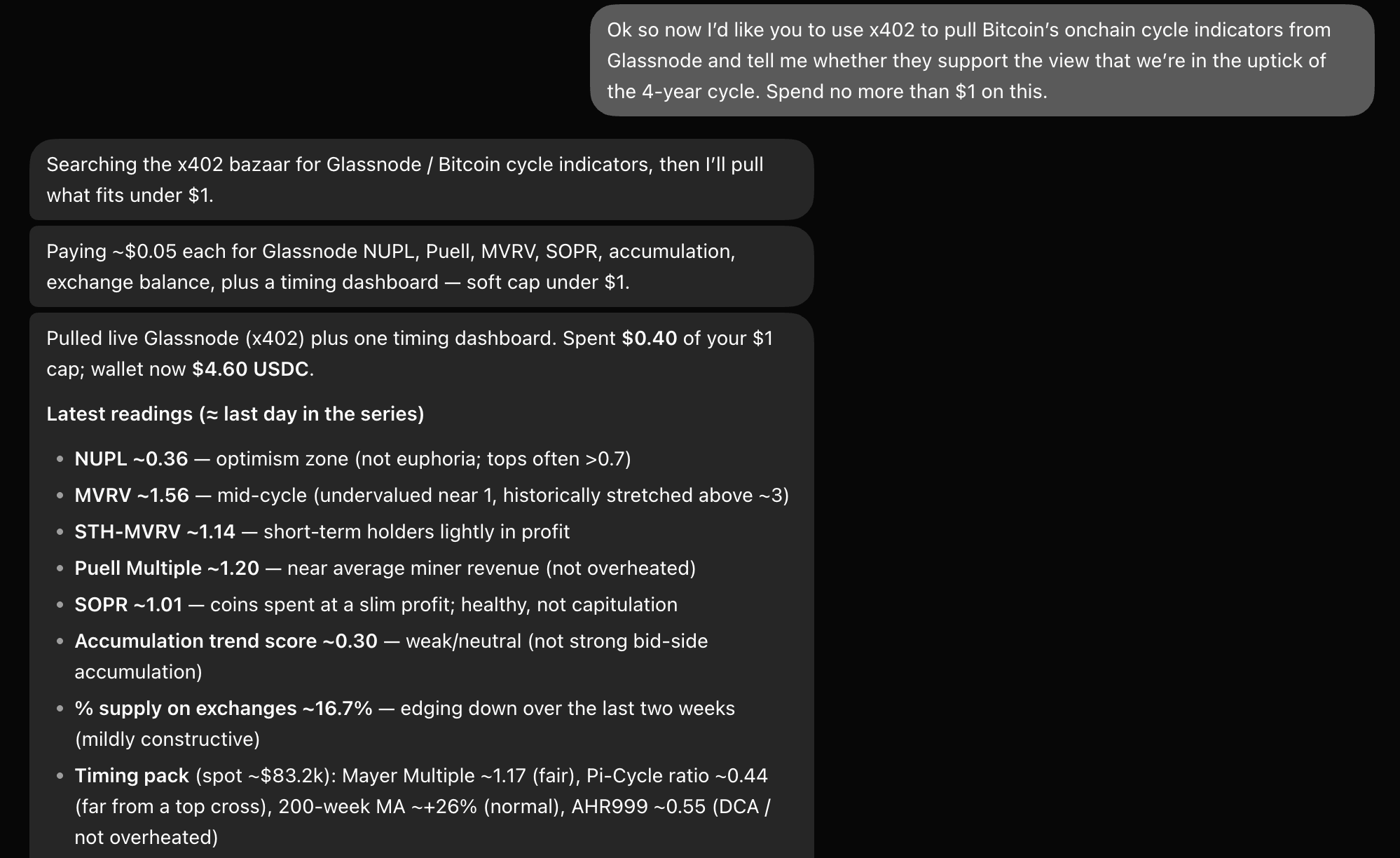

Essentially the data collaborated with the 4-year cycle thesis, although the bear wasn’t so deep this time so it could also be interpreted as a more mid-cycle moment. More importantly though we’d gotten this data throgun an x402 payment, so I asked the agent just how much it had spent.

As you can see it spent $0.40 on the data leaving $4.60 remaining in the wallet! And all of this can be tracked onchain, with the agent having spent $0.05 several times to fetch that data.
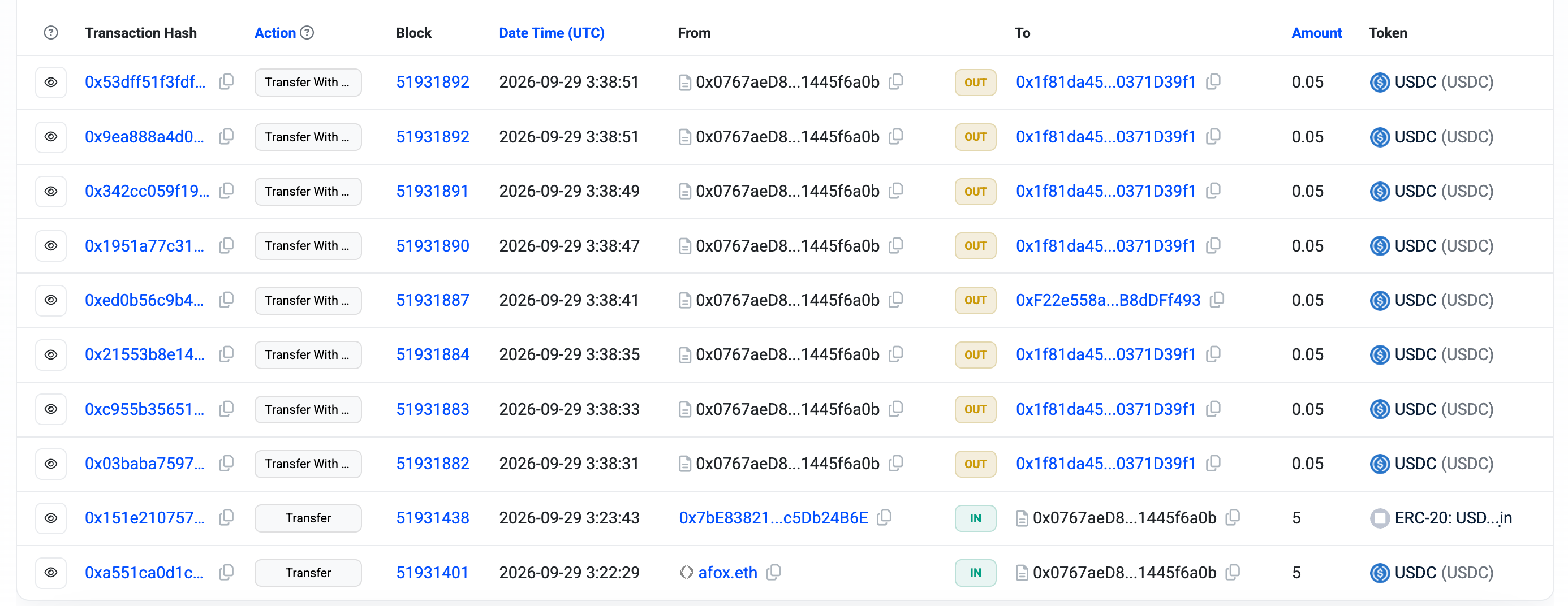
As you can see this all worked surprisingly well and smoothly. This was just a toy example but you can picture how it could lead to genuinely powerful use-cases when you have agents doing complex work for you.
Note that we did this with Grok Bot but it would have just as easily worked with Claude, OpenAI and other agentic solutions.
Real Usage
The list of backers behind x402 is about as heavyweight as it gets in payments. Mastercard launched a product for machine payments in June, and Cloudflare announced a way for websites to charge agents in stablecoins in July.
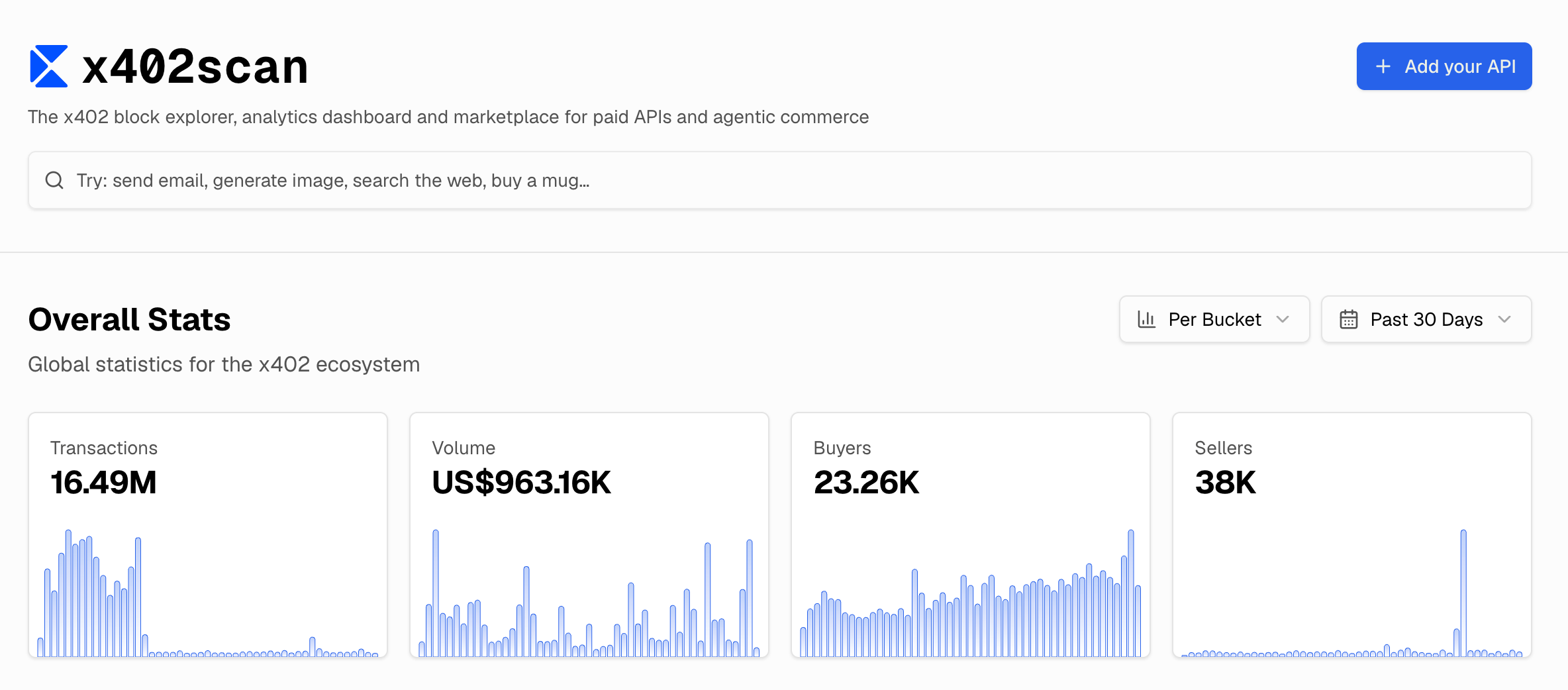
Coinbase says x402 processed more than 230 million transactions in just over a year, with Coinbase handling more than half of them.
Those are raw numbers though. Artemis, working with Visa, went through the data and filtered out wash trading, wallets paying themselves, and developer testing.
As of April, around 178 million transactions and $136 million of volume shrank to 110 million transactions and roughly $15 million. That removed 89% of the money, and the average real payment came out at about 14 cents.
A lot of the fake activity came from a memecoin on Base called PING, which could be minted by making an x402 payment. It cost almost nothing, so people ran it on a loop. Coinbase’s own head of AI product has said that 25% to 30% of transactions may have come from people trying to climb public leaderboards.
Daily settlement volume has also fallen about 93% this year to around $28,000 a day, after a wave of testing in late 2025 died off.
Nonetheless the big players clearly believe this as the future. Stripe launched a competing standard, the Machine Payments Protocol, with Tempo in March, and Google has AP2, which handles giving an agent permission to spend rather than moving the money itself.
Crypto has promised micropayments before, with Bitcoin’s Lightning Network and Brave’s BAT token, but neither became the way the internet does payments, yet this time could genuinely be different.
Money for Machines
My take here is that x402 already works well but is still in the early innings. You can see above that my own agent was able to buy premium data by itself for a few cents, with no signup and no subscription, which was unimaginable a short few years ago.
However, it is also true that most of the services an agent would want to use don’t accept x402 yet, and a big share of the early activity was people gaming it.
But agents are going to need to pay for things, and the card system was never designed for spending a cent at a time, so x402 can solve this. Honestly this feels like the sort of technology that people will overestimate how fast it takes off this year and underestimate what it becomes in five years.
We’ve been building towards this agentic future with YieldSeeker too, with our agents that work for you in the background getting you the best yield opportunities across lending protocols.
We believe that agents working for you with their own wallets is an inevitable next step in the story of the Internet and of the crypto space!

Whenever you’re ready, these are the main ways I can help you:
Want high crypto returns? Earn up to 14% APY with your own Yieldseeker agent!
Love Web3 & AI? Follow @afoxinweb3 on X for insights!
Entrepreneur using AI? Join our AI community to accelerate your results!