
TLDR:
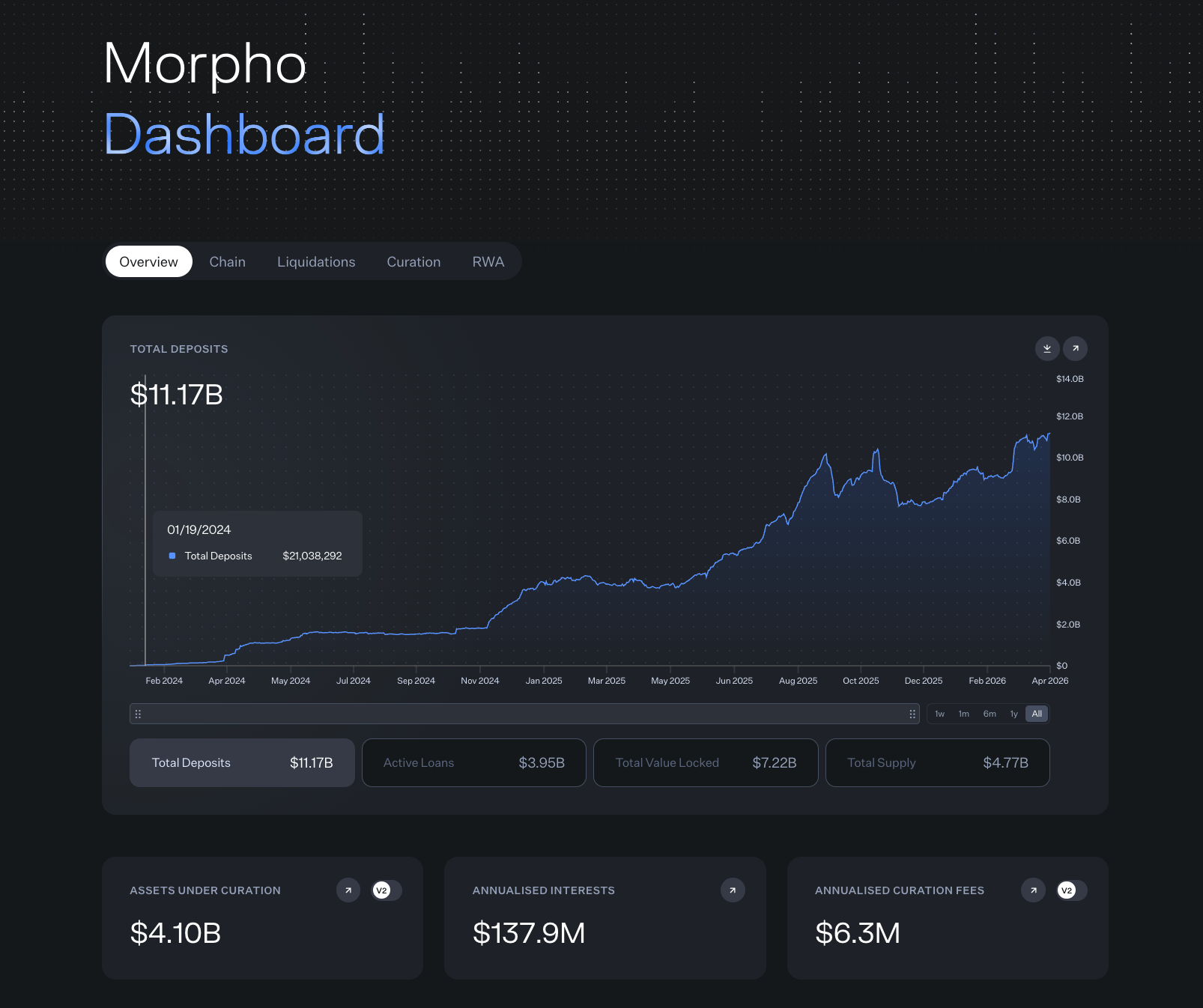
Morpho is a DeFi lending protocol with $11bn in deposits built in two layers: “Markets” where borrowing happens and “Vaults” where lenders earn yield.
Vaults are managed by risk experts called curators who allocate your deposits across markets. Users deposit once and curators handle the complexity.
Below you’ll see how to lend via vaults or borrow through markets, with liquidation thresholds, interest rates, and risks all visible upfront.
Morpho is becoming a base layer for DeFi lending, and even big players like the Ethereum Foundation and trillion-dollar TradFi institutions are getting involved.
This week we’re keeping it DeFi and focusing on one of the biggest successes in recent years, that spawned a whole category of DeFi vaults, we’re talking about Morpho!
What began as a little app that sat on top of lending protocols like Aave and Compound has become a juggernaut of its own with over $13bn in deposits across all its different vaults.
If this post resonates with you and you enjoy the content then please share it with a friend and get rewarded for doing so!

This blog goes out weekly to over 20,000 subscribers. Please message me if you’re interested in sponsorships or partnerships.
Morpho
Morpho are a DeFi lending juggernaut with over $11 billion in deposits, 1.4 million users, and the backing of both the Ethereum Foundation and some of the biggest names in crypto.

The basic idea with lending protocols is simple, you deposit assets to earn yield, or put up collateral to borrow against it. Aave is probably the most well known example, and I’ve written in length about them before:

Morpho started its life as something that sat on top of other lending protocols like Aave and Compound, using a peer-to-peer matching system to give both lenders and borrowers better rates than either protocol could offer on its own.
Since then it’s grown into a full standalone lending infrastructure in its own right, and one of the most important protocols in DeFi today.
Morpho is built in two layers, and understanding both makes everything else click.
The base layer is “Morpho Markets”. This is where the actual borrowing happens, you can post collateral then borrow another token against it. Markets are permissionless, so anyone can create one by setting parameters like: which assets are involved, what the collateral requirements are, which oracle handles pricing, how interest rates work.
Sitting on top of Markets are “Morpho Vaults”. This is the lending side, where users deposit assets to earn passive yield from interest paid by borrowers. Vaults allocate your deposits across multiple Markets, handled by trusted risk experts called “curators” who manage the complexity on your behalf.
Morpho Vaults are built on the “ERC-4626” standard, Ethereum’s tokenised vault standard created by the DeFi community to make yield-bearing vaults interoperable. In practice it means other protocols can plug straight into Morpho Vaults without custom integrations, which is a big reason why many projects build on top of Morpho.
One of the most important design decisions is how markets are isolated from each other. If something goes wrong in one market it doesn’t cascade across the whole protocol, which is a big safety improvement over older lending designs.
Lending
Getting started as a lender with Morpho Vaults is pretty straightforward. First head to app.morpho.org and connect your wallet.
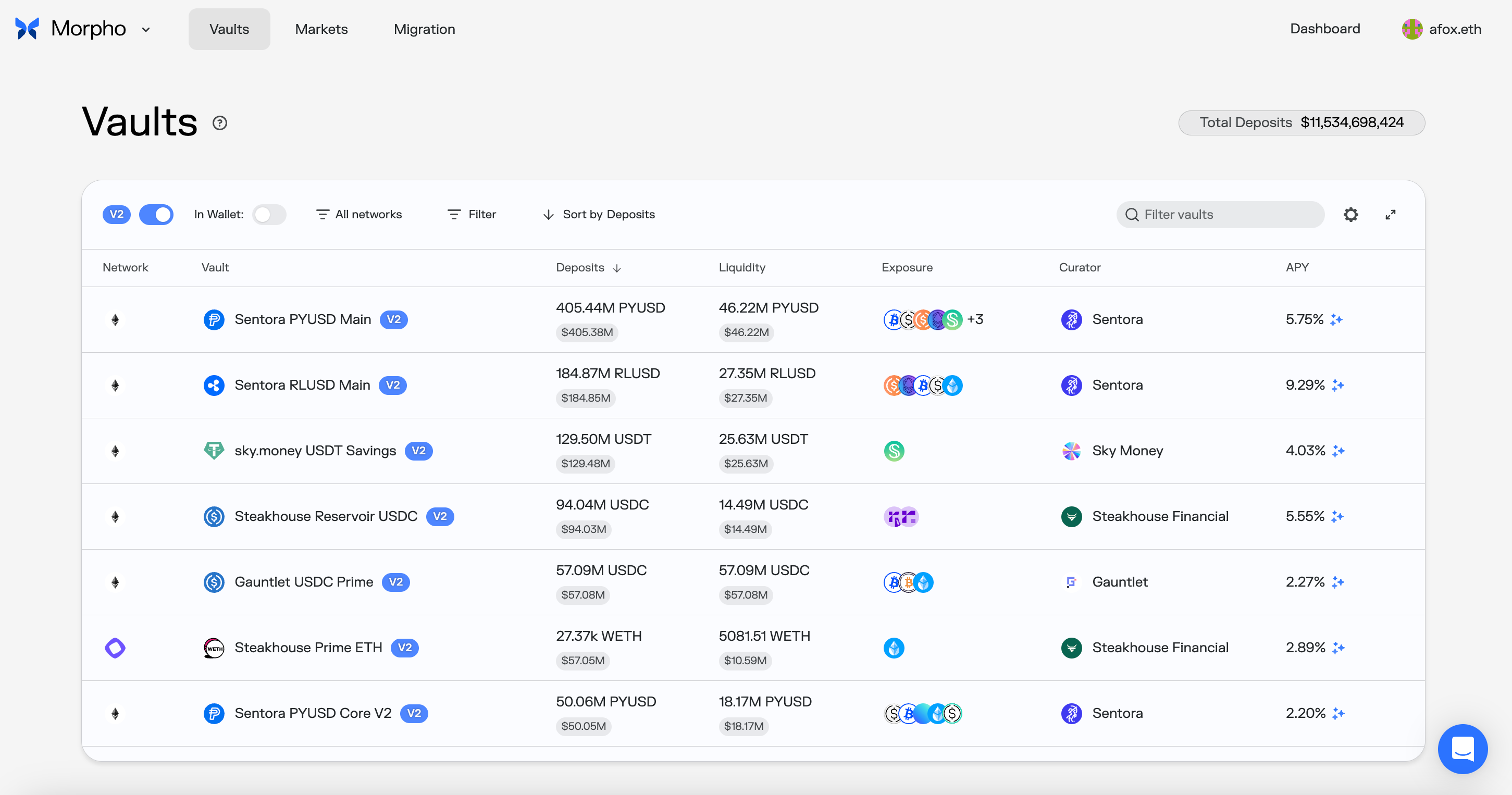
You’ll now land on the vaults page, where you can browse available vaults, the assets they accept, and the yields currently on offer.
When you select a vault it shows you the curator behind it, the assets it lends against, and a breakdown of where deposits get allocated. For example if we click on the top option here “Sentora PYUSD Main” you’ll see the following:
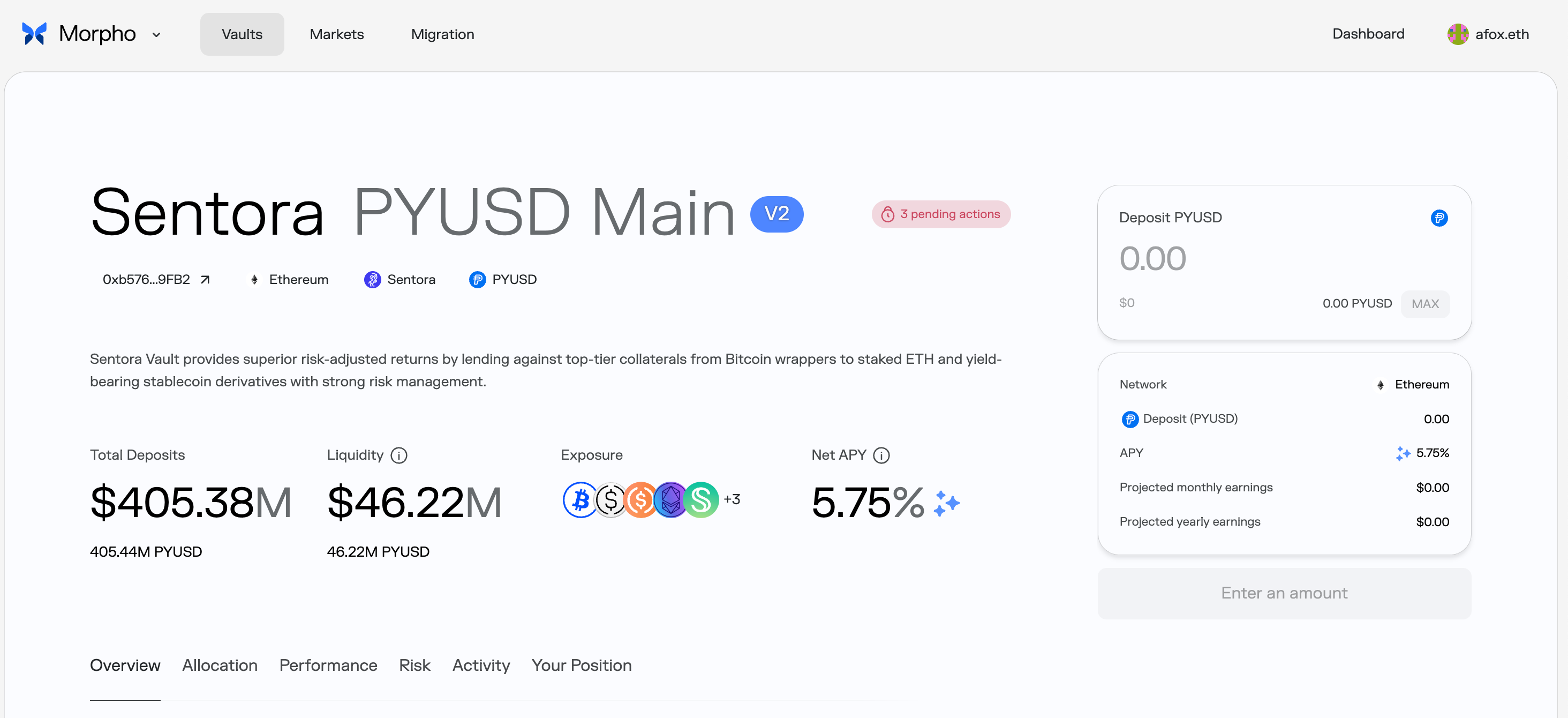
As you scroll down this page you can find more information related to the vault such as its historic performance and returns.
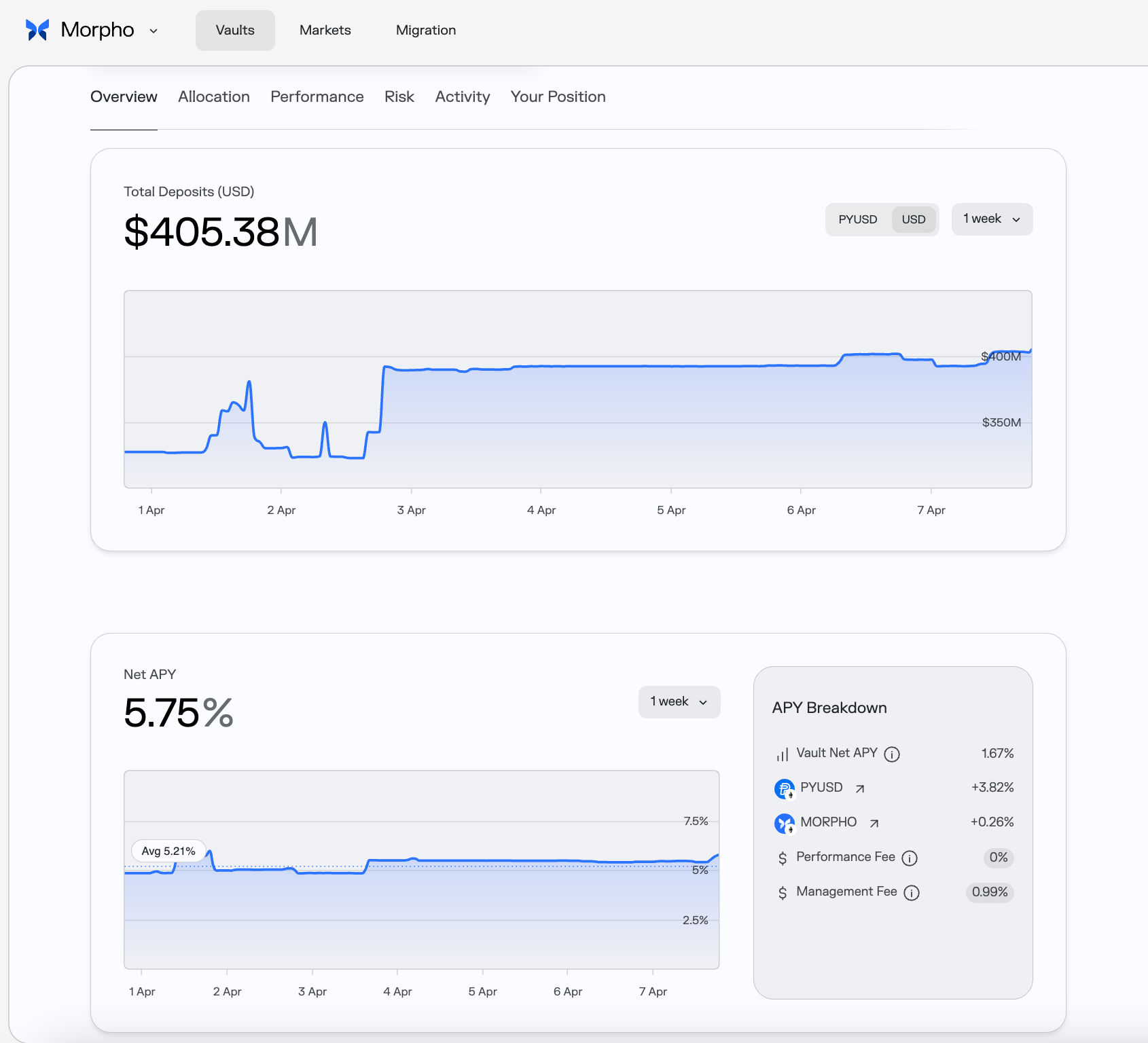
Plus you can usually find other information that can help you to understand the types of risks involved, in this specific case they haven’t shared a risk document but we do know what tokens the vault is exposed to for example.
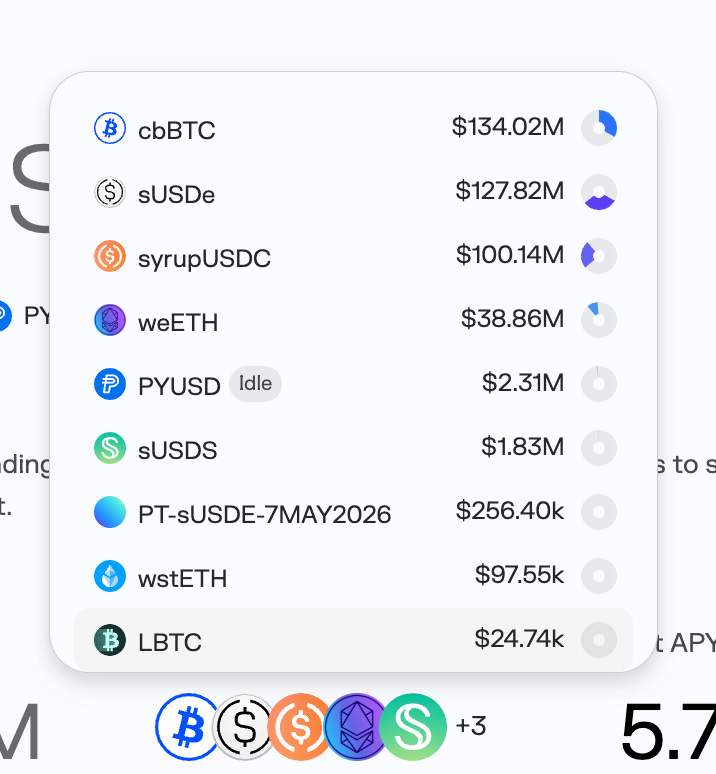
Using the vault is then super simple. You just pick your asset, pick a vault, and deposit - that’s essentially it!
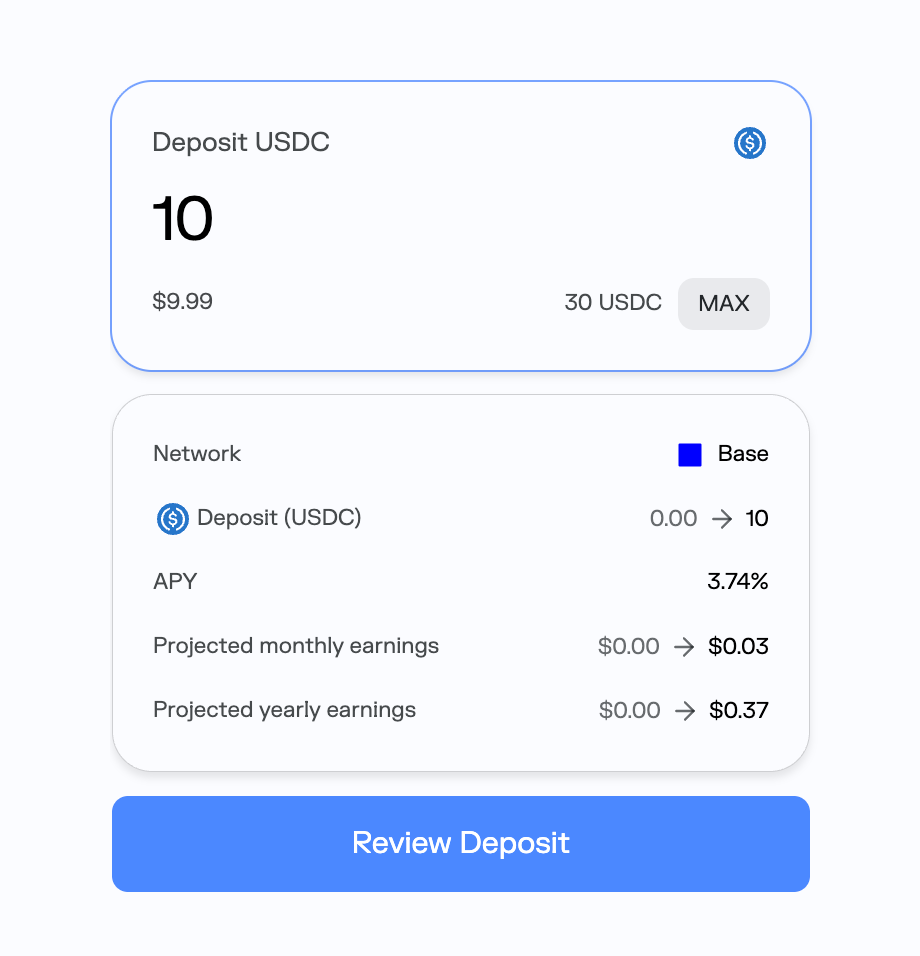
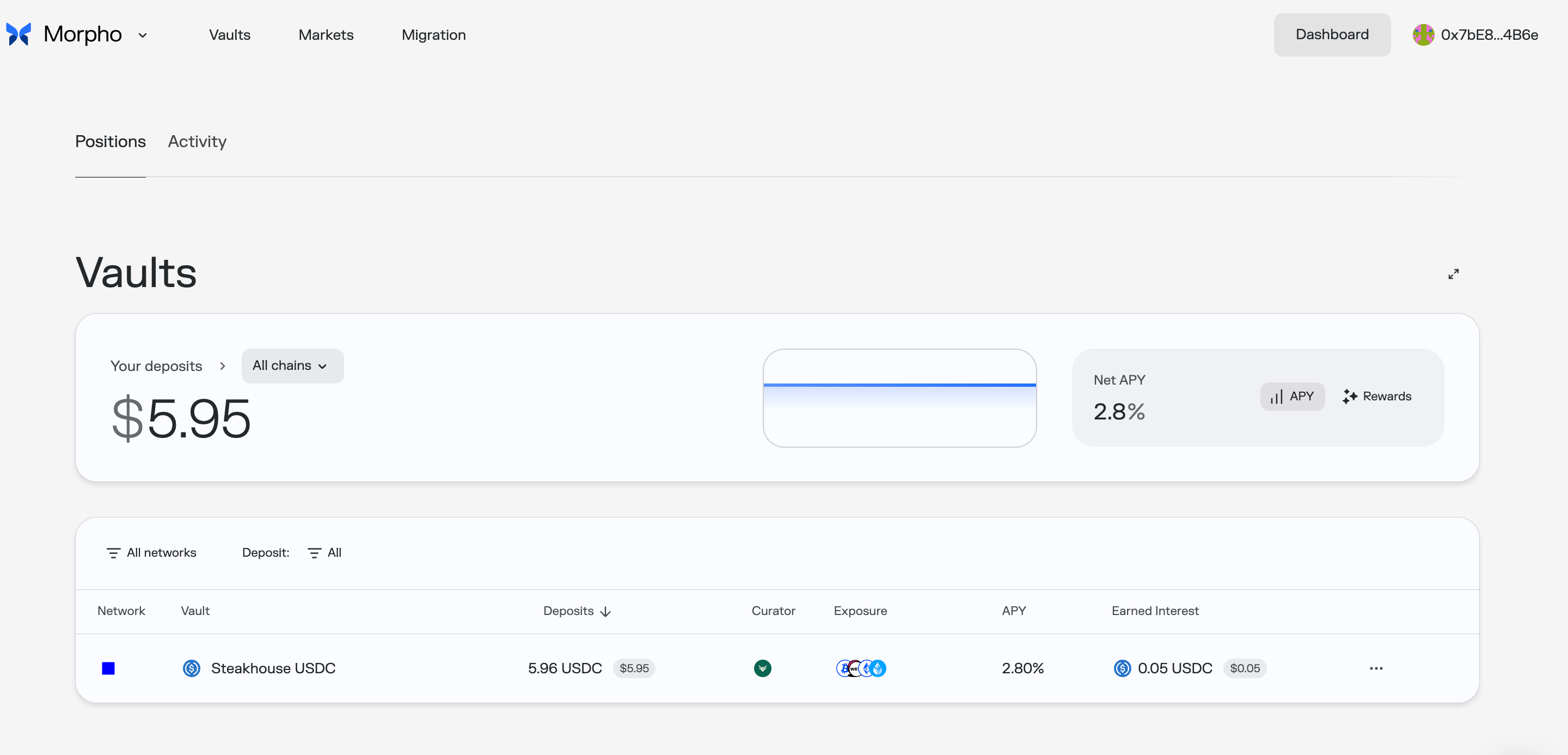
You earn yield automatically as borrowers pay interest into the markets your vault is allocated to, and you can withdraw at any time. Your dashboard will then show your positions at any given moment.
Our very own Yieldseeker uses Morpho’s lending vaults as a core part of its infrastructure, we allow users to automatically seek the best vaults available to earn yield on Morpho as well 10+ other lending protocols on Base!
Borrowing
The borrowing experience on Morpho is the other side of the equation, all you need to do is select “Markets” on the navigation bar to see it.
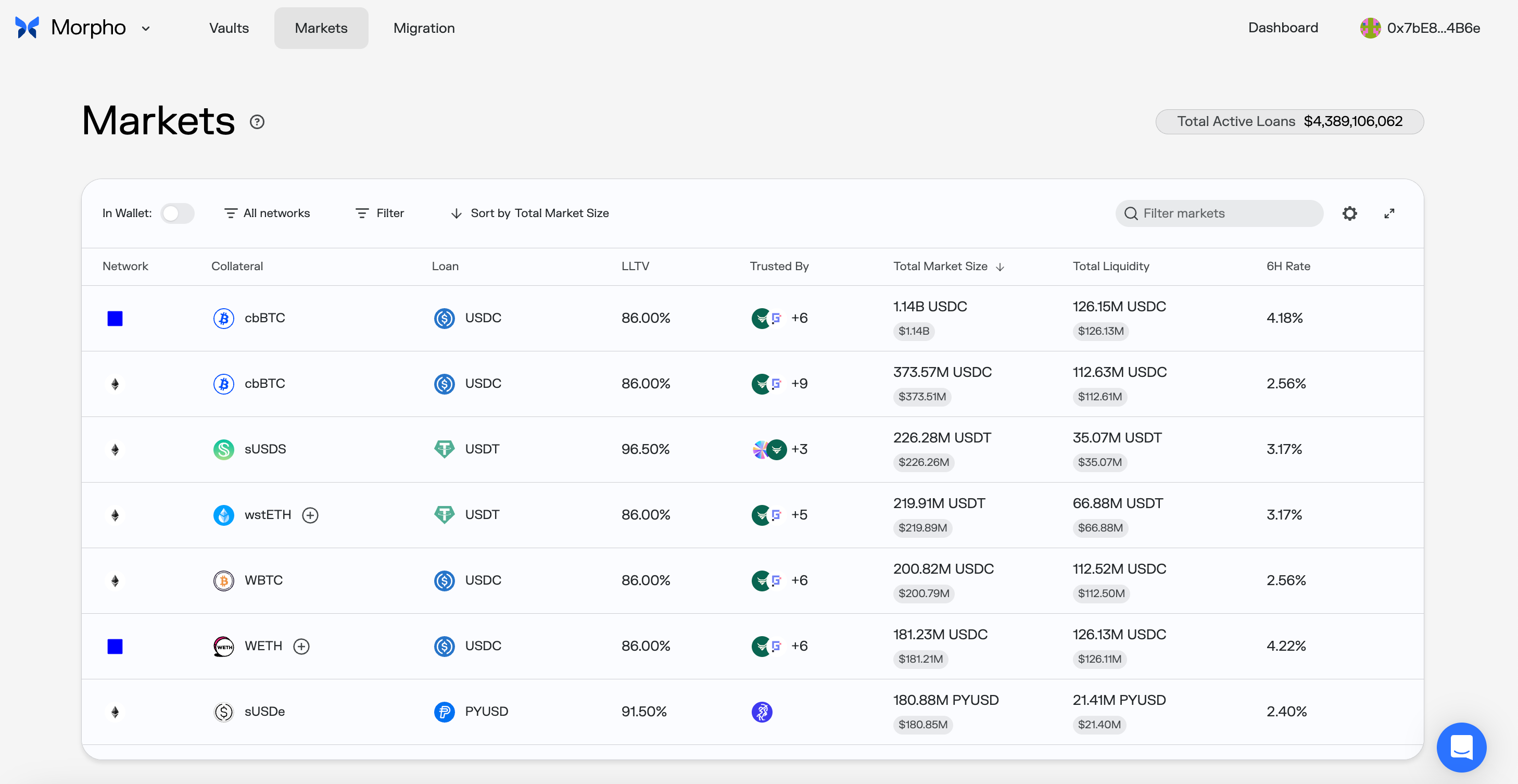
Here you can see the collateral needed to borrow against for each individual market. If you select the top one for example you’ll be able to put cbBTC as collateral and borrow USDC.
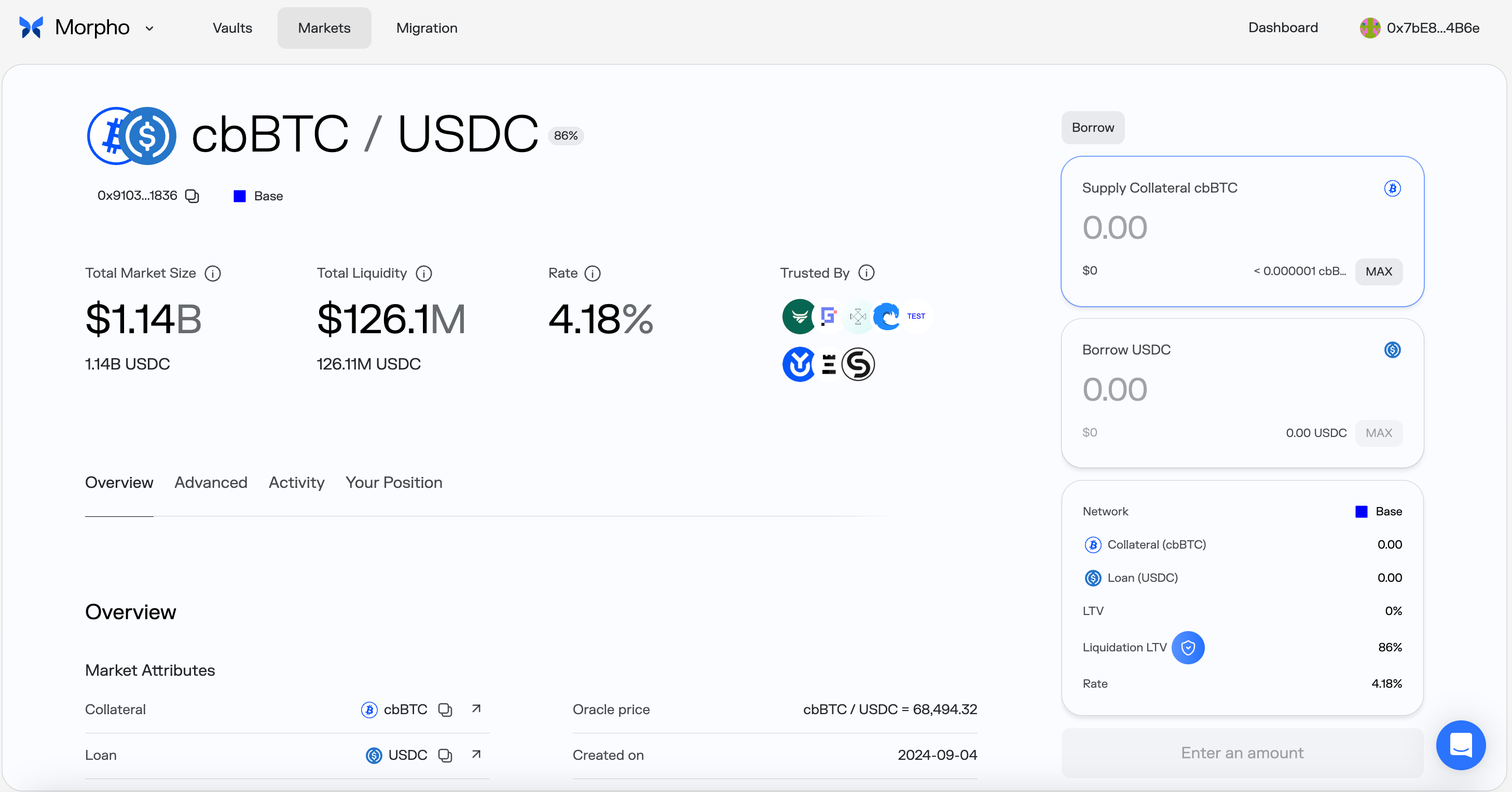
You can see on this page the rate at which you’ll be paying back the loan, in this case it’s currently 4.18% per year. Plus on the right-hand-side you can see that if the collateral goes below 86% then you’ll be liquidated.
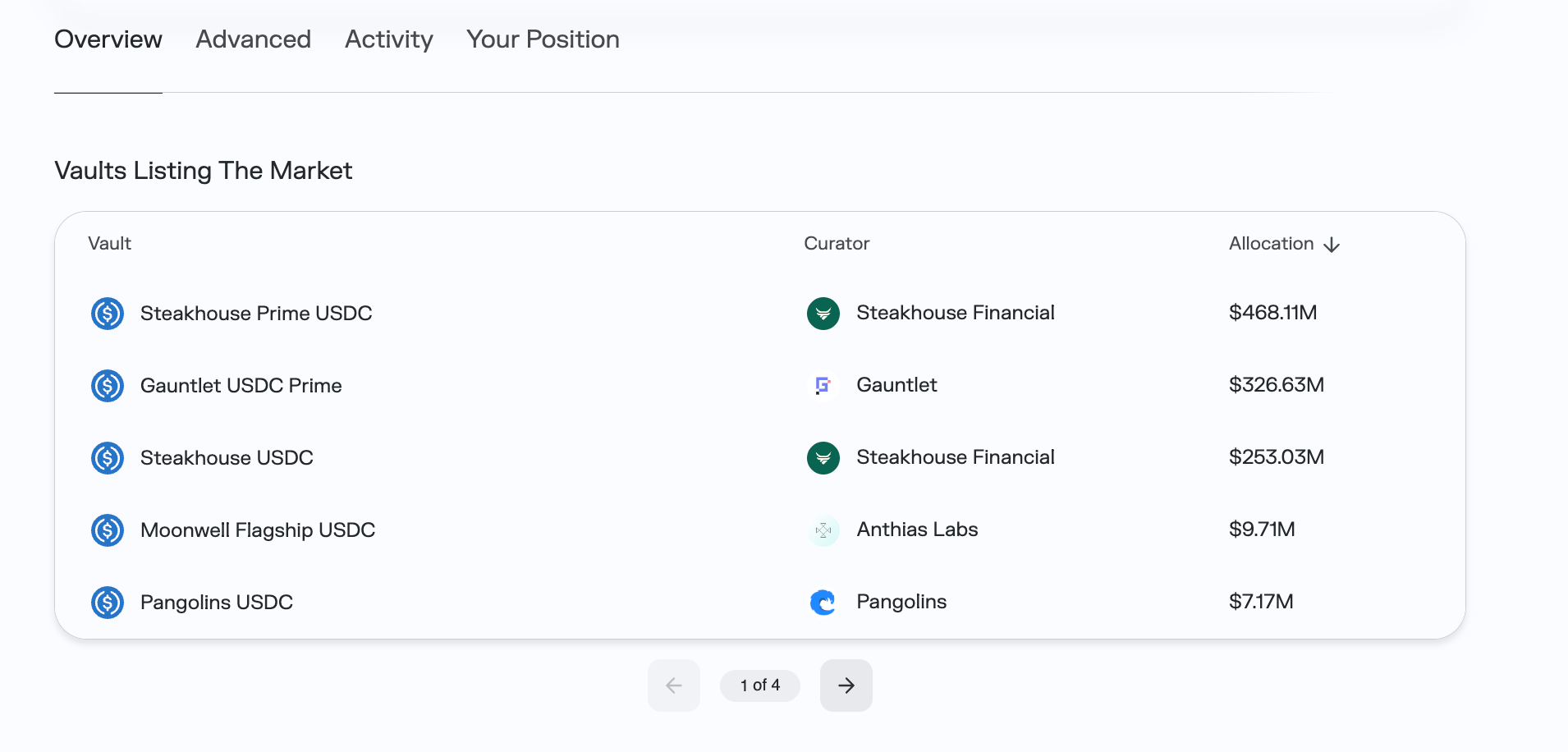
Many vaults are built on top of this market and by scrolling down you can see the list of these vaults, in this case there’s many millions of liquidity available through them.
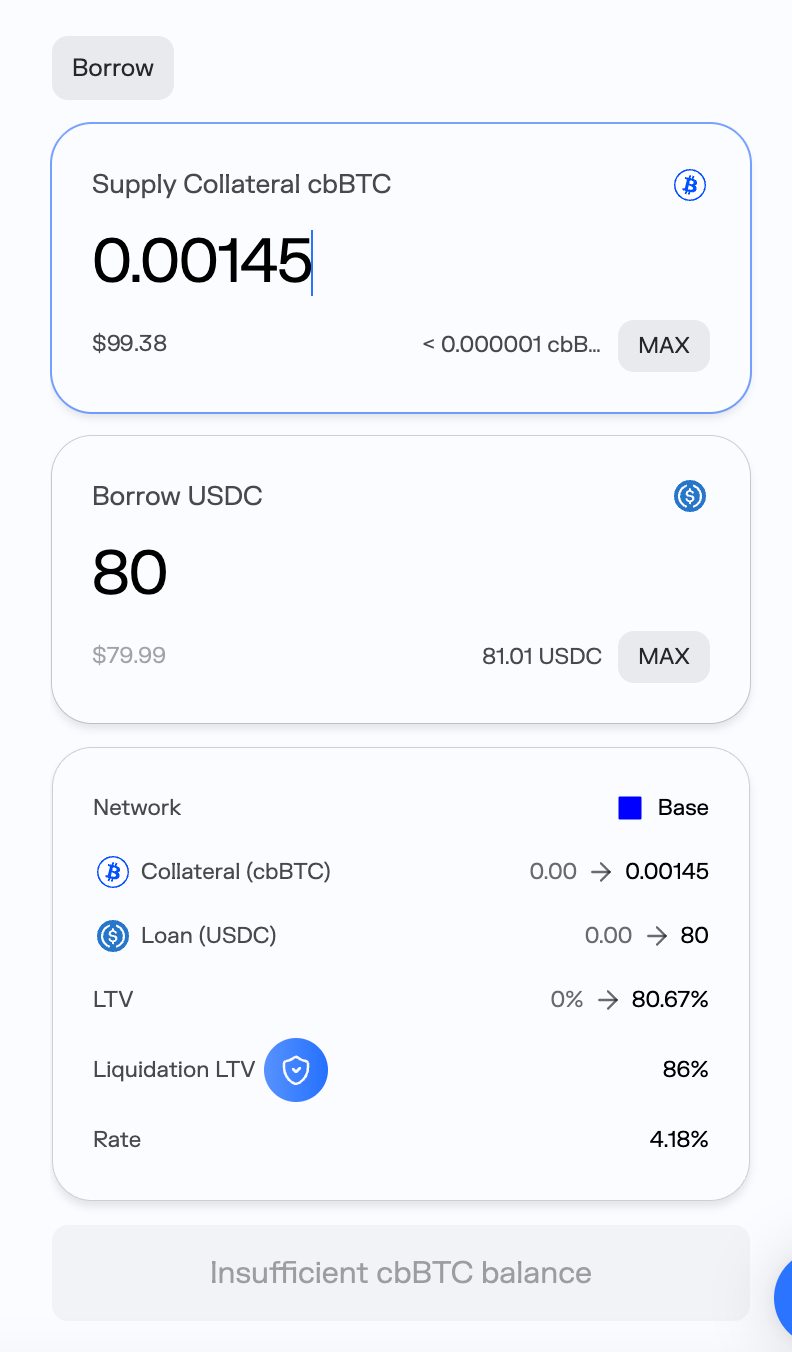
So in our given example around $100 of cbBTC would allow me to borrow up to a maximum of around $81, but that wouldn’t give me much breathing room for liquidation and even a slight drop in cbBTC’s price could liquidate my position.
These last couple of sections give a pretty good over-arching understanding of how Morpho handles both vaults for lending and markets for borrowing, but why does this even matter.
Why Morpho matters
Morpho is becoming the lending infrastructure layer that others build on top of, an esssential DeFi primitive. It is a reliable base that developers and protocols can use to create their own lending products without building everything from scratch - Yieldseeker’s integration of Morpho is a clear example of this in action.
Plus recent events highlight how Morpho just keeps growing. For example the Ethereum Foundation recently deposited 3,400 ETH directly into Morpho Vaults as part of their own treasury strategy. For the EF, who are essentially stewards of Ethereum itself, to put their money into a protocol is a big deal.
Then there’s Apollo Global Management, a traditional finance firm with $938 billion in assets under management who recently agreed to acquire 9% of the MORPHO token supply over the next four years!
Both the builders of Ethereum and a nearly trillion dollar TradFi institution putting real conviction behind the same protocol at the same time is something to pay attention to.
The RWA angle is worth watching too. As more real world assets come onchain, Morpho’s isolated market design handles them well. A problem with one type of RWA collateral stays contained and doesn’t affect the rest of the protocol.
Ultimately DeFi is building the infrastructure that could one day support a serious chunk of global finance, and Morpho is one of the more important pieces of that being laid down right now.

Whenever you’re ready, these are the main ways I can help you:
Want high returns? Earn up to 14% APY with Yieldseeker!
Love Web3 & AI insights? Follow @afoxinweb3 on X!
New to crypto? Join our beginners community to master crypto fast!
Building a Web3 app? Get our expert product development support!