
TLDR:
Hugging Face is the largest hub for open source AI, hosting 2.9 million+ models, 950,000+ datasets, and over 1 million “Spaces.”
Over 13 million people and 500,000+ organisations use the platform, including more than 30% of the Fortune 500.
It allows you to run thousands of models without owning a GPU, by either using: a Space; a free serverless API; dedicated endpoints; or their routing layer.
It turned down a $500m investment from Nvidia last year to protect its neutrality, yet big tech keeps building on it, it’s become a mainstay in the AI landscape.
Last week we looked at OpenRouter, which allows its users to access 400+ models through a single API. Having 400 models at your fingertips is an awful lot, more than most people will ever need or use.
Yet some people may want to access even more models, or more specific models that OpenRouter doesn’t offer, for this the best place to find them is Hugging Face! With Hugging Face you can access over 2 million open source models as you’ll discover in today’s post.
If this post resonates with you and you enjoy the content then please share it with a friend and get rewarded for doing so!

This blog goes out weekly to over 20,000 subscribers. Please message me if you’re interested in sponsorships or partnerships.
Hugging Face
Hugging Face didn’t start out trying to build the home of open source AI. It started in 2016 in New York, founded by three French entrepreneurs, Clément Delangue, Julien Chaumond, and Thomas Wolf, as a chatbot app aimed at teenagers.
The name comes from the 🤗 emoji, which tells you just how seriously they were taking themselves at the time.

The chatbot never really took off, but the small natural language processing model the team had built to power it, and open sourced along the way, quietly started attracting its own following.
Then in late 2018 Google released a model called BERT that reset the entire field of NLP, and Hugging Face’s team had their own version of it open sourced within a week.
That moment made changed their entire direction. By 2019 the company had formally pivoted away from the consumer chatbot and toward building open infrastructure for machine learning, starting with the “Transformers” library that’s still at the centre of the ecosystem today.
Today people often describe Hugging Face as “GitHub for machine learning,” and that’s surprisingly accurate. If you happen to not understand what GitHub is then you can check out my previous post on what it is and how to use it, but essentially it’s the home of open source code.

However, instead of hosting open source code repositories, Hugging Face hosts open source models, datasets, and small interactive apps, and just like GitHub anyone can upload their own or build on someone else’s.
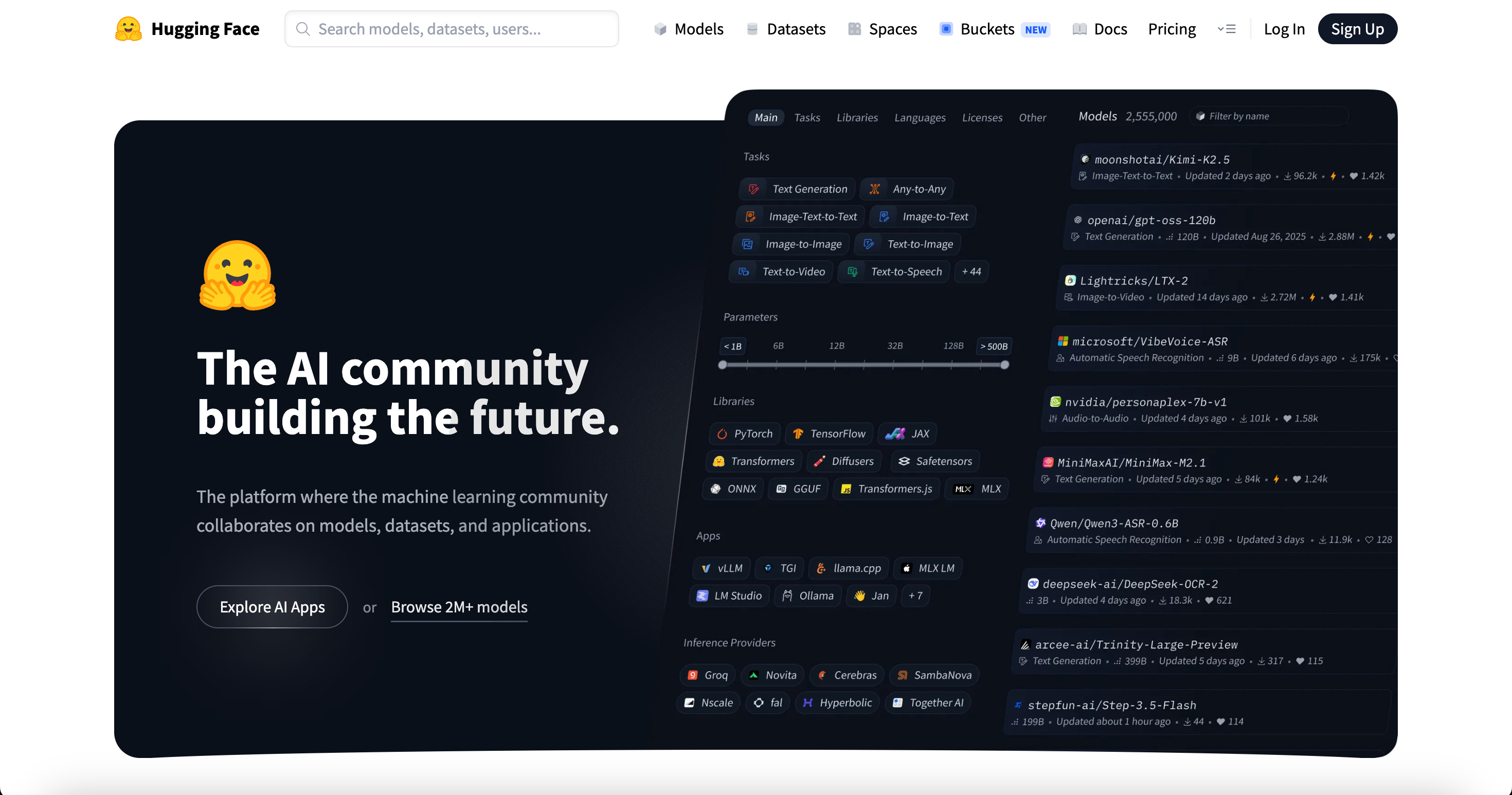
Models, Datasets, and Spaces
Hugging Face's main resources are models, datasets and spaces. Models are the actual trained AI, the thing doing the thinking. Datasets are the raw material used to train or fine-tune those models, everything from text to images to audio. And Spaces are small hosted apps that let you try a model directly in your browser.
The scale of Hugging Space by now is hard to overstate. As of this year it holds over 2.9 million models, more than 950,000 datasets, and over 1 million spaces!
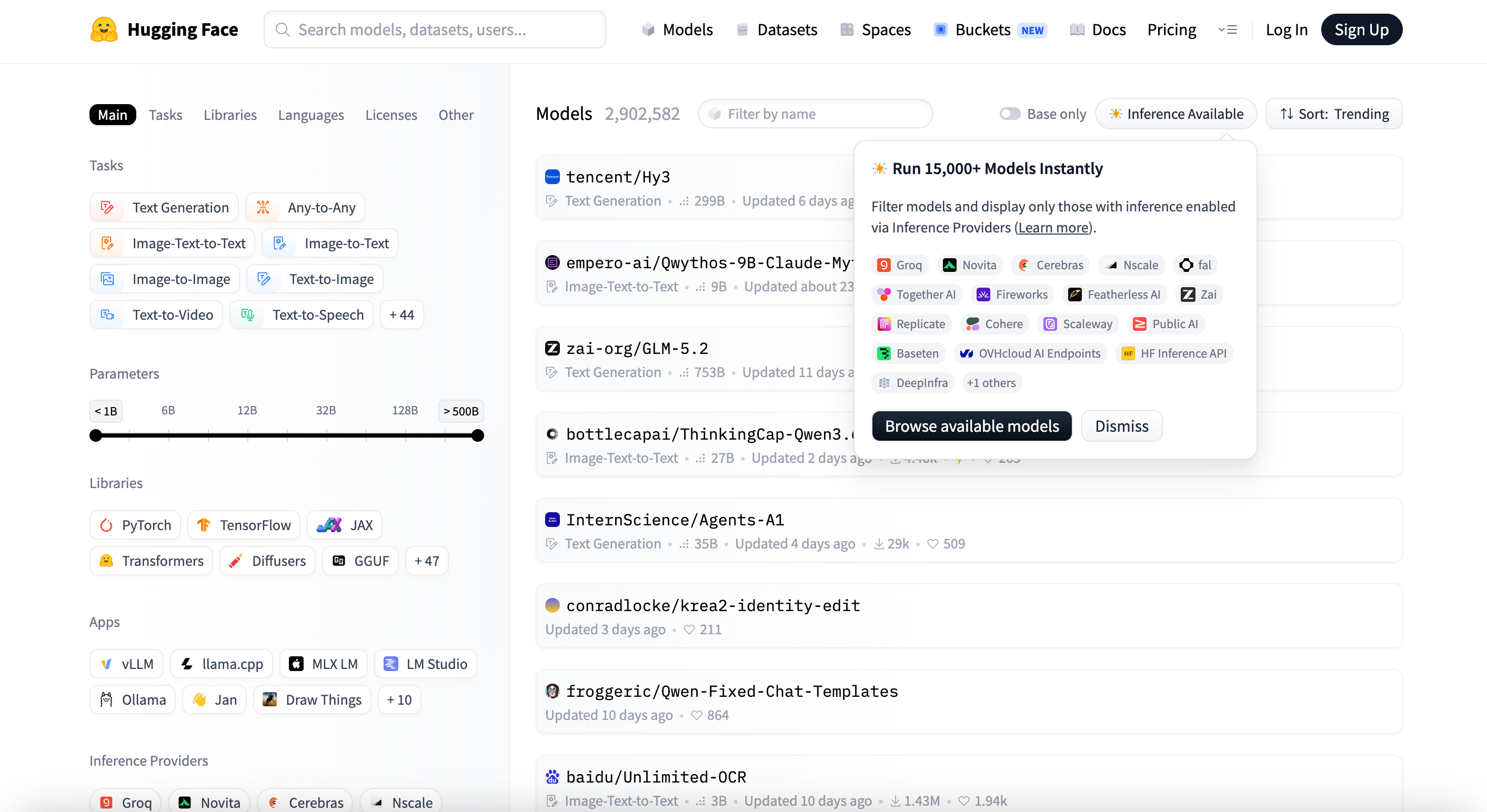
When you open the models tab you can browse the full range of models uploaded to the site, with lots of different filtering options to help you locate the ideal model for your needs. These range from Text-to-Text, Text-to-Video, Image-to-Text, and even models that accept Any-to-Any input-output.
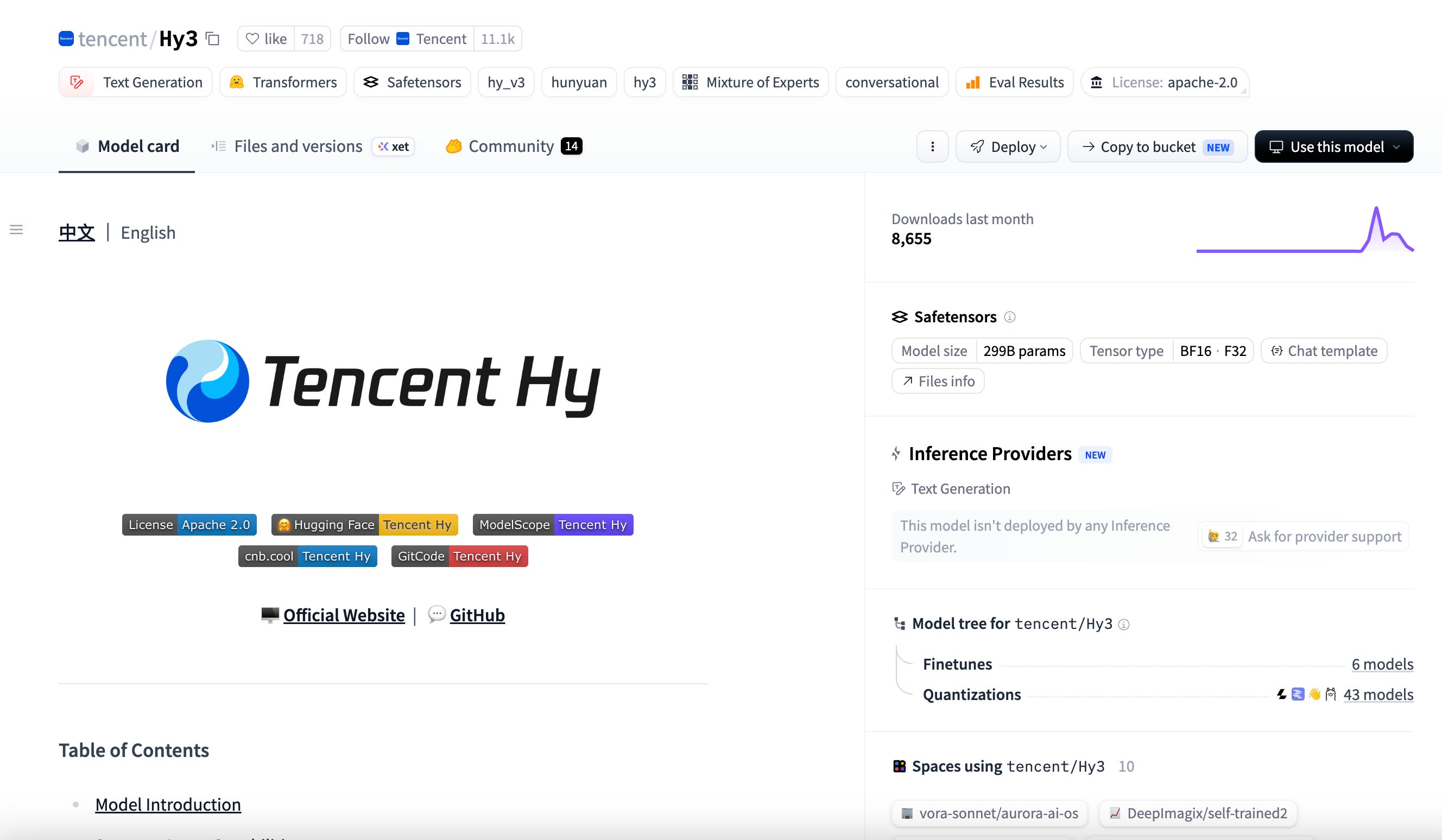
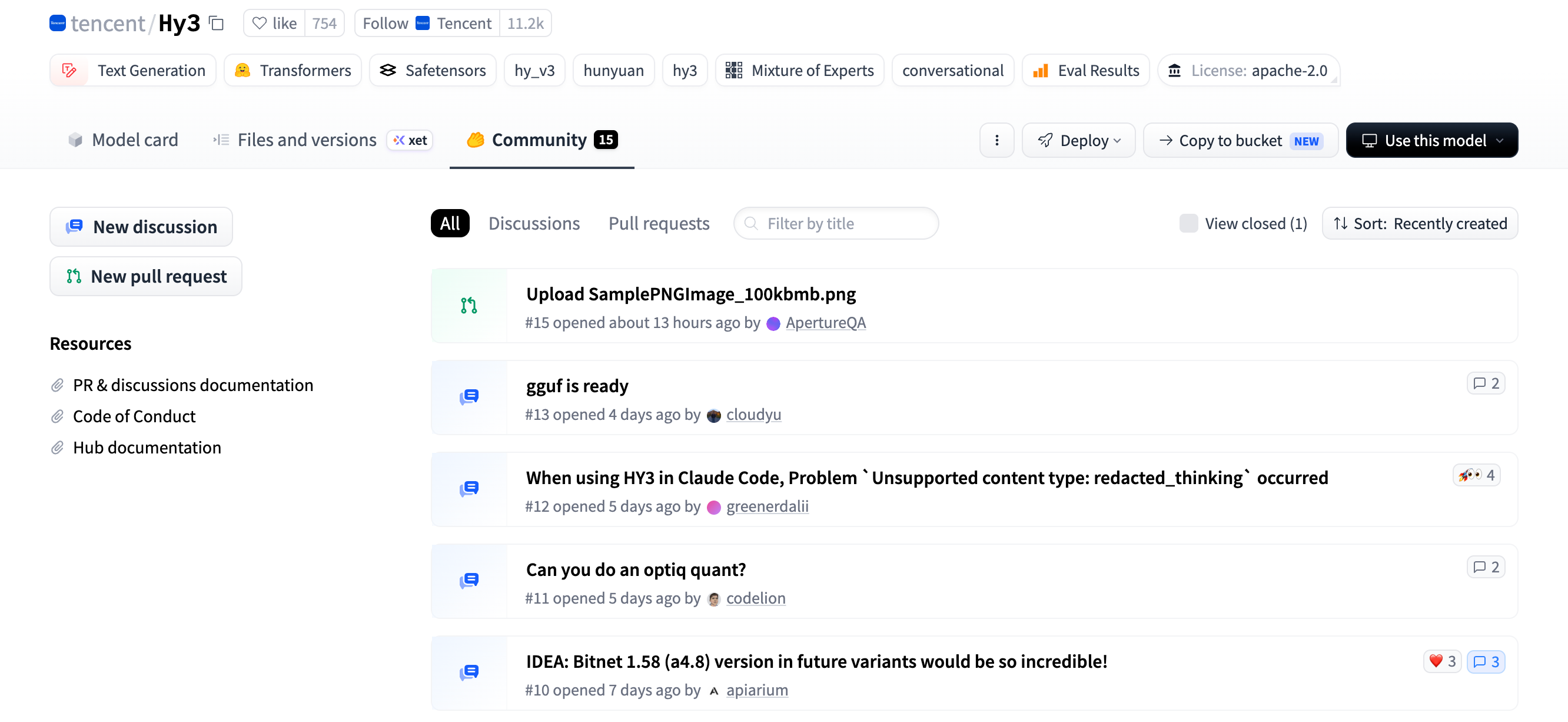
When you select a model you get to see its own page with a “model card”. Here you can see what it does, how it was trained, its license, if it was built from another model, and the option to download a version of it.
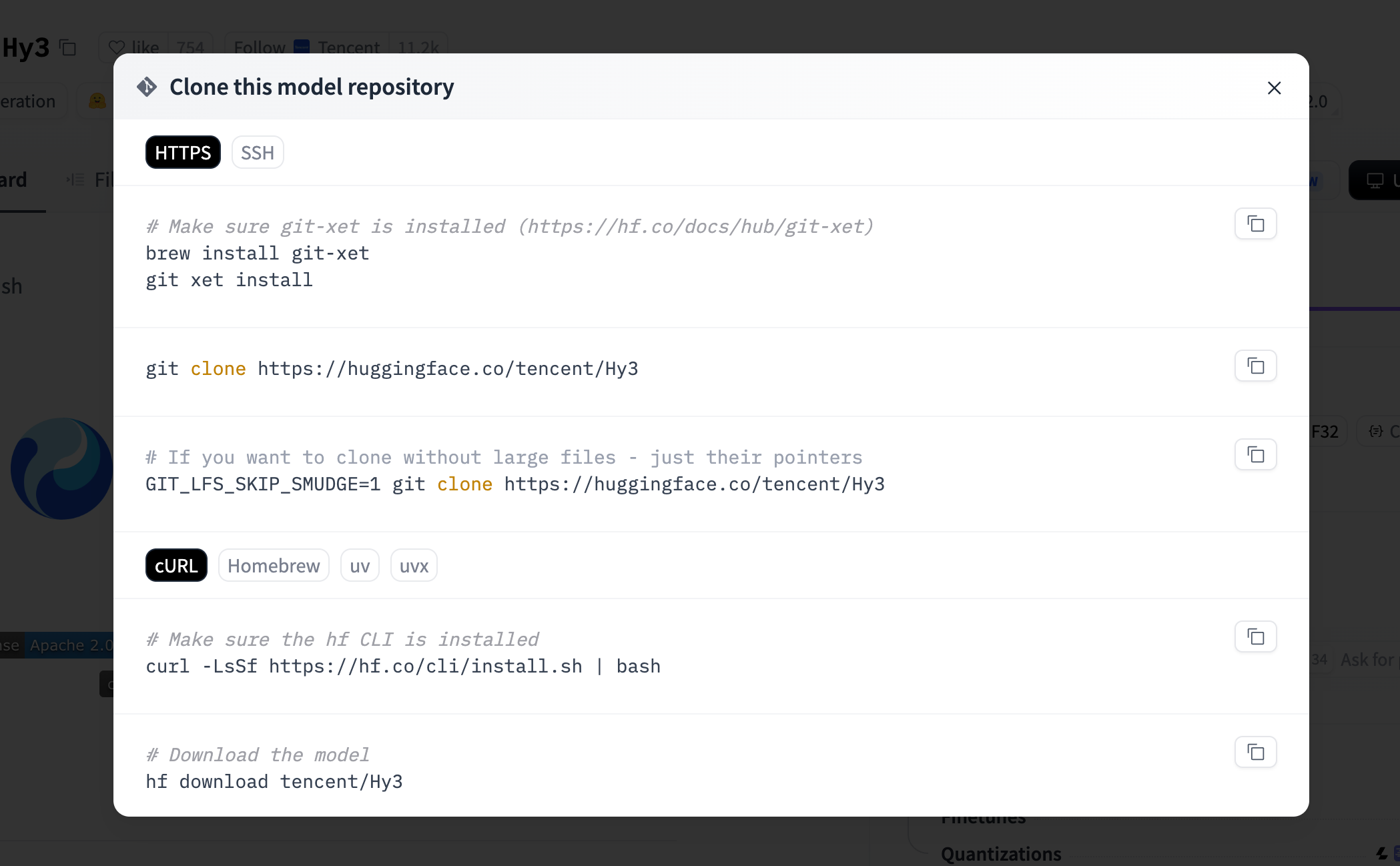
None of this functionality requires creating an account. To download a model, for example, you can just select the 3 dots on the top right for instructions to clone the model’s repository.
However, creating an account allows you to do additional things like take part in the community through comment and pull requests.
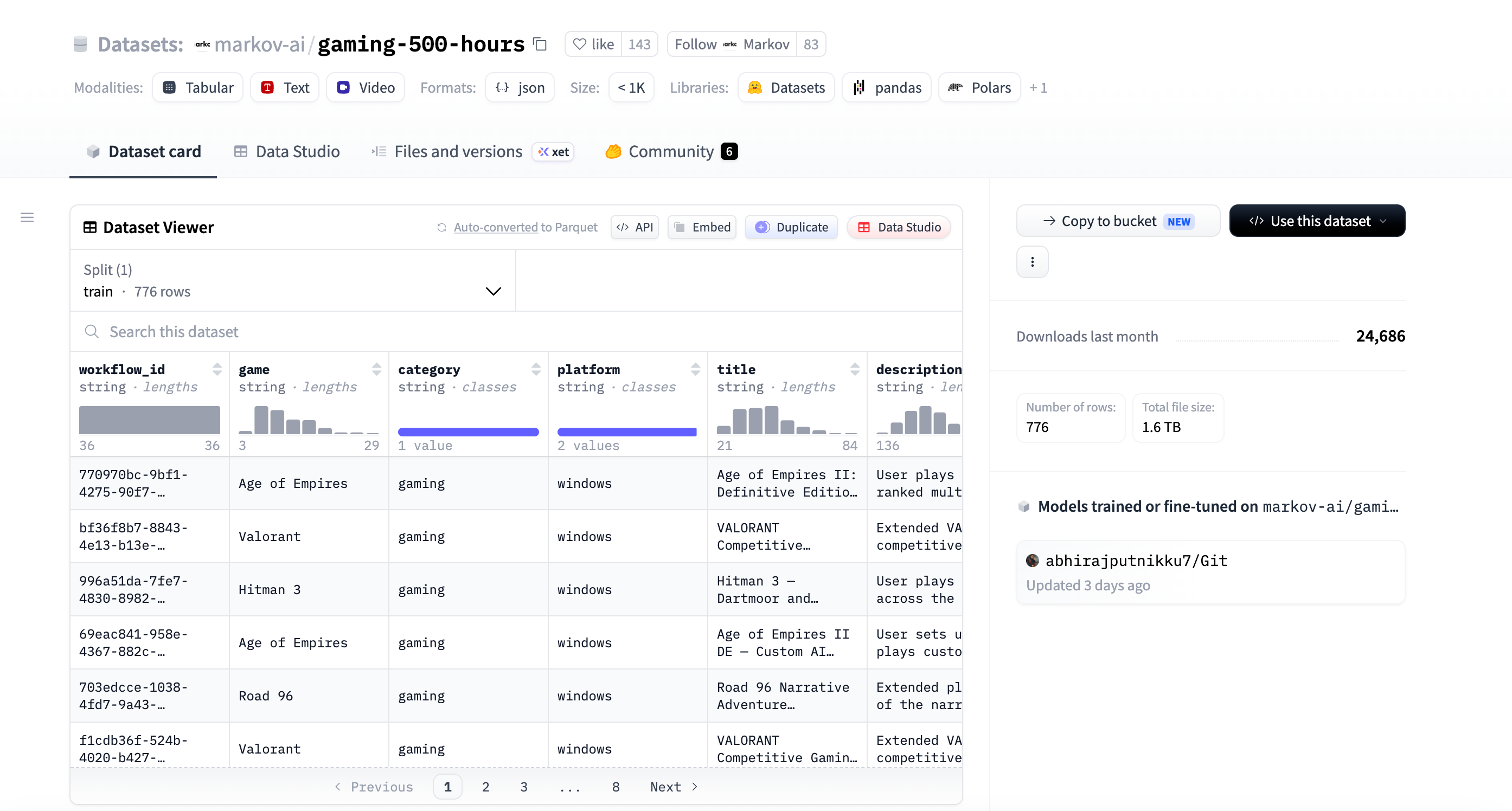
Datasets work in the same way as the models, with the addition that they show a preview of the actual rows of data before you download anything.
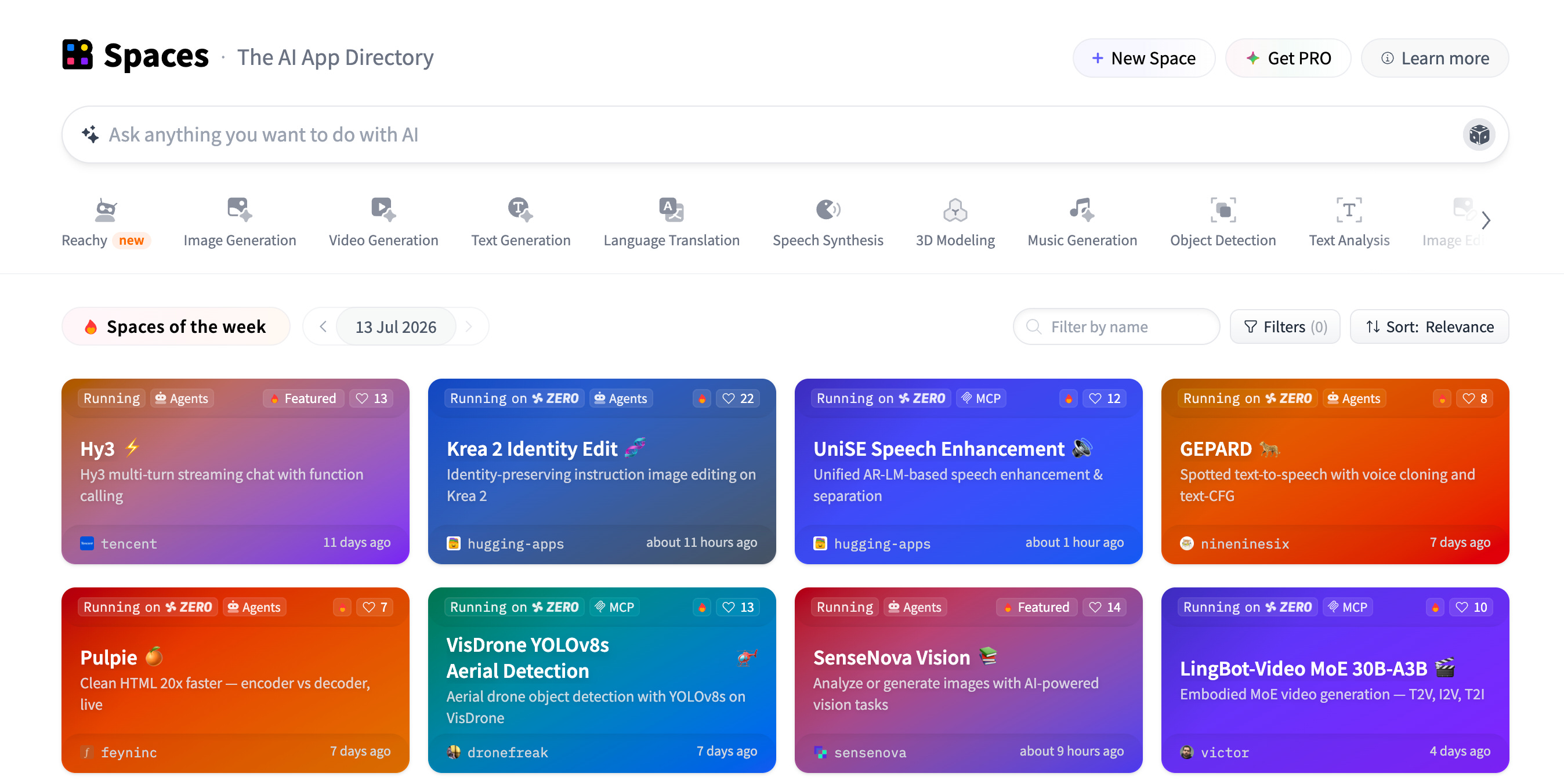
Meanwhile Spaces give you over 1 million different ways to communicate with models that have been uploaded onto the platform, and are one of the easiest way to test a model out.
Hugging Face now has over 13 million users registered across 500,000+ organisations, and more than 30% of the Fortune 500 have a verified presence on it.
Running a model
The part that surprises people new to Hugging Face is that you don’t need your own hardware to actually use any of this. There are four ways to run a model, ordered roughly from simplest to most technical:
Spaces - open a hosted demo in your browser, no code required.
The Serverless Inference API - a free endpoint you call from your own code.
Inference Endpoints - a dedicated GPU for a project you’re actually relying on.
Inference Providers - a routing layer that picks the best host for your chosen model.
The simplest of these is a Space. With a Space someone else has already built a small hosted app around the model, so you just open it in your browser and use it, no code, no API key, nothing to install.
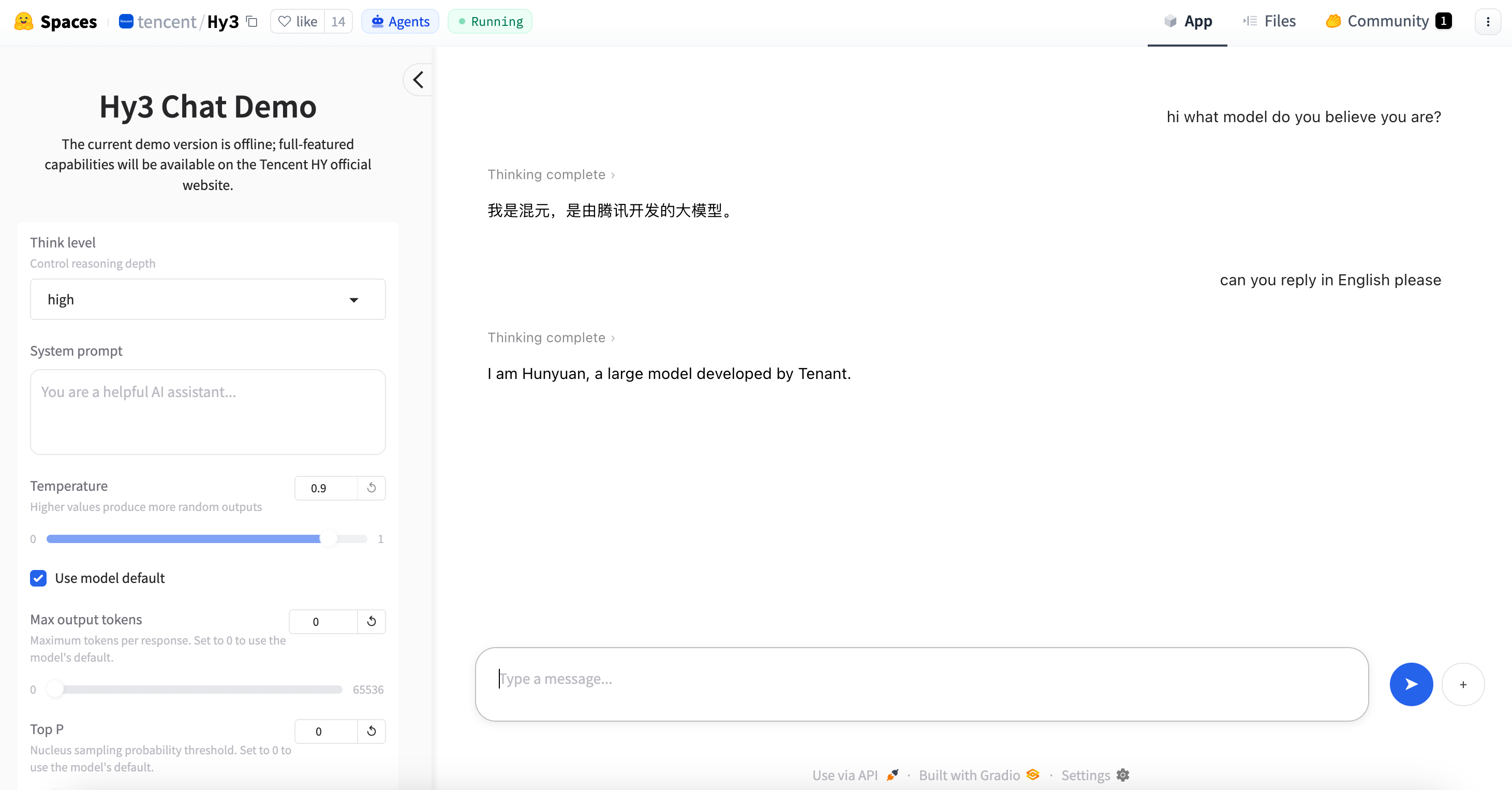
Many Spaces run on “ZeroGPU,” which borrows an NVIDIA H200 GPU for the few seconds your request needs it then releases it again. Free accounts get a daily allowance of this, and the $9 a month PRO tier unlocks more, up to 25 minutes of full H200 compute a day.
Next, if you’re building something yourself and want to call a model from code, the Serverless Inference API is the next step up. Open any supported model’s page and there’s usually a “Deploy” button. It gives you a free, rate-limited endpoint to call directly, ideal for testing an idea before committing to anything.
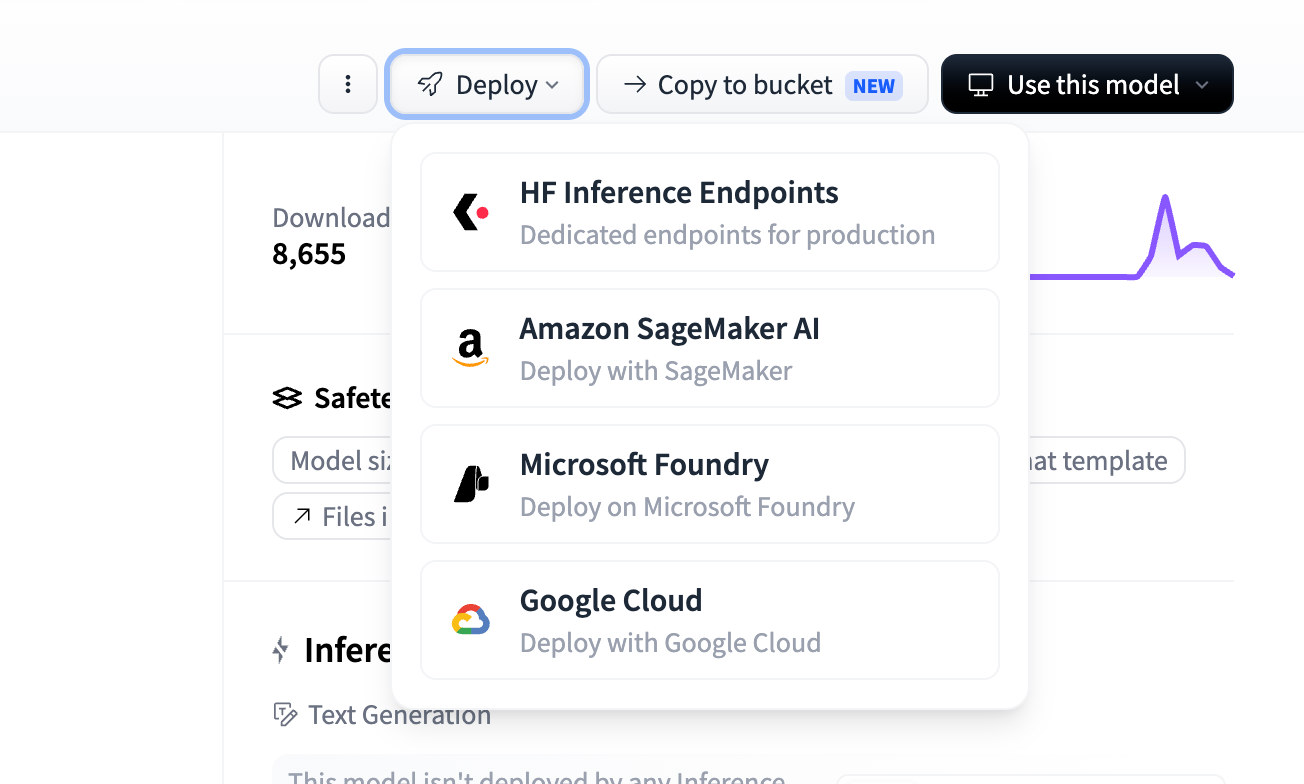
If you need something more reliable for a real project, Inference Endpoints let you spin up a dedicated GPU for a specific model. Pricing starts around $0.50 an hour, and it scales to zero when you’re not using it, so you’re not paying for idle time.
The most interesting of the four is Inference Providers. Rather than running every model itself, Hugging Face routes your request to whichever specialised provider hosts that model best, names like Groq, Together AI, Fireworks, and Cerebras, plus newer additions like DeepInfra and Novita.
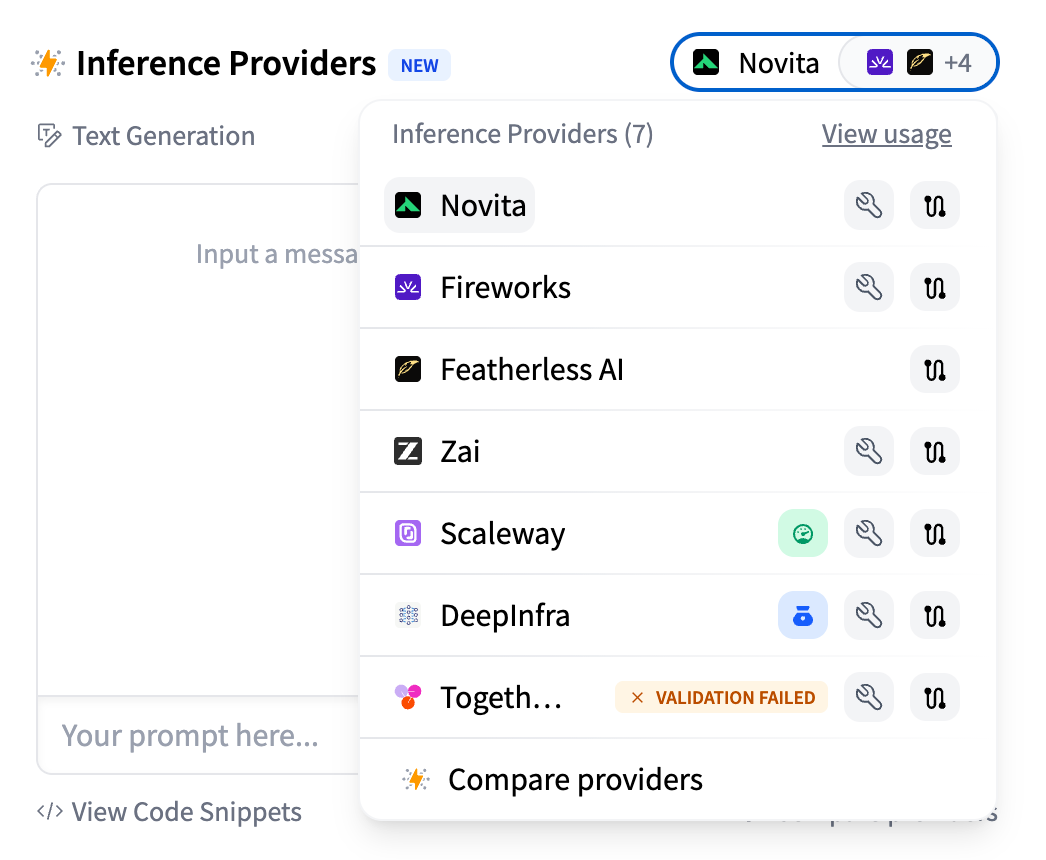
It’s all OpenAI-compatible, similar to OpenRouter which we covered last week, so you get one account and one API key. Hugging Face then handles picking and paying the right backend for you.
These four ways cover a good range of possibilities: open a Space if you just want to try something; call the free API to prototype; spin up an Endpoint once you need reliable output; or route through Inference Providers once you’re picking between many different models.
Mainstay in the AI landscape
Hugging Face has raised $235m so far, backed early on by Google, Amazon, Nvidia, IBM, and Salesforce. Their last round in 2023 valued the company at $4.5bn. Late last year Nvidia came back and offered another $500m, this time at a $7bn valuation, but Hugging Face turned it down.

The company was already profitable and didn’t need the cash. More importantly, taking a large check from a single chip maker would have compromised the neutral position it’s spent years building between Nvidia, AMD, and Intel, a stance Hugging Face itself pointed to when explaining the decision.
That neutrality is exactly why big tech keeps building on top of Hugging Face instead of trying to own it. Just this past week, NVIDIA brought its Isaac GR00T 1.7 robotics model into LeRobot, Hugging Face’s open source robotics library.
A day later, Hugging Face’s models landed inside Microsoft’s Foundry platform too, giving enterprise developers a curated, weekly-refreshed catalogue of open models to deploy.
The biggest, most closed-source-leaning companies in AI have every incentive to keep everyone inside their own walled gardens. Yet instead they keep choosing to build on Hugging Face’s open layer.
Importantly what you’ve seen today has just scratched the surface of what’s possible with Hugging Face. They have recently introduced “Buckets” as a form of storage service for AI models, datasets and artifacts. Plus they have hundreds of other little features that range from ways to remix models yourself, to a collection of papers in AI.
The beauty of open source AI is that no matter what direction the big AI frontier labs decide to go down, you’ll always have an alternative option that doesn’t rely on them. Hugging Space provides that open source alternative, so it’s become an incredibly important piece of the AI landscape that’s here to stay.

Whenever you’re ready, these are the main ways I can help you:
Want high crypto returns? Earn up to 14% APY with your own Yieldseeker agent!
Love Web3 & AI? Follow @afoxinweb3 on X for insights!
Entrepreneur using AI? Join our AI community to accelerate your results!