
TLDR:
Bittensor is an open network that pays people in its token, TAO, for doing useful AI work, with the same 21 million cap and halvings as Bitcoin.
The work happens in 128 “subnets”, each one a competition for a single AI task, and the market decides which subnets earn the most.
Some subnets now have real paying customers, including Chutes, which was the most-used AI provider on OpenRouter late last year.
Customer revenue is still only around a tenth of what the network pays out in rewards, but it’s the biggest experiment yet in open, community-owned AI.
This week I decided to write about Bittensor, which is a very well known network and ecosystem in the crypto space focused around AI. This post has been a long time coming because it literally straddles the part of the space I focus on the most but I’d never written about!
This blog goes out weekly to over 20,000 subscribers. Please message me if you’re interested in sponsorships or partnerships.
And if this post resonates with you and you enjoy the content then please share it with a friend and get rewarded for doing so!

YieldSeeker is your onchain AI financial manager. Use specialised onchain agents to manage DeFi activity such as earning yield, without constantly monitoring positions yourself. Your funds remain non-custodial as agents operate through secure smart-wallet infrastructure within the permissions you set. YieldSeeker agents monitor opportunities and risk around the clock, while you retain control over your funds.
Bittensor
The most powerful AI today is built by a handful of companies like OpenAI, Google, SpaceX and Anthropic, which decide who gets to use them and on what terms.
Bittensor is a decentralised attempt at an alternative, it’s an open network where any one can build, train and use AI, and get paid for contributing to it.
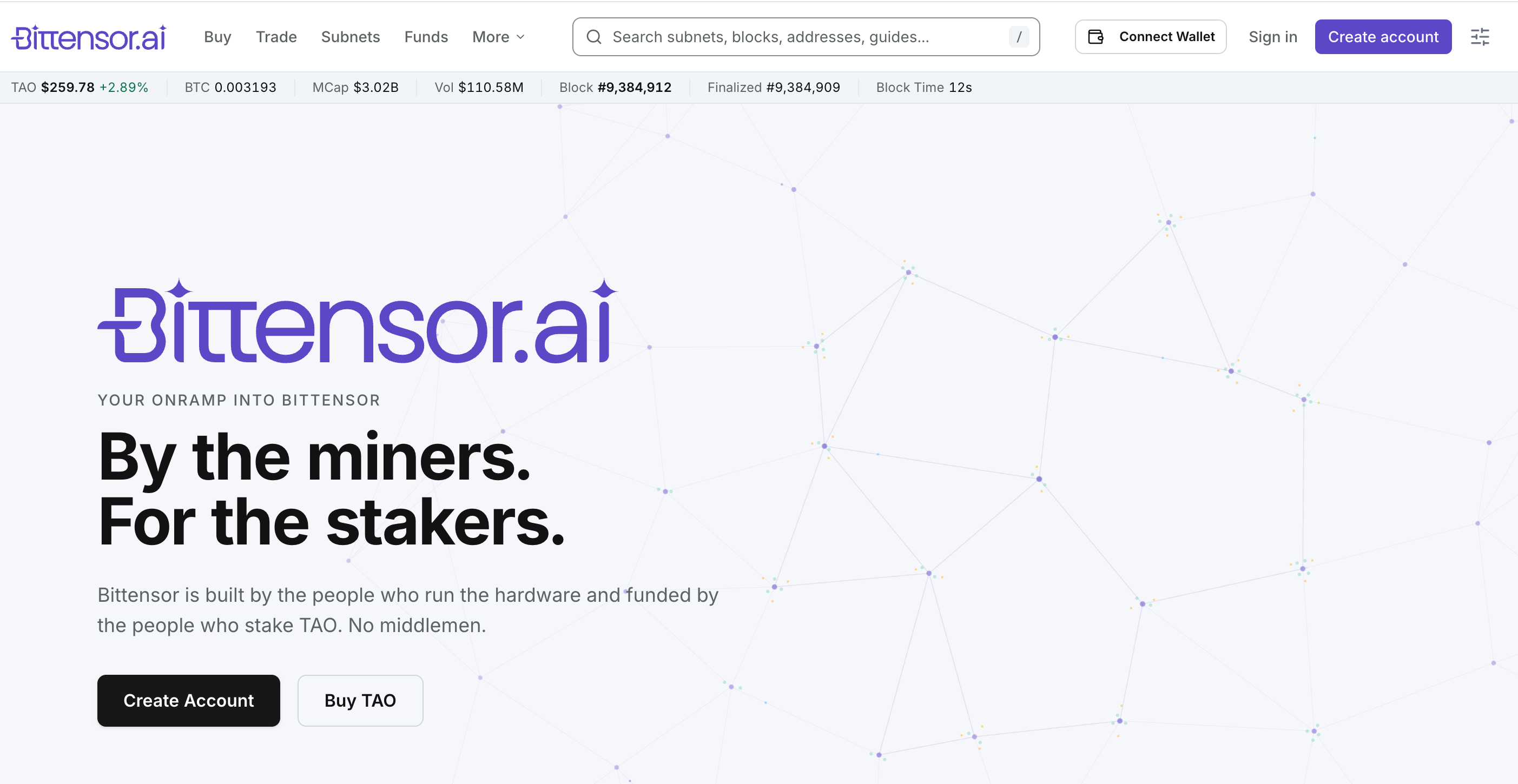
It launched in 2021, developed by co-founder Jacob Steeves and the Opentensor Foundation. Like Bitcoin, it had a “fair launch”, meaning there was no pre-sale to investors and no tokens set aside for the team. Every token in existence was earned by doing work on the network!
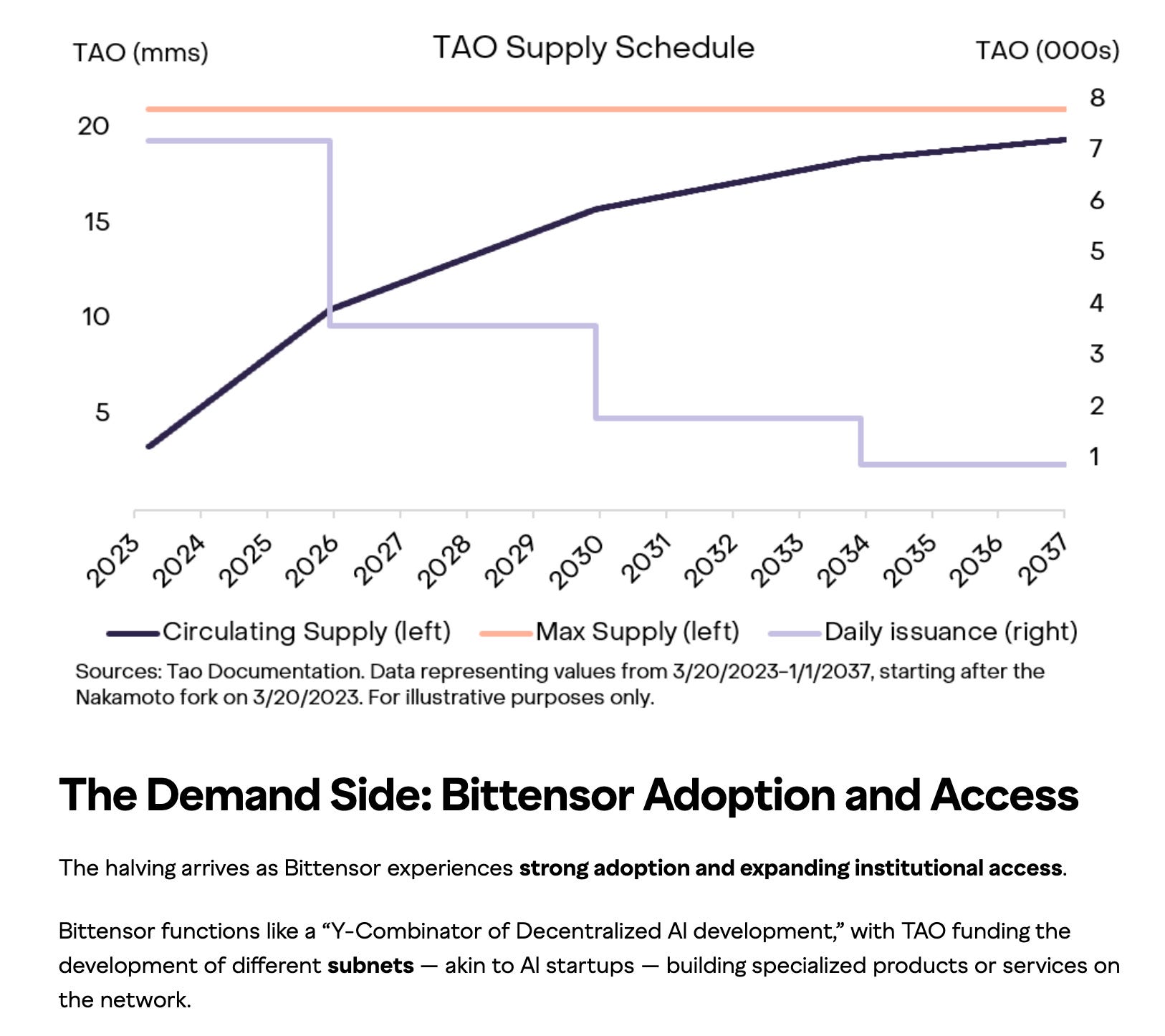
That token is TAO, and its design copies Bitcoin closely. There will only ever be 21 million TAO (just like Bitcoin), and the amount of new TAO created each day halves roughly every four years (also just like Bitcoin). The first “halving” happened last December, cutting new issuance from about 7200 TAO a day to 3600.
Where Bitcoin pays miners for running computers that secure the network, Bittensor pays its miners for doing useful AI work, like running AI models, renting out computing power or training new models.
Grayscale, the crypto asset manager, has described Bittensor as a “Y-Combinator of Decentralized AI development”, after the famous startup accelerator. This is because the network funds lots of small AI projects with TAO, and the ones that prove useful get more of it.
Subnets
Bittensor’s ‘small AI projects’ are called “subnets”, and each one is a competition for a single task. One subnet might be a contest to run AI models as cheaply as possible, another to train a new model, and another to spot deepfakes.
Every subnet has three types of participants:
Miners, who do the actual work, like answering requests with an AI model.
Validators, who test the miners and score how good their work is.
The subnet owner, who designs the contest and decides what good work looks like.
The obvious risk is a validator handing high scores to a friend’s miner. Bittensor deals with this using a system called “Yuma Consensus”, which compares every validator’s scores - importantly this is not the same as the blockchain’s consensus, for which a variant of “Proof of Authority” is used.

In Yuma Consensus if one validator rates a miner far higher than most others do, its score gets cut down to the level the majority agrees on, and validators who keep getting cut down lose influence and earn less.
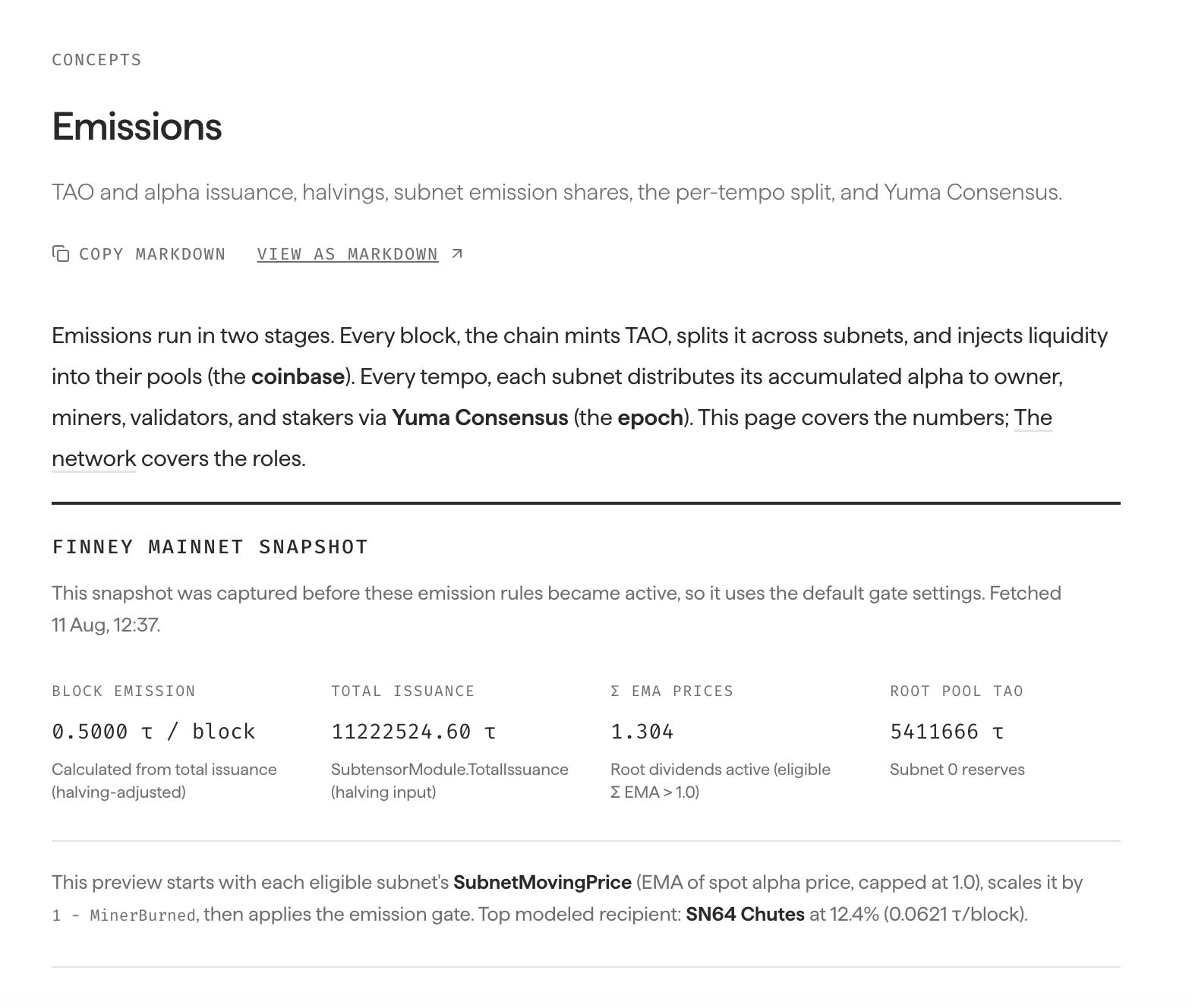
At the end of each round the new tokens are shared out. By default 41% goes to miners, 41% to validators and the people who’ve staked TAO with them, and 18% to the subnet owner. Since an upgrade this month, subnet owners can change that split for their own subnet.
There’s a cap of 128 subnets, so spots are competitive. When the network is full and someone registers a new subnet, the lowest-valued subnet that’s past its four-month protection period gets removed, and its token holders are refunded in TAO. That way weak projects get replaced over time.
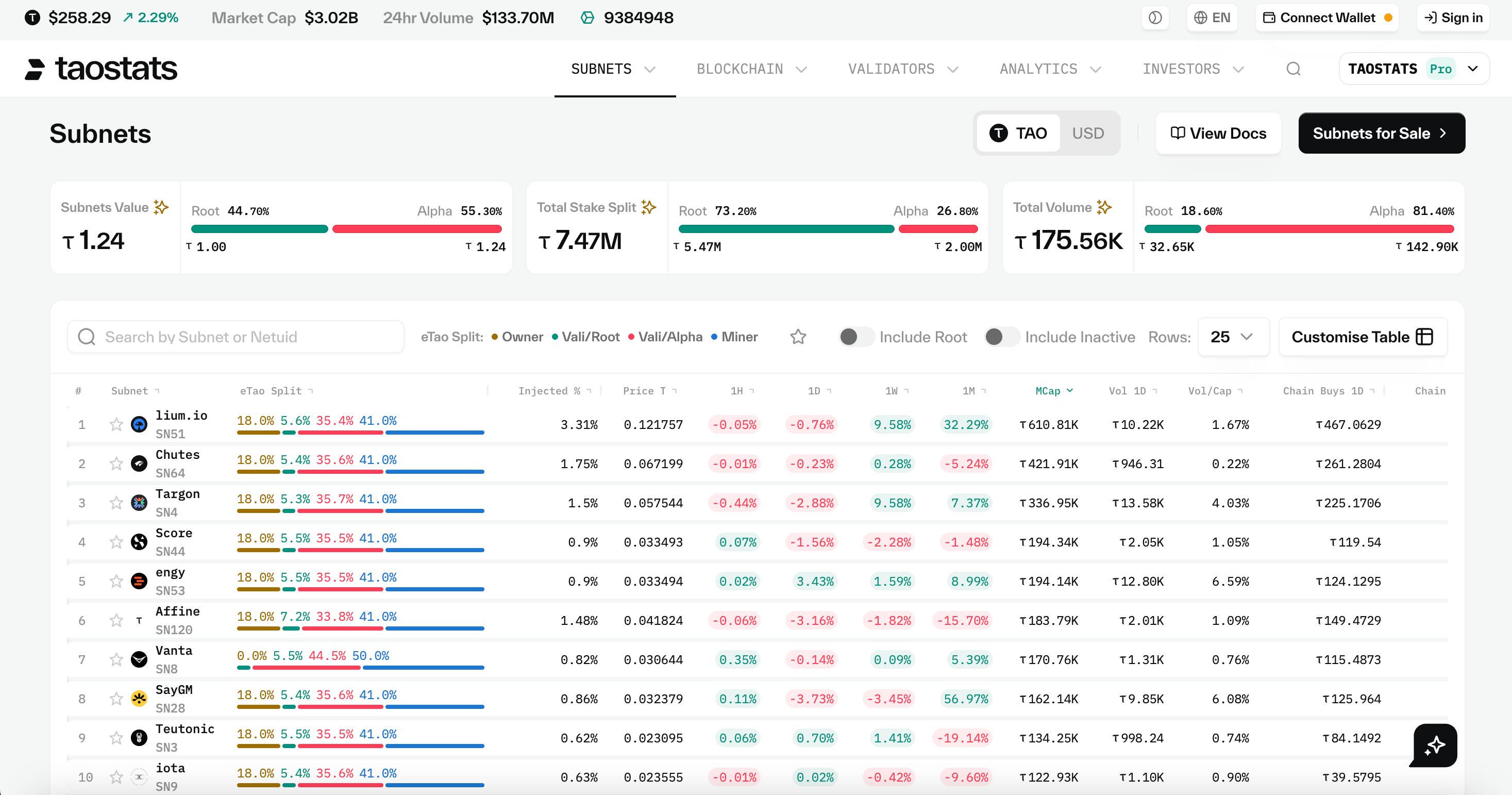
You can browse every subnet on Taostats.io, a Bittensor explorer.
Dynamic TAO
Originally, which subnets got the most rewards was effectively decided by a small group of the largest validators. But in February 2025, Bittensor switched to “Dynamic TAO”, which handed the decision to the market instead.
Every subnet now has its own token, called its “alpha” token, which trades against TAO in a pool. If you think a subnet is doing valuable work, you can stake TAO into it, which buys its alpha token and pushes the price up.
The more the market values a subnet’s token, the bigger the share of new TAO that subnet earns. So staking works like a continuous vote, with no committee deciding where the money goes.
Holders who don’t want to pick individual subnets can stake into “Subnet Zero” instead, which pays a smaller cut from across all of them. That’s where most stakers have gone so far. About half of all TAO sits in Subnet Zero, while only around a fifth is staked directly into subnets, according to a May report by FalconX.
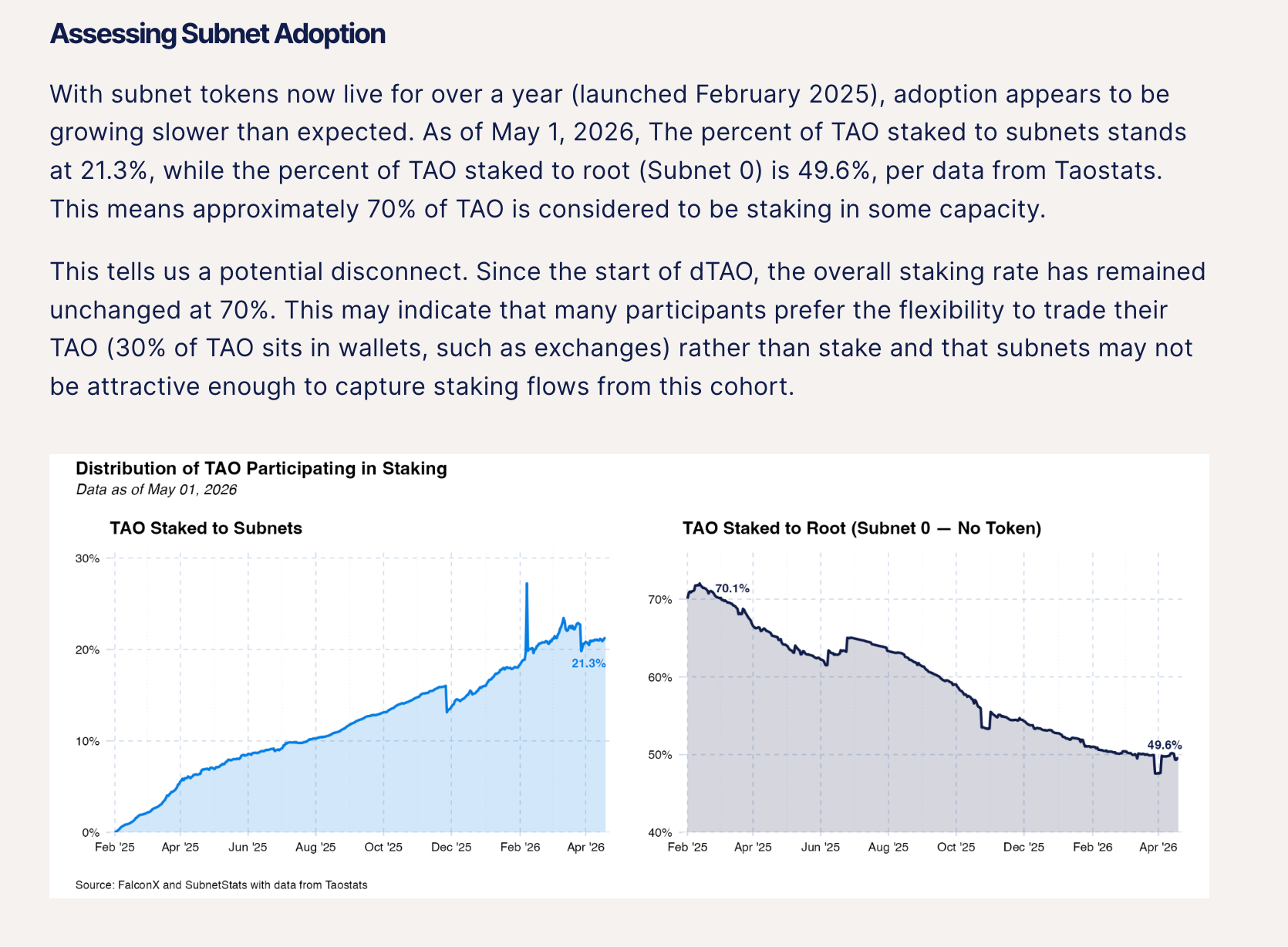
Picking subnets yourself is riskier, since your stake rises and falls with that subnet’s token price. In exchange the rewards can be much bigger, with Subnet Zero paying up to around 10% a year in May, while many of the top subnets can pay 40% or more.
The formula for sharing out rewards has changed three times since Dynamic TAO launched, and this month alone brought two more upgrades. That’s typical of a young network, but it does make Bittensor harder to keep up with than most.
Chutes and Templar
So what are subnets actually producing?
Chutes is one of the largest subnet by token value, and it offers cheap access to open-source AI models like DeepSeek and Llama, with the computing done by miners around the world.
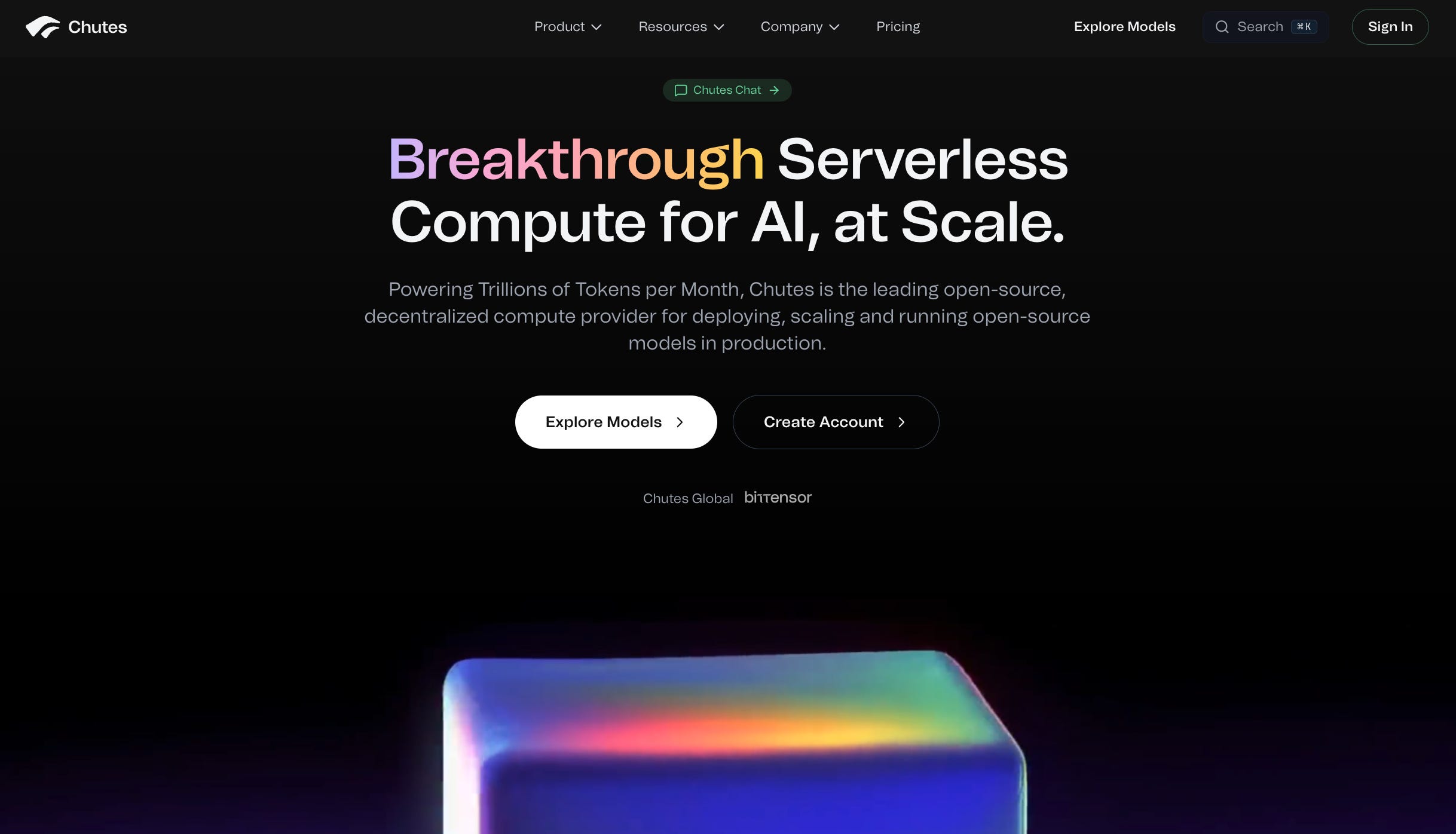
Developers can use it directly or through OpenRouter, the platform I covered earlier this year that gives you one place to access hundreds of AI models.

Late last year Chutes was the most-used AI provider on OpenRouter, ahead of established centralised companies!
Meanwhile Templar took on a harder problem. Training a large AI model normally needs a giant data centre full of chips in one place, but Templar’s subnet coordinated independent contributors across the internet to train one together.
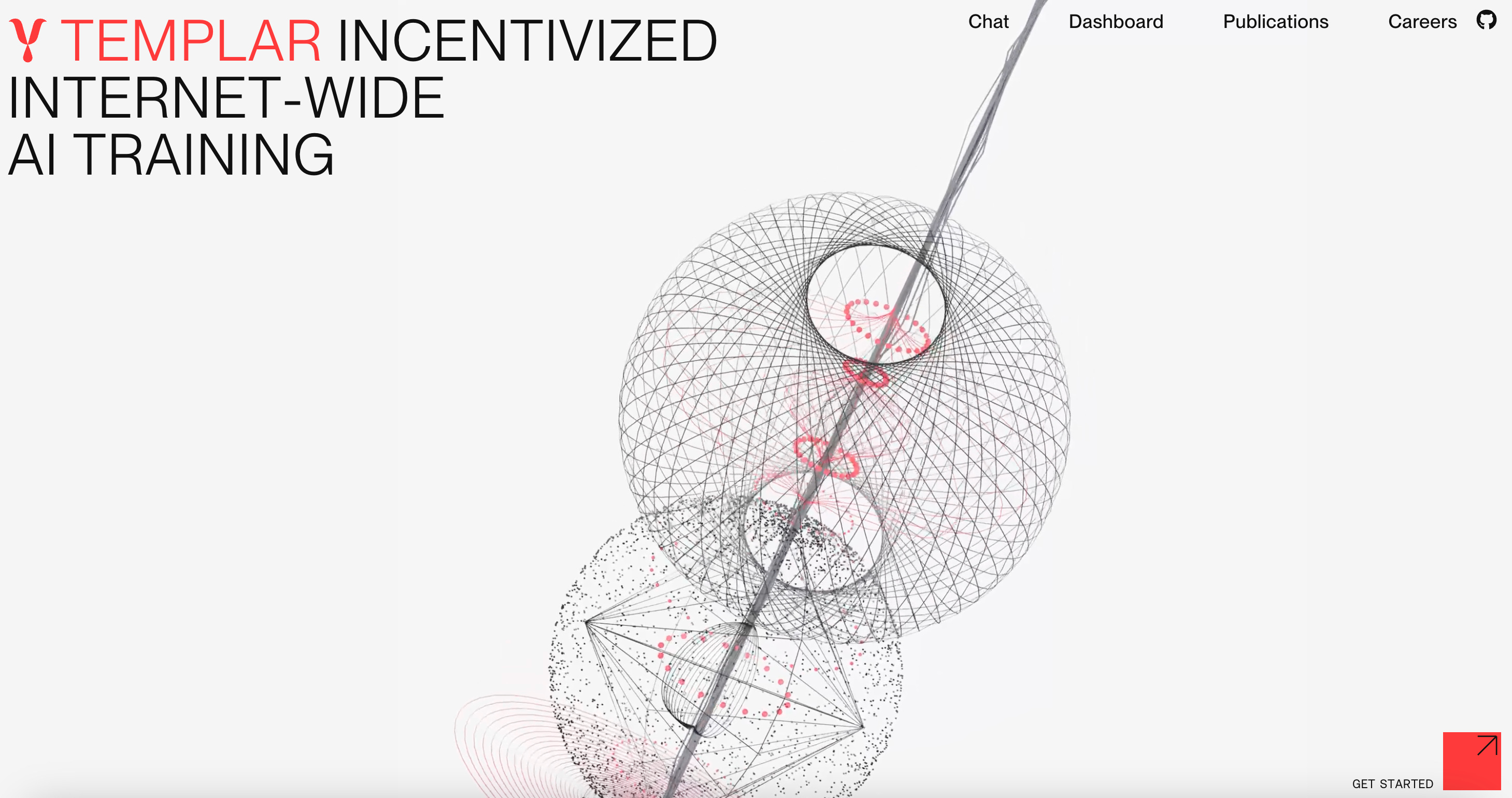
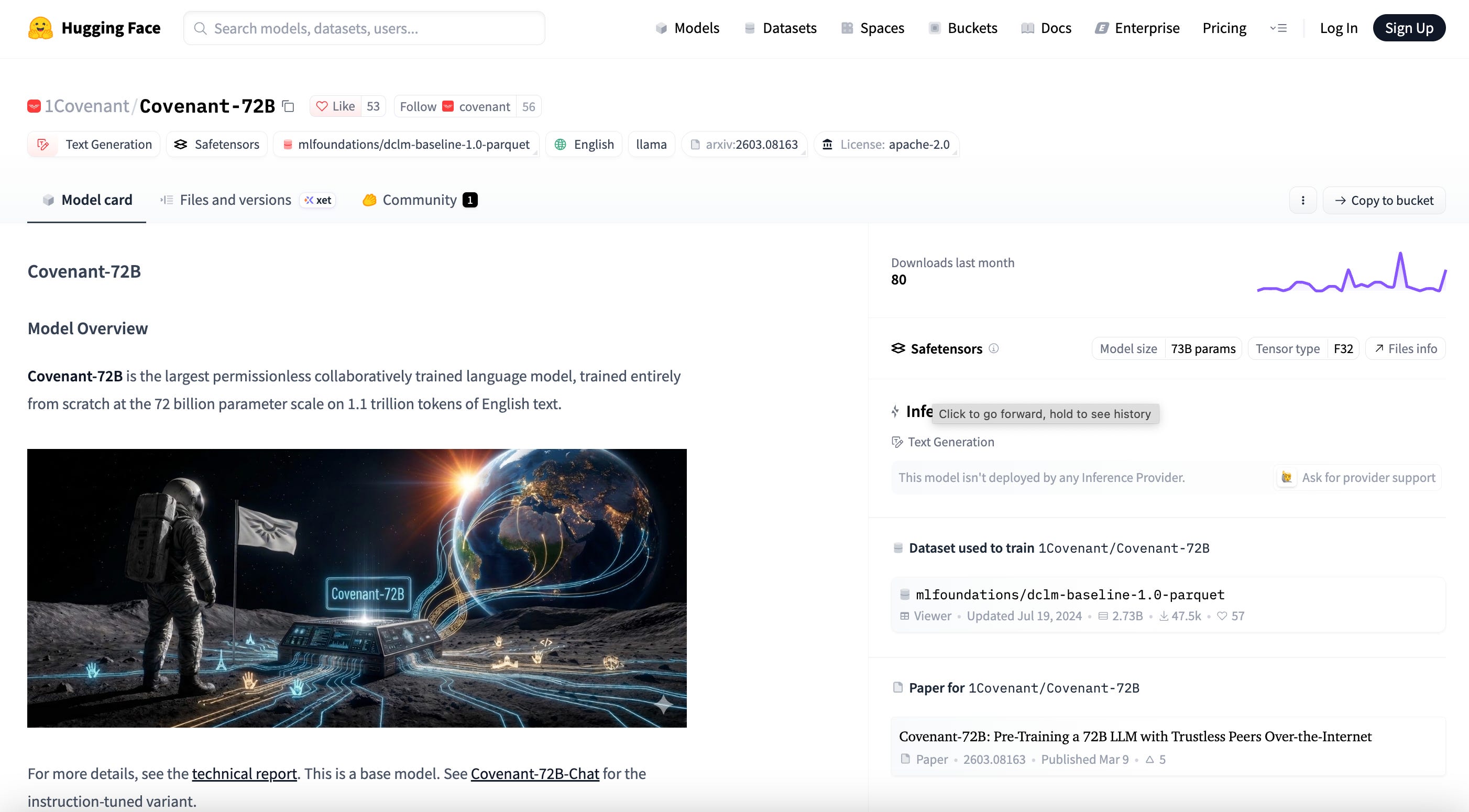
In March it finished “Covenant-72B”, a 72 billion parameter model whose test scores put it roughly level with Meta’s Llama 2 70B, one of the leading open models of 2023. That makes it the largest AI model ever trained this way!
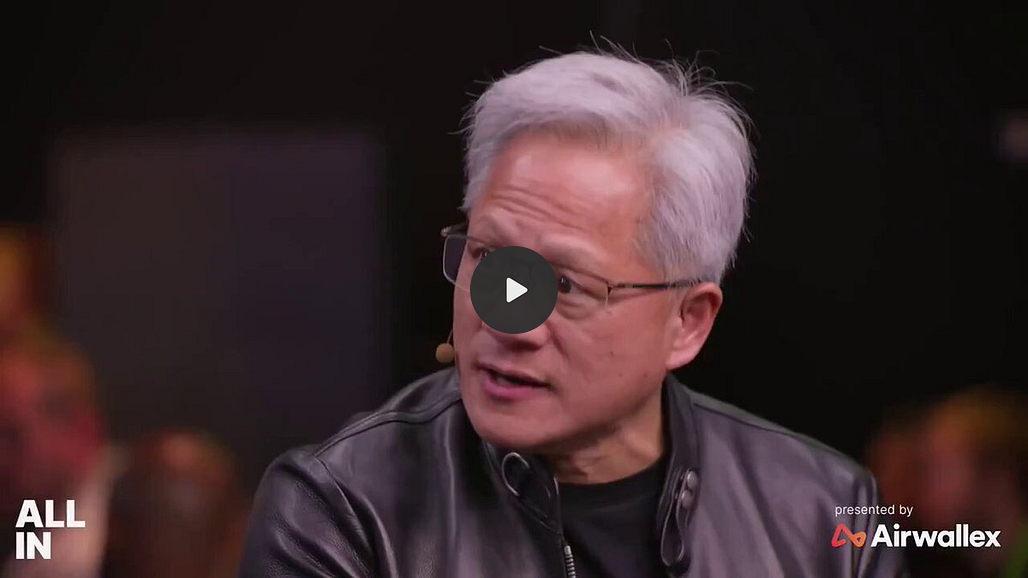
NVIDIA’s CEO Jensen Huang called it “our modern version of Folding@home” on the All-In podcast, comparing it to the famous project where volunteers lent their home computers to help scientists research diseases.

Plenty of other subnets have found paying customers too. An index by research firm SubConnect estimates that 24 subnets now earn around $28 to $35 million a year from customers, including PwC France and Dropbox!
Most of that comes from subnets selling computing power. Lium, which rents out GPUs, leads at around $8 to $10 million a year, followed by Targon, which offers private computing for businesses, at $5.5 to $6 million.
Real Revenue
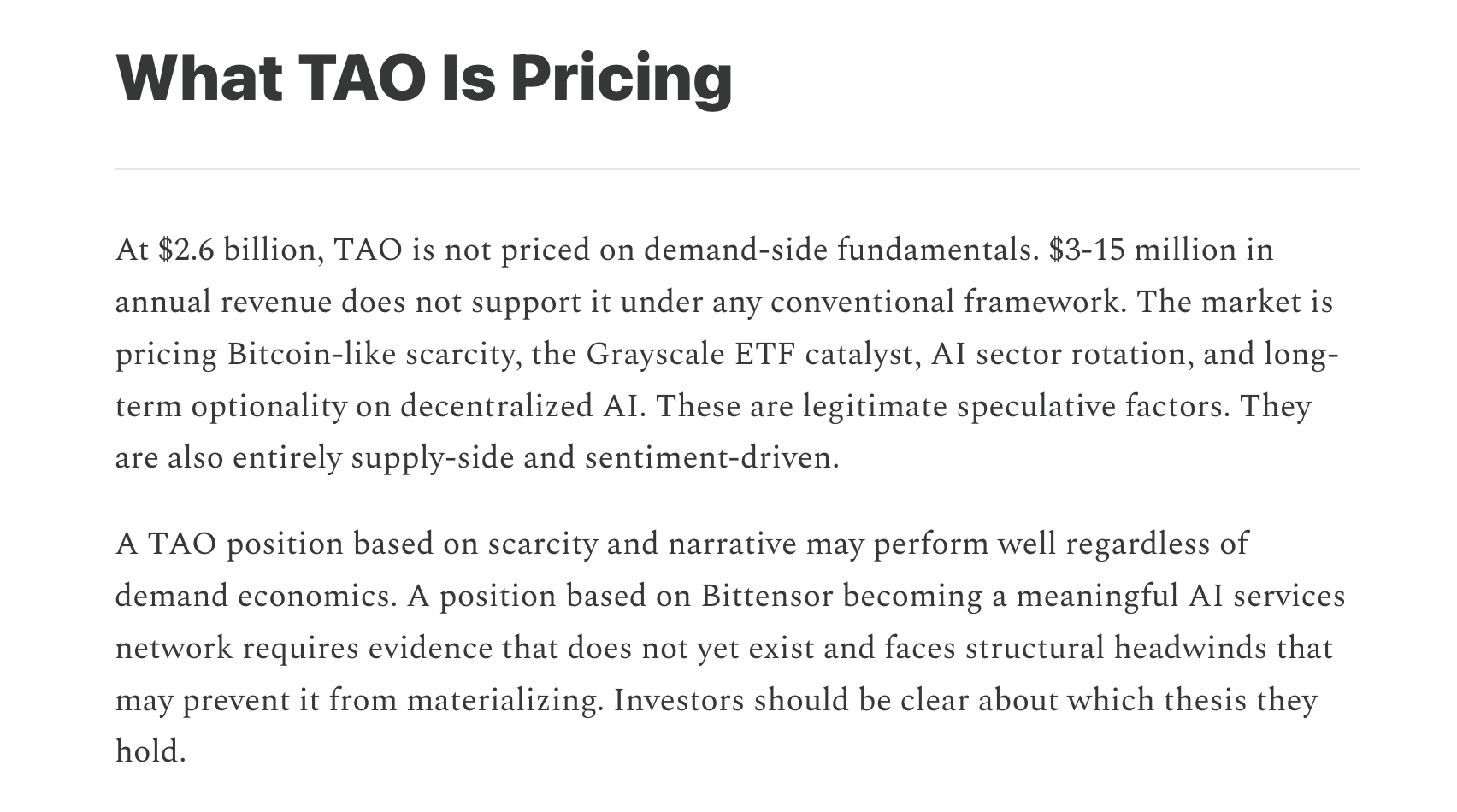
Bittensor still pays out more than $300 million a year in new TAO though, so customer revenue covers only around 9-12% of what the network spends on rewards.
Critics like Pine Analytics, a crypto research group, argue this makes some subnets look more competitive than they really are. Back in March it estimated Chutes was earning roughly $1.3 to $2.4 million a year from customers while receiving around $52 million worth of rewards, meaning its low prices were mostly paid for by new TAO.
There are also questions about how decentralised Bittensor really is. Upgrades to the network are still approved by the “Triumvirate”, three keys held by the Opentensor Foundation, and there’s no community voting on chain yet.
That came to a head in April, when Covenant AI, the team behind Templar and two other top subnets, quit Bittensor. It called the network “decentralization theatre”, claimed the founder Steeves had too much control, and sold all of its subnet tokens.
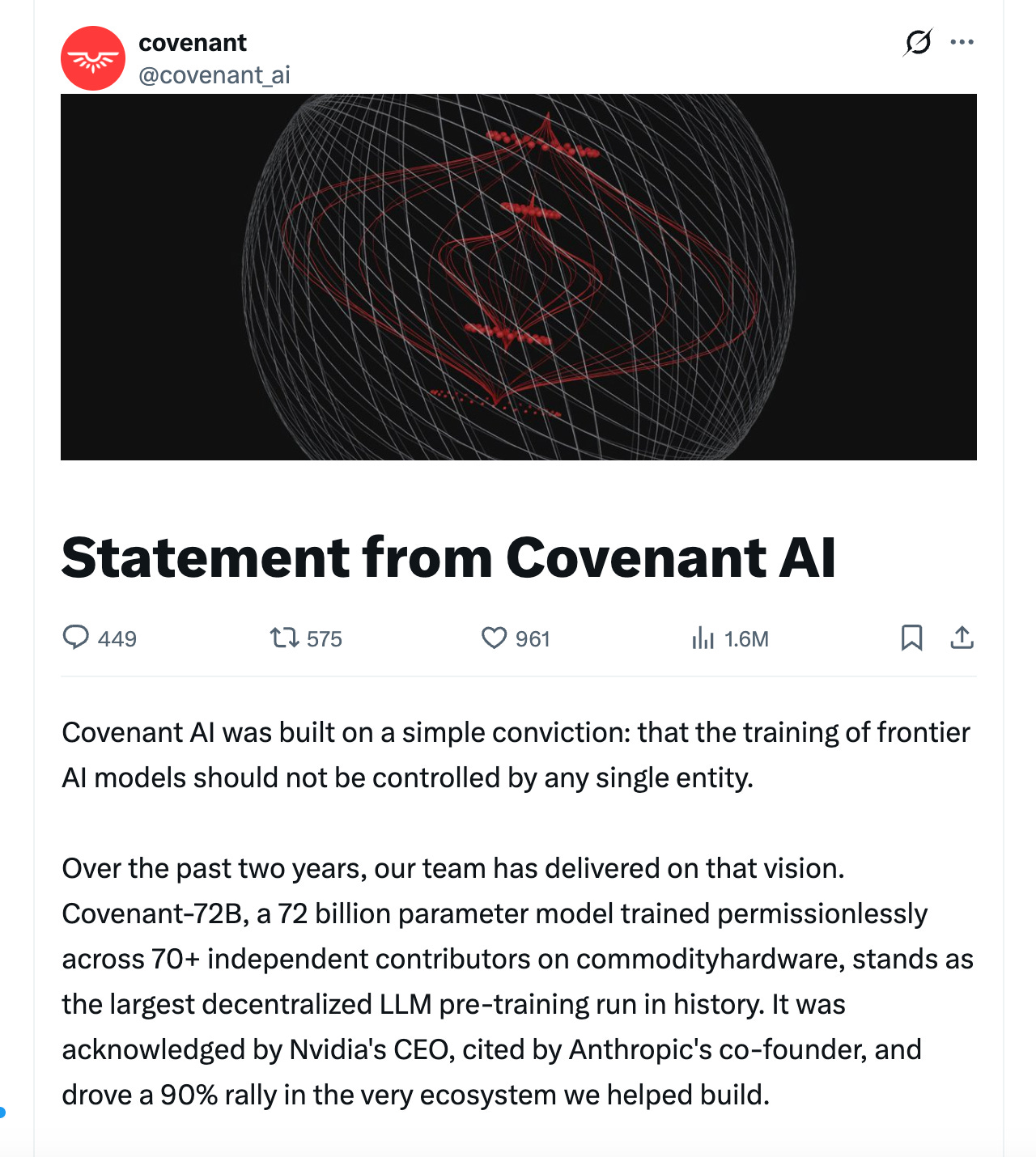
Those tokens fell by as much as 40%, and TAO dropped around 20% within hours, while Steeves disputed the claims.
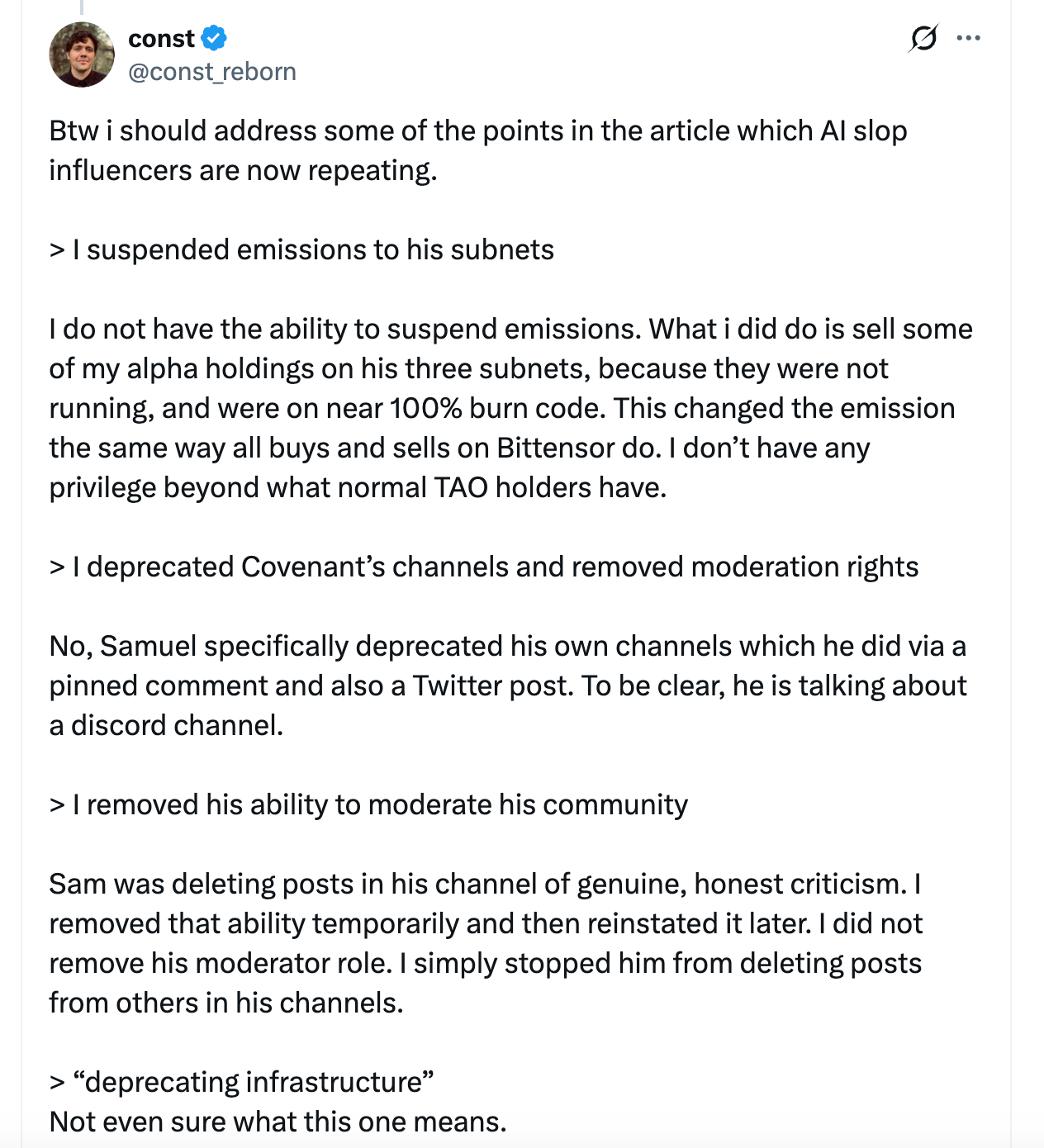
It also fed a deeper worry, that successful teams can use Bittensor’s rewards to get started and then leave once they’ve grown.
Since then, subnet ownership has been tied to “conviction”, meaning owners have to keep tokens locked up to stay in control of their subnet, which makes a sudden exit like Covenant’s much harder.
The Opentensor Foundation is also working towards community governance by the end of this year, new teams have already picked up Templar’s old subnet, and Grayscale and Bitwise have both applied to launch TAO ETFs in the US.
My personal read is that Bittensor is one of the most ambitious ideas in crypto, and one of the few that puts crypto’s incentives directly to work on AI. Whether those rewards can turn into businesses that stand on their own is still unproven, and the price reflects that, with TAO around two thirds below its 2024 high.
But as the most powerful AI gets concentrated in fewer and fewer companies, an open network offering an alternative that anyone can contribute to and profit from matters more and more. If even a handful of subnets keep growing their customers the way Chutes and Lium have, Bittensor could become a real counterweight to the big labs.
Decentralised AI is still in its very early days, and Bittensor is the biggest experiment in it so far!

Whenever you’re ready, these are the main ways I can help you:
Want high crypto returns? Earn up to 14% APY with your own Yieldseeker agent!
Love Web3 & AI? Follow @afoxinweb3 on X for insights!
Entrepreneur using AI? Join our AI community to accelerate your results!